How to Organize a Small Kitchen for Maximum Storage
Learning how to organize a small kitchen can make limited cabinets, drawers, walls, and work surfaces much easier to use.
The goal is not to fill every available space with organizers, but to keep everyday items accessible while moving rarely used objects away from prime storage areas.
To organize a small kitchen effectively, begin by decluttering, creating functional zones, using vertical space, and protecting valuable countertop space. With a practical system and simple daily habits, even a compact kitchen can feel more spacious and easier to maintain.
Table of Contents
- Why Small Kitchens Feel Cluttered
- Start by Decluttering
- Step 1: Create Functional Zones
- Step 2: Use Vertical Space Wisely
- Step 3: Maximize Cabinets and Drawers
- Step 4: Keep Countertops Clear
- Step 5: Be Strategic With Appliances
- Step 6: Use Awkward Spaces
- Step 7: Build Habits That Maintain Order
- Common Small-Kitchen Storage Mistakes
- Frequently Asked Questions
Why Small Kitchens Feel Cluttered
A small kitchen does not necessarily feel cramped because of its size alone. Problems usually appear when too many objects compete for limited storage and work surfaces.
Common causes include:
- Too many appliances on the countertop
- Poorly organized cabinets
- Duplicate utensils and cookware
- Food stored in several unrelated locations
- Unused vertical space
- Items stored far from where they are normally used
Good organization should reduce unnecessary movement while cooking and make it easy to return items to their normal place.
If you are working with a compact layout, you may also like our guide to
small modern kitchens.
Start by Decluttering Before Buying Organizers
Before purchasing baskets, shelf risers, or drawer inserts, first decide what actually needs to remain in the kitchen.
Review:
- Duplicate utensils
- Unused mugs and glasses
- Damaged food containers
- Expired pantry products
- Appliances you rarely use
- Cookware that does not suit your current needs
Organizers work best after unnecessary items have been removed. Otherwise, they simply help you store clutter more efficiently.
How to Organize a Small Kitchen With Functional Zones
Instead of storing items wherever there is free space, group them according to the task they support.
Preparation Zone
Keep frequently used cutting boards, knives, mixing bowls, measuring tools, and preparation utensils close to the main work surface.
Cooking Zone
Store pots, pans, spatulas, oven gloves, and frequently used cooking ingredients near the stove when practical.
Cleaning Zone
Dishwashing supplies, sponges, brushes, and appropriate cleaning products should be convenient to the sink but stored safely.
Food Storage Zone
Keep pantry foods grouped in logical categories so that products are easy to see and less likely to be forgotten.
Food organization should also support safe storage. The FDA food storage guidance explains how to organize refrigerated, frozen, and shelf-stable foods while reducing spoilage and food-safety risks.
Coffee or Breakfast Zone
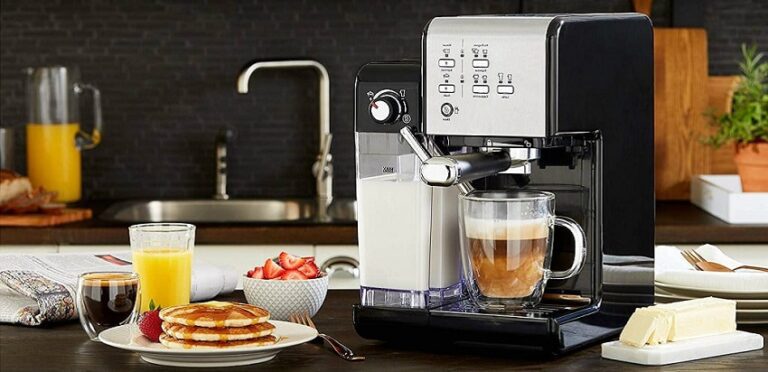
If you use the same equipment every morning, storing the coffee maker, mugs, tea, coffee, and related items together can make the routine more efficient.
The basic rule is simple: store an item close to where you use it most often.
For more layout ideas, explore our guide to
modern style kitchen design.
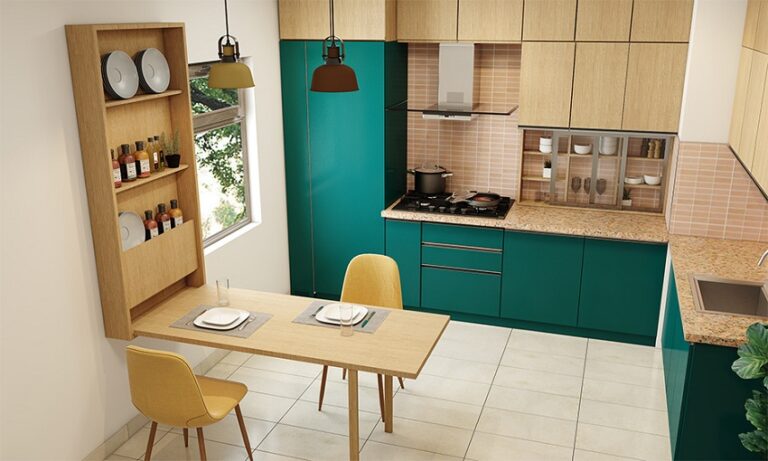
Step 2: Use Vertical Space Wisely
When floor and counter space are limited, the walls and unused height inside cabinets become especially valuable.
- Install shelves where additional wall storage makes sense.
- Use rails or hooks for appropriate lightweight utensils.
- Add shelf risers inside cabinets to create additional levels.
- Use stackable storage where it remains easy to access.
- Consider the sides of cabinets for suitable small storage accessories.
Do Not Overload Open Shelves
Open shelves can make frequently used items easy to reach, but they can also make a small kitchen look busier when too many objects are displayed.
Use them selectively for attractive or regularly used dishes, glasses, jars, or a small number of decorative objects.
For visual inspiration, see our guide to
kitchen color ideas.
Step 3: Maximize Space Inside Cabinets and Drawers
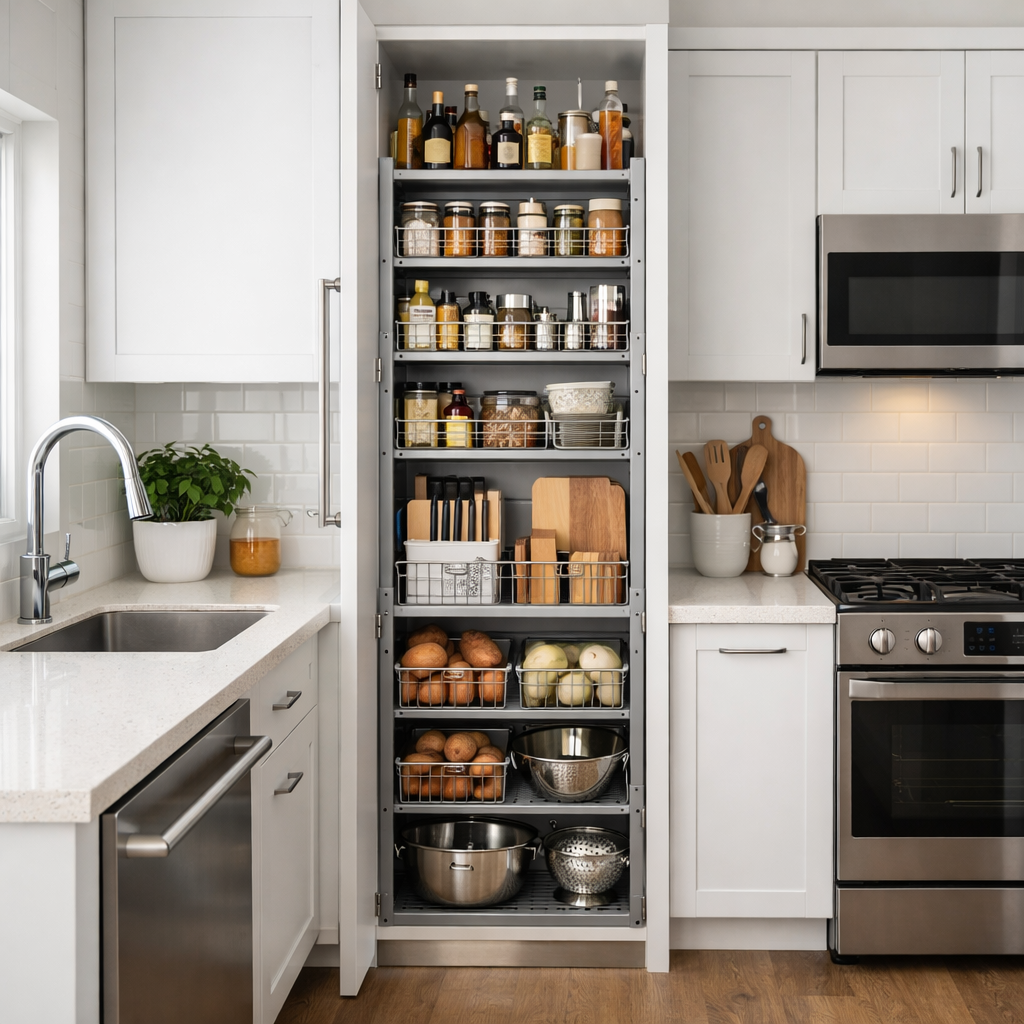
Cabinets often contain more usable space than they appear to, especially when there is a large gap between shelves.
Use Shelf Risers
Shelf risers allow cups, plates, bowls, or pantry products to be stored on two levels instead of stacking everything into one tall pile.
Use Drawer Dividers
Dividers can keep utensils and small kitchen tools separated so that the entire drawer does not need to be searched every time you need one item.
Organize Deep Cabinets
Pull-out baskets or sliding organizers can make the rear of deep cabinets easier to access.
Use Cabinet Doors Carefully
The inside of cabinet doors can sometimes hold lightweight racks for small items, but check that the organizer will not interfere with shelves or prevent the door from closing correctly.
Store Similar Items Together
Keeping food containers, baking supplies, spices, or cleaning products together makes it easier to see what you already own.
For more renovation ideas, read
the choices available for kitchen upgrading.
Step 4: Keep Countertops as Clear as Possible
Countertop space is valuable in a small kitchen because it is needed for food preparation as well as everyday appliances.
Aim to keep only items that are used very frequently.
- Keep daily-use appliances accessible.
- Store occasional appliances in a cabinet or another suitable location.
- Group cooking oils or utensils rather than scattering them across the worktop.
- Return dishes and ingredients after use.
- Avoid using the countertop as permanent storage for mail, bags, or unrelated household objects.
Protect a Dedicated Prep Area
Try to keep at least one section of countertop consistently clear for food preparation. This prevents cooking from becoming frustrating because everything has to be moved before you can begin.
For more ideas on keeping the kitchen fresh and functional, see
10 things in the kitchen that we update regularly.
Step 5: Be Strategic With Kitchen Appliances
Small kitchens can quickly become dominated by coffee machines, kettles, mixers, air fryers, toasters, blenders, and other appliances.
Ask yourself:
- How often do I actually use this appliance?
- Does another appliance already perform the same function?
- Does it need to stay on the countertop?
- Is it proportionate to the amount of space available?
Measure Before Buying
Always measure the intended storage or countertop location before purchasing a new appliance. Remember to allow space for ventilation, opening lids or doors, and safe operation.
Use Multi-Purpose Appliances Carefully
A product that performs several useful functions can reduce the number of appliances you need, but only if you genuinely use those functions.
Taking care of existing appliances can also extend their useful life. See our guides to
refrigerator maintenance
and
removing refrigerator odors.
Step 6: Make Use of Awkward and Forgotten Spaces
Compact kitchens often contain narrow or unusual spaces that can be useful when organized carefully.
Above Cabinets
If upper cabinets do not reach the ceiling, the area above them may provide storage for lightweight, rarely used items. Avoid turning it into a random pile that collects dust.
Corners
Corner cabinets can be difficult to use efficiently. Turntables, pull-out mechanisms, or careful grouping can make items easier to reach.
Under the Sink
The space under the sink can work for suitable cleaning supplies, but plumbing reduces usable volume. Organize around pipes and keep products safely stored according to their instructions.
Narrow Gaps
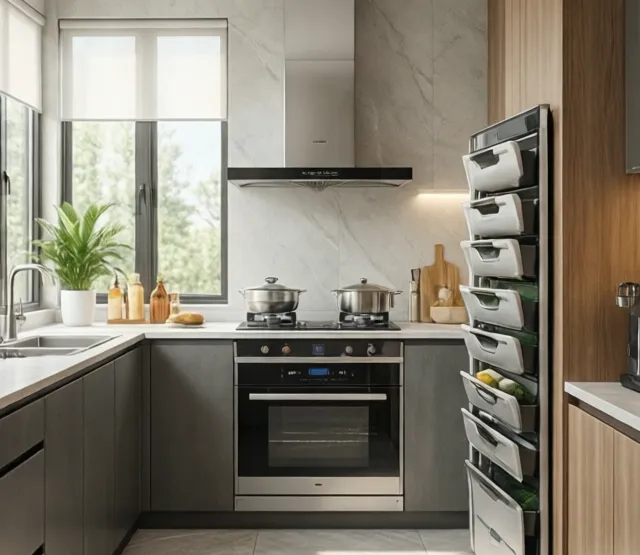
Some narrow gaps can accommodate purpose-built slim storage, but make sure access does not interfere with appliances, ventilation, doors, or safe movement.
Step 7: Build Daily Habits That Maintain Order
An organization system only works when it is easy enough to maintain during normal everyday life.
- Return items after use rather than leaving them on the counter.
- Do a short kitchen reset after meals.
- Deal with dishes regularly rather than allowing them to accumulate.
- Check the refrigerator before buying more food.
- Review one cabinet or drawer periodically.
- Put groceries into their normal storage zones instead of leaving them wherever there is space.
A five-minute reset is often easier to maintain than allowing several days of clutter to accumulate.
For a broader housekeeping system, explore our
10-minute daily cleaning routine
and
5 steps to effective housekeeping.
Common Small-Kitchen Storage Mistakes
- Buying organizers before decluttering: this often creates more containers without solving the underlying problem.
- Using every wall for storage: too many shelves and hooks can make a small kitchen feel visually crowded.
- Keeping rarely used appliances on the counter: reserve prime worktop space for equipment you use frequently.
- Stacking items too deeply: storage is less useful when you need to remove five objects to reach the one at the back.
- Ignoring safety: do not place heavy items where they are difficult to lift safely or store products in unsuitable locations.
- Filling every cabinet completely: a little free space makes storage easier to use and prevents items from being forgotten.
- Keeping duplicates “just in case”: unnecessary duplicates consume valuable space quickly in a compact kitchen.
Frequently Asked Questions About Small Kitchen Storage
How can I make a small kitchen look less cluttered?
Keep countertops relatively clear, reduce unnecessary duplicates, use consistent storage zones, and avoid displaying too many objects on open shelves.
What should I store on the countertop?
Ideally, only equipment and items used frequently. Coffee machines, kettles, or another daily-use appliance may justify the space, while occasional gadgets can usually be stored elsewhere.
Are open shelves good for small kitchens?
They can be useful because they provide accessible storage and may feel visually lighter than some closed cabinets. However, overcrowded shelves can make a small space look more cluttered.
How do I organize deep kitchen cabinets?
Group similar items, use pull-out baskets or suitable organizers where practical, and avoid hiding frequently used objects behind rarely used ones.
Should I store appliances outside the kitchen?
Rarely used or seasonal appliances can sometimes be stored elsewhere if the alternative location is clean, dry, safe, and convenient enough that the appliance will still be used when needed.
How can I create more storage without renovating?
Start with decluttering, shelf risers, drawer dividers, improved cabinet organization, wall-mounted storage where appropriate, and moving rarely used items away from prime kitchen space.
What is the most important rule for organizing a small kitchen?
Keep the items you use most often close to where you use them. A smaller amount of well-positioned storage is usually more practical than a larger amount of poorly organized storage.
Final Thoughts
Organizing a small kitchen for maximum storage is not about filling every empty space. It is about deciding what deserves to be in the kitchen and making those items easy to access.
Start by decluttering, then create practical zones, use cabinet height efficiently, protect valuable countertop space, and be selective about appliances.
The final step is maintaining the system. A kitchen that takes only a few minutes to reset each day is much easier to keep organized over the long term.
For more compact-kitchen inspiration, continue with our guides to
small modern kitchens
and
kitchen design trends.