Daily Cleaning Routine: A Practical 10-Minute System
This daily cleaning routine uses ten focused minutes to control clutter, clear essential surfaces, and keep frequently used rooms functional.
It is not intended to clean the entire home.
Instead, it prevents small daily jobs from accumulating.
The routine combines tidying with limited cleaning.
Returning shoes to storage is tidying.
Removing crumbs from a kitchen counter is cleaning.
Both actions help maintain the home between longer weekly sessions.
Use the sequence as a flexible framework.
If the kitchen needs immediate attention, spend most of the time there.
The goal is a more usable home, not a perfect one.
How the 10-Minute Daily Cleaning Routine Works
Everyday mess usually develops gradually.
A cup remains on a table, shoes collect near the entrance, and crumbs stay on the kitchen floor.
Each problem is small, but together they make the home harder to manage.
A short daily routine interrupts that accumulation.
It focuses on areas with the greatest practical and visual effect:
- dishes and food preparation surfaces
- items blocking tables or walkways
- bathroom sink clutter
- visible dirt in high-traffic areas
- objects needed for the following day
The routine works best after the home has a basic level of organization.
Frequently used items need consistent storage locations.
Otherwise, most of the ten minutes will be spent deciding where objects belong.
Cleaning Is Not the Same as Organizing
Cleaning removes dirt, crumbs, spills, and other residue.
Organizing decides where objects should be stored.
Tidying returns those objects to their assigned places.
A ten-minute session can include small amounts of each activity.
It cannot complete a full wardrobe, pantry, or storage-room project.
Schedule those projects separately.
What to Do Before Starting
A short routine loses effectiveness when several minutes are spent finding supplies.
Prepare a simple and safe system before using the timer.
Keep a Small Set of Basic Supplies
Depending on your surfaces, this may include:
- clean microfiber or reusable cloths
- a suitable general cleaning product
- a small brush and dustpan
- a vacuum suitable for quick use
- trash and recycling bags
- a basket for misplaced items
Store products according to their labels.
Keep chemicals and cleaning tools inaccessible to children and pets.
Convenience should never reduce safety.
Choose a Stopping Point
Set a timer for ten minutes and plan to stop when it ends.
This makes the routine easier to begin.
You may continue when you genuinely have time.
However, the basic system should remain useful even when the session ends after ten minutes.
Choose the Main Priority
Ask which area will make the next few hours easier.
The answer may be the kitchen after dinner or the entrance before the morning school routine.
Start with function.
Decorative adjustments can wait until essential surfaces and paths are usable.
10-Minute Daily Cleaning Routine: Step by Step
| Time | Task | Main Goal |
|---|---|---|
| Minutes 0–2 | Collect dishes and trash | Remove food-related mess and waste |
| Minutes 2–4 | Clear one essential surface | Restore a counter, table, or desk |
| Minutes 4–6 | Return misplaced items | Reduce visible clutter |
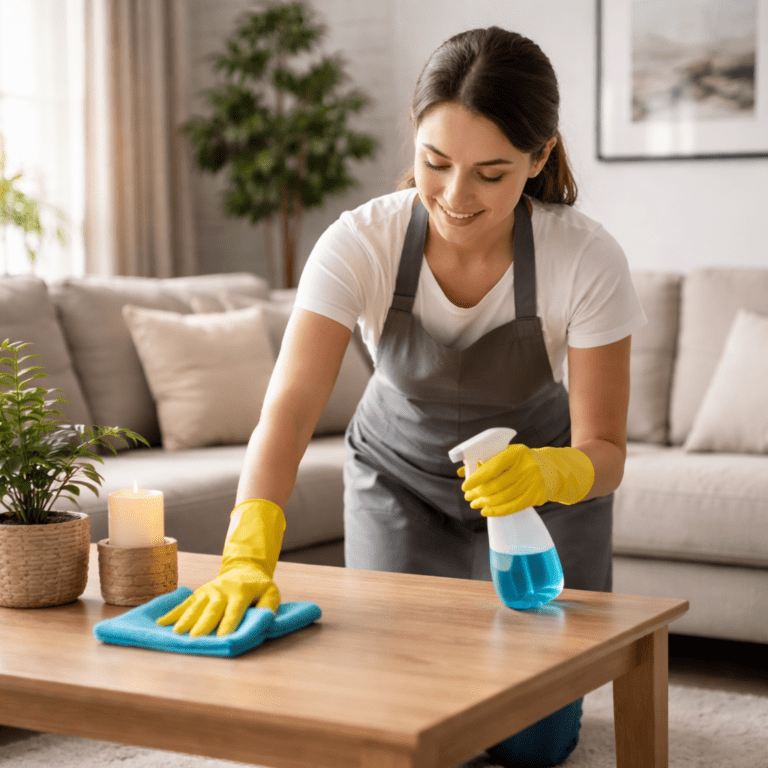
| Minutes 6–8 | Wipe high-use surfaces | Remove spills, crumbs, and visible dirt |
| Minutes 8–10 | Clean one high-traffic floor area | Remove obvious debris |
Minutes 0–2: Collect Dishes and Trash
Begin with items that can create odors, attract pests, or interfere with food preparation.
- Take cups and plates to the kitchen.
- Load the dishwasher or stack dishes safely.
- Discard obvious trash.
- Separate recycling according to local rules.
- Remove food packaging from tables and counters.
Do not stop to wash every difficult pan if it will consume the entire session.
Soak it or schedule it immediately after the routine.
Minutes 2–4: Clear One Essential Surface
Choose the surface needed most:
- the main kitchen preparation area
- the dining table
- the bathroom sink
- a desk used for work or homework
- the entrance console
Return items to their proper locations.
Avoid moving the entire pile to another table.
If an item has no storage location, place it in one temporary decision container.
Review that container during a separate organization session.
Minutes 4–6: Return Misplaced Items
Walk through the main living area and collect objects that clearly belong elsewhere.
Examples include:
- shoes
- coats and bags
- toys
- books and magazines
- clean clothing
- chargers and remote controls
- blankets and cushions
Use a basket if several objects belong on another floor.
Empty the basket at the end or assign that task to another household member.
Minutes 6–8: Wipe High-Use Surfaces
Wipe only the surfaces that need attention.
Do not dust every shelf.
Priorities may include:
- kitchen counters with food residue
- the dining table after a meal
- the bathroom sink
- a visibly marked work surface
Use a product suitable for the material.
Natural stone, unfinished wood, screens, stainless steel, and painted surfaces may require different care.
Minutes 8–10: Clean One High-Traffic Floor Area
Concentrate on visible crumbs, soil, or pet hair.
The kitchen, dining area, and entrance are common priorities.
Use a small vacuum, broom, or another appropriate tool.
Do not move heavy furniture or attempt to clean every room.
If the floor is already acceptable, use the final minutes to restore the sofa, entrance, or bathroom.
Which Areas Should You Clean First?
When time is limited, prioritize according to function rather than room order.
1. Kitchen
Food residue, dishes, and spills normally deserve early attention.
Clear enough counter space to prepare the next meal safely.
2. Main Bathroom
Return toiletries to storage, wipe obvious sink residue, and hang towels so they can dry.
A full toilet, tub, and floor cleaning belongs in the weekly schedule.
3. Entrance
Remove shoes, bags, packages, and objects that obstruct the route.
A clear entrance makes arriving and leaving easier.
4. Living Area
Collect dishes and return entertainment items, toys, books, and blankets.
Focus on the area used most by the household.
5. Bedrooms
Place clothing in a hamper or wardrobe and remove dishes.
Making the bed is optional if another task has greater practical value.
You do not need to visit every room each day.
Clean the areas where small messes will create the most work if ignored.
Morning vs Evening Cleaning Routine
The best time is the one you can maintain.
Morning and evening sessions serve slightly different purposes.
Morning Routine
A morning reset can include:
- straightening the bed
- putting sleepwear away
- clearing breakfast dishes
- wiping the food preparation area
- placing dirty clothes in the hamper
This approach leaves the main rooms ready for daytime use.
It may not suit a household with a rushed morning schedule.
Evening Routine
An evening reset can include:
- collecting the day’s dishes
- restoring the kitchen counter
- putting away toys and living-room clutter
- clearing the entrance
- preparing items needed the next morning
This can reduce morning pressure.
Avoid creating a long late-night cleaning session when rest is more important.
Split the Ten Minutes
You can use five minutes in the morning and five in the evening.
For example, restore bedrooms after waking and reset the kitchen after dinner.
What If the Home Is Already Very Cluttered?
A maintenance routine cannot immediately correct a large backlog.
Begin with one small functional area rather than racing through the entire home.
Use the One-Surface Method
- Choose one table, counter section, chair, or floor area.
- Remove trash and dishes.
- Return items with obvious storage locations.
- Place undecided objects in one temporary container.
- Clean the newly cleared surface if needed.
Repeat this method during later sessions.
Do not create several boxes of unsorted objects in different rooms.
Begin with Safety and Hygiene
Prioritize:
- clear walking and exit routes
- spoiled food and trash
- necessary dishes
- usable bathroom fixtures
- clean clothing and bedding
Decorative organization can wait until essential areas are safe and functional.
How to Involve the Whole Family
Ten minutes can accomplish much more when tasks are divided.
Give each participant one clear responsibility.
Possible Family Assignments
- One person collects dishes.
- One person puts away shoes and bags.
- One person returns toys or books.
- One person wipes the kitchen counter.
- One person clears visible floor debris.
Assign work according to age, ability, and safety.
Adults should manage chemicals, heavy objects, electrical equipment, and difficult cleaning.
Younger children may put toys in a container or clothing in a hamper.
Older children may clear a table, put away their belongings, or vacuum a small open area.
Keep responsibilities predictable.
Changing every task daily can create more explanation than cleaning.
For more ideas, read
how to motivate your family to help with chores.
How to Make the Routine Consistent
Connect It to an Existing Habit
Start the routine after an event that already happens every day.
Examples include finishing breakfast, returning from work, or clearing dinner.
Keep the Checklist Short
Do not add every unfinished household task.
The routine should focus on daily maintenance.
Prepare Supplies
Keep frequently used tools in a convenient but secure location.
Do not leave hazardous products where children or pets can reach them.
Use Visible Storage Labels
Labels can help family members return items without asking where they belong.
They are especially useful for toys, school supplies, and shared storage.
Do Not Compensate for Every Missed Day
If you miss the routine, begin again at the next practical time.
Do not automatically turn ten minutes into an hour.
Review the System
After two weeks, identify which tasks repeatedly consume the timer.
That problem may need better storage, a different family assignment, or a separate weekly task.
Our guide to
quick-cleaning tools and gadgets
can help you decide whether a tool would save meaningful time.
What the 10-Minute Routine Does Not Replace
The daily system controls visible mess and immediate household needs.
It does not replace thorough cleaning and maintenance.
Most homes still need scheduled tasks such as:
- complete bathroom cleaning
- vacuuming carpets and rugs
- mopping suitable floors
- changing bedding
- laundry
- dusting less accessible surfaces
- cleaning kitchen appliances
- washing bins and reusable cleaning tools
- periodic decluttering
The required frequency depends on household size, pets, allergies, room use, and surface materials.
Use our
weekly cleaning schedule for busy families
to distribute those longer jobs across the week.
Cleaning Product Safety
A quick routine should not encourage careless chemical use.
Always read and follow the product label.
- Use products only on compatible surfaces.
- Provide ventilation when required.
- Use the stated amount rather than adding extra product.
- Store chemicals in their original labeled containers.
- Keep cleaning products away from children and pets.
- Wash or store reusable cloths appropriately.
- Never mix cleaning chemicals.
Do not mix bleach with ammonia, acids, vinegar, or another cleaner.
Dangerous gases or chemical reactions can result.
Routine cleaning and disinfection are different.
According to the
CDC guidance on household cleaning and disinfecting
,
cleaning with soap and water is sufficient in many ordinary situations.
Disinfection is more relevant when someone is sick or at increased risk.
A daily ten-minute routine usually does not require disinfecting every surface.
Concentrate on visible dirt and follow current health guidance when illness occurs.
Printable 10-Minute Daily Cleaning Checklist
- Set a ten-minute timer.
- Collect dishes and food packaging.
- Remove immediate trash and recycling.
- Clear one essential counter, table, or desk.
- Return obvious misplaced items.
- Wipe the surfaces that are visibly dirty.
- Remove crumbs or debris from one high-traffic floor area.
- Prepare important items for the next part of the day.
- Empty the return basket.
- Stop when the timer ends.
You do not need to complete every item every day.
Start at the top and focus on the tasks relevant to the current condition of the home.
Frequently Asked Questions
Is ten minutes enough to clean a home?
No.
Ten minutes is enough for a limited daily reset, not a complete house cleaning.
It can prevent dishes, clutter, spills, and visible debris from accumulating.
What should I clean every day?
Prioritize food preparation surfaces, necessary dishes, visible spills, immediate trash, and objects blocking daily activities.
The exact list depends on the household.
Should I make the bed every morning?
Only if it helps you and does not replace a more urgent task.
The bed does not have to look perfect for the routine to be successful.
Is this a cleaning or decluttering routine?
It contains both.
Collecting objects is tidying, while wiping spills and removing crumbs is cleaning.
Larger decluttering projects require separate time.
Should I clean in the morning or evening?
Choose the time you can repeat most reliably.
Morning cleaning prepares the home for the day.
An evening reset can make the following morning easier.
Can I divide the routine into two sessions?
Yes.
Five minutes in the morning and five minutes in the evening may fit some households better.
What if I cannot finish before the timer ends?
Stop after completing the current task.
Continue during the next session or move an important job to the weekly schedule.
What if I miss several days?
Restart with dishes, trash, one essential surface, and a clear walking route.
Do not attempt to compensate by completing every missed task.
Do I need several different cleaning products?
Not necessarily.
Use the smallest practical selection that is compatible with your surfaces.
Always follow product and material-care instructions.
Can children participate in the ten-minute reset?
Yes.
Give them age- and ability-appropriate tasks without hazardous chemicals or equipment.
Examples include storing toys, books, shoes, or dirty clothing.
Does the routine replace weekly cleaning?
No.
Bathrooms, floors, bedding, dusting, laundry, and maintenance still require separate attention.
The daily routine makes those sessions easier.
How can I make the routine faster?
Give common items fixed storage locations, keep safe supplies accessible, and assign recurring family responsibilities.
Faster movement should not come at the expense of product safety.
Final Thoughts
A useful daily cleaning routine should keep essential areas functional without becoming a second full cleaning session.
Ten minutes is enough to address a limited number of high-impact tasks.
Start with dishes and trash.
Clear one necessary surface, return misplaced items, wipe visible dirt, and finish with one high-traffic floor area.
Adapt the order to the home’s immediate needs.
Consistency is helpful, but missing a day is not failure.
Restart with the next practical ten-minute session.