How to properly care for your refrigerator at home
Regular refrigerator care helps keep the appliance clean, reduces unpleasant odors, supports efficient operation, and makes it easier to spot small problems before they become more serious.
Fortunately, refrigerator maintenance does not need to be complicated. Routine cleaning, correct temperature settings, clean door seals, good airflow, and occasional inspection of accessible components are enough for most households.
This guide explains how to care for a refrigerator safely, including modern frost-free models and refrigerators that require manual defrosting.

Basic Refrigerator Care
The easiest way to maintain a refrigerator is to deal with spills, spoiled food, and small problems as they occur rather than waiting for a major cleaning session.
A practical routine includes:
- wiping up spills promptly
- removing expired or spoiled food regularly
- cleaning shelves and drawers when needed
- checking the door seals
- keeping ventilation openings unobstructed
- monitoring refrigerator temperature
- checking for unusual noises, leaks, or excessive frost
A deeper interior cleaning can be done periodically or whenever spills, stains, or odors make it necessary. There is no need to follow an arbitrary cleaning schedule if the refrigerator is already clean.
If you are building a broader home-cleaning routine, see our
daily cleaning routine
.
Check the Refrigerator Temperature
Correct temperature is important for food storage as well as refrigerator operation.
A household refrigerator should generally be kept at approximately 4°C (40°F) or below, while avoiding temperatures cold enough to freeze foods that are not intended to be frozen.
The control setting inside the refrigerator does not always correspond directly to an exact temperature.
If you are unsure, an inexpensive appliance thermometer can help you check the actual temperature inside the compartment.
Do Not Block Internal Airflow
Cold air needs to circulate around the refrigerator compartment.
Avoid packing food tightly against internal air vents, particularly in frost-free refrigerators that rely on forced-air circulation.
At the same time, you do not need to keep the refrigerator nearly empty. The goal is simply to leave enough space for air to circulate as intended.
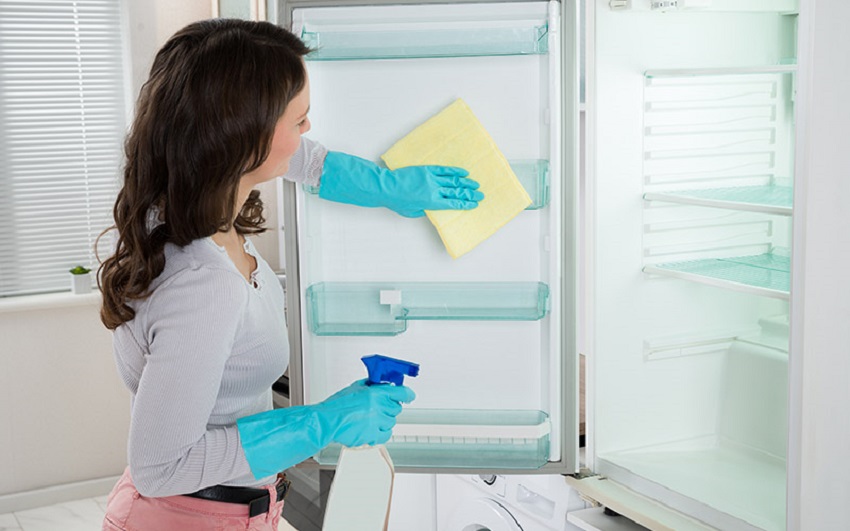
How to Clean a Refrigerator Properly
Before a thorough cleaning, check the manufacturer’s instructions for your appliance. If you need to move the refrigerator, clean electrical areas, or work around accessible mechanical components, disconnecting it from power may be appropriate.
1. Remove the Food
Take food out and discard anything spoiled or no longer safe to use.
For a longer cleaning session, keep perishable food appropriately chilled while it is outside the refrigerator.
2. Remove Shelves and Drawers
Take out removable shelves, bins, and drawers according to the appliance instructions.
Be careful with glass shelves. A very cold glass shelf should not be exposed suddenly to very hot water because rapid temperature changes can damage some glass components.
3. Wash Removable Parts
Use warm water and a mild cleaning solution suitable for the refrigerator surfaces.
Avoid abrasive pads or aggressive cleaners that could scratch plastic, glass, coatings, or stainless-steel finishes.
4. Clean the Interior
Wipe the walls, shelf supports, door bins, corners, and other accessible surfaces with a soft cloth or sponge.
Pay particular attention to sticky spills and areas where food debris collects.
5. Dry the Surfaces
After cleaning, wipe surfaces dry before replacing the shelves, drawers, and food.
Caring for a Frost-Free Refrigerator
A frost-free or No Frost refrigerator automatically manages frost accumulation around its cooling system during normal operation.
That means it normally does not need routine manual defrosting simply because a certain number of months have passed.
It still needs regular interior cleaning and basic maintenance.
Check for:
- food blocking internal air vents
- dirty or damaged door seals
- water where it should not normally collect
- persistent odors
- unusual frost accumulation
- temperature that is consistently too high or too low
Heavy or persistent frost in a frost-free refrigerator may indicate a door-seal, airflow, defrost-system, or other problem rather than a need for routine manual defrosting.
Caring for a Manual Defrost Refrigerator
Some refrigerators and freezer compartments require manual defrosting when ice accumulates.
Follow the manufacturer’s instructions for the particular appliance.
A typical process may involve:
- removing food and keeping it safely chilled
- switching off or unplugging the appliance as instructed
- allowing the ice to melt naturally
- collecting the meltwater
- cleaning and drying the compartment
- restarting the appliance
Never Chip Ice With a Sharp Object
Do not use knives, screwdrivers, or other sharp tools to remove ice.
They can damage the interior or cooling components and may create a serious appliance fault.
Cleaning a New Refrigerator
A new refrigerator may contain packaging dust or a temporary manufacturing and packaging odor.
Before storing food, remove all packaging materials and wipe the accessible interior surfaces according to the manufacturer’s instructions.
A mild cleaning solution and soft cloth are generally preferable to strong solvents, abrasive cleaners, or improvised chemical treatments.
Allow cleaned surfaces to dry before loading the refrigerator.
If the refrigerator has just been transported, follow the manufacturer’s instructions regarding how long it should stand before being connected to power. The appropriate procedure can depend on the appliance and how it was transported.
Clean and Check the Door Seals
The flexible gasket around the refrigerator door helps maintain an effective seal.
Food residue and dirt can accumulate in its folds, so clean the gasket gently with a soft cloth and mild cleaning solution when necessary.
While cleaning, inspect it for:
- cracks
- tears
- loose sections
- areas that no longer sit correctly against the cabinet
A damaged or poorly fitting gasket can allow warm, humid air into the refrigerator and may contribute to temperature problems or condensation.
Condenser Coils and Ventilation
Refrigerator designs vary considerably. Some appliances have accessible condenser coils, while others use designs where the relevant components are enclosed or integrated into the cabinet.
If your refrigerator has accessible coils and the manufacturer recommends cleaning them, accumulated dust can be removed carefully according to the appliance instructions.
Do not remove covers or attempt to access sealed electrical or refrigeration components simply for routine cleaning.
Allow Proper Ventilation
Built-in and freestanding refrigerators require appropriate ventilation around specified areas.
Follow the installation clearances given by the manufacturer rather than pushing the appliance into a space that restricts required airflow.
Drainage and Drip Pans
Some refrigerator designs use a drain channel, drain opening, or evaporation pan as part of their normal defrost system.
These components are not equally accessible on every refrigerator.
If your appliance has a user-accessible drain that becomes blocked, clean it only according to the manufacturer’s instructions.
Do not pour large quantities of water into drainage openings or tilt the refrigerator simply to empty a tray unless the appliance manual specifically instructs you to do so.
If water repeatedly collects inside or underneath the refrigerator and the cause is unclear, investigate the source rather than treating the water itself as routine maintenance.
How to Prevent Refrigerator Odors
Most refrigerator odors are easier to prevent than to remove.
Good habits include:
- cleaning spills promptly
- removing spoiled food
- using suitable covered containers
- keeping strong-smelling foods properly wrapped or sealed
- cleaning drawers and shelves where liquids have leaked
- checking hidden areas if an odor persists
Do not assume that every odor comes from food. Persistent burning, electrical, or unusual chemical smells should be taken seriously and investigated appropriately.
For a more detailed troubleshooting guide, see
how to remove odor from a refrigerator
.
How to Remove Persistent Refrigerator Odors
If an odor remains after spoiled food has been removed, the most effective approach is to find and clean the source rather than trying to cover the smell with another fragrance.
Start With a Thorough Cleaning
Remove food and inspect:
- shelves
- drawers
- door bins
- gasket folds
- corners and seams
- accessible drainage areas
- any accessible drip or evaporation pan identified in the manual
A small amount of leaked food or liquid hidden underneath a drawer can produce a surprisingly persistent smell.
Baking Soda
Baking soda is commonly used as a refrigerator deodorizer and can help reduce some food odors.
It should complement proper cleaning rather than replace it.
Do Not Simply Mask the Smell
Strongly scented products may make the refrigerator smell different without removing the underlying contamination.
Finding and cleaning the source is more useful than relying on perfume, citrus, coffee, or other strong aromas.
Common Refrigerator Care Mistakes
Using Harsh or Abrasive Cleaners
Strong chemicals and abrasive tools can damage interior plastics, coatings, seals, and exterior finishes.
Using Sharp Objects to Remove Ice
A sharp tool can puncture or damage refrigerator components. Allow ice to thaw according to the appliance instructions instead.
Ignoring the Door Gasket
A dirty or damaged seal can affect how well the refrigerator door closes.
Blocking Air Vents With Food
Poor internal airflow can contribute to uneven temperatures.
Assuming Every Refrigerator Needs Manual Defrosting
Frost-free refrigerators normally manage defrosting automatically. Follow the manual for your particular appliance rather than defrosting it according to a generic schedule.
Cleaning Components That Are Not User-Serviceable
Routine maintenance should not involve dismantling sealed electrical or refrigeration components.
Ignoring Persistent Water, Frost, or Temperature Problems
Repeated problems may indicate a fault that cleaning alone will not solve.
Frequently Asked Questions
How often should I clean my refrigerator?
Clean spills and spoiled food as soon as possible and perform a more thorough cleaning whenever the interior needs it. The appropriate frequency depends on household use rather than a fixed monthly schedule.
Does a No Frost refrigerator need to be defrosted?
Under normal operation, a frost-free refrigerator manages defrosting automatically. Persistent or excessive ice can indicate another problem and should not simply be treated as routine frost buildup.
What temperature should a refrigerator be?
A refrigerator should generally be kept at about 4°C (40°F) or below for safe food storage, without allowing foods that should remain refrigerated to freeze.
Can I clean a refrigerator with dish soap?
A small amount of mild dishwashing liquid may be suitable for many removable and interior surfaces, but always follow the refrigerator manufacturer’s cleaning instructions and rinse or wipe away residue appropriately.
Can baking soda remove refrigerator smells?
Baking soda can help reduce some odors, but it will not fix spoiled food, spills, blocked drainage, or another underlying source of odor. Clean the source first.
Should I clean behind my refrigerator?
If the refrigerator can be moved safely and its installation instructions permit it, periodically removing accessible dust and debris around the appliance can be useful. Do not move or dismantle the refrigerator in a way that could damage water, electrical, or refrigeration connections.
Final Thoughts
Proper refrigerator care is mostly about simple habits: keep the interior clean, remove spoiled food promptly, maintain the correct temperature, avoid blocking airflow, inspect the door seals, and follow the manufacturer’s maintenance instructions.
Modern frost-free refrigerators generally do not require scheduled manual defrosting, while older or manual-defrost models may need ice removed periodically according to their design.
Most importantly, treat repeated frost, leaks, unusual noises, poor cooling, or electrical smells as potential problems rather than normal maintenance issues. A clean refrigerator is important, but correct operation and safe maintenance matter just as much.