How to Organize a Kitchen Pantry: Simple Storage Ideas That Work
Learning how to organize a kitchen pantry can make everyday cooking easier, reduce food waste, and help you see what you already have before buying more. A good pantry does not need to look perfect. It simply needs to make food easy to find, use, and put away.
The most effective pantry systems are usually simple. Group similar items together, keep frequently used products within easy reach, and avoid filling every shelf so tightly that things disappear behind one another.
Whether you have a walk-in pantry, a tall cabinet, or just a few shelves, these practical ideas can help you create a storage system that works for your kitchen and your routine.
Start by Emptying the Pantry
The easiest way to understand what is taking up space is to remove everything from the pantry and review it category by category.
Check expiration dates, damaged packaging, duplicate products, and food you no longer use. Discard anything unsafe and set aside unopened food you do not expect to use if you have an appropriate way to donate it locally.
While the shelves are empty, wipe them down and measure the available space. Knowing the width, depth, and height of each shelf will help if you later decide to add baskets, risers, or containers.
Do not rush to put everything back immediately. This is the best time to decide which products deserve the easiest-to-reach locations.
Group Food by Category
One of the simplest ways to organize a kitchen pantry is to keep similar products together.
Instead of placing items wherever there is space, create clear categories that match the way you cook and shop.
- Breakfast: cereal, oats, spreads, coffee, and tea.
- Baking: flour, sugar, baking powder, chocolate, and decorating supplies.
- Pasta and grains: pasta, rice, couscous, quinoa, and similar staples.
- Canned food: beans, tomatoes, vegetables, soups, and fish.
- Snacks: crackers, nuts, bars, and packaged snacks.
- Cooking basics: oils, sauces, condiments, and seasonings.
The categories do not need to be complicated. Use names that make sense to everyone in the household.
Create Practical Pantry Zones
Once food is grouped into categories, decide where each category should go.
Store frequently used items around eye level or slightly below. Less frequently used products can go higher or farther back.
Heavy items should generally stay on lower shelves, especially large containers, beverage packs, or bulk food.
If children regularly prepare their own snacks, you may want to create a lower shelf with suitable items they can reach easily.
A practical layout matters more than a perfectly symmetrical one.
Use Pantry Containers Carefully
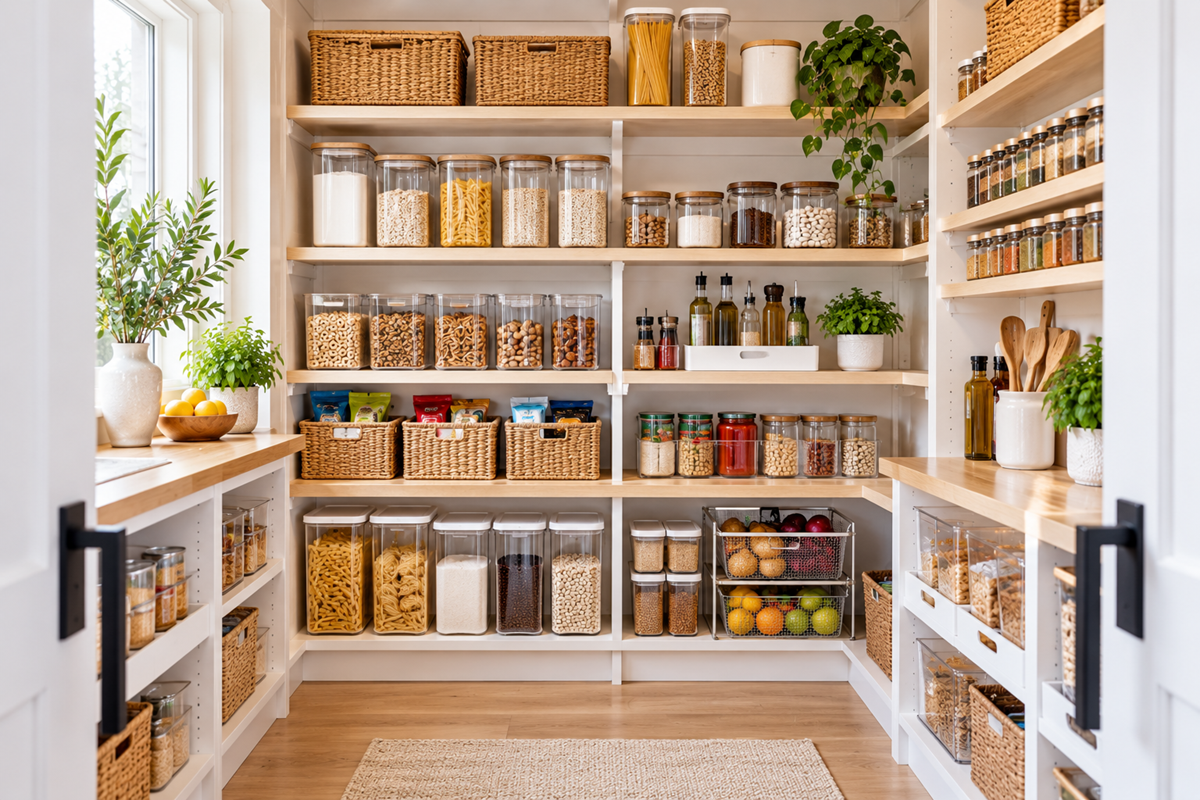
Clear containers can make a pantry easier to scan and can help protect dry food after the original packaging has been opened.
However, transferring every product into matching containers is not necessary.
Good candidates for containers
- Flour
- Sugar
- Rice
- Pasta
- Oats
- Cereal
- Nuts
- Frequently used baking ingredients
Choose food-safe containers with lids that fit properly. Before transferring food, make sure the container is clean and completely dry.
Do not mix new food with old food without checking both products first. Keeping date information can also be useful, especially for products that are stored for long periods.
Use Labels Where They Help
Labels can make a pantry easier to maintain, especially when several people use the same kitchen.
They are most useful on containers, baskets, and shelves where the contents are not immediately obvious.
You do not need to label every object. Too many labels can make a simple system feel unnecessarily complicated.
For dry food transferred out of its original packaging, consider keeping the product name and relevant date information available.
Make Better Use of Pantry Shelves
Pantry shelves often waste vertical space because products come in many different heights.
Use shelf risers
Shelf risers create an extra level for cans, jars, or small packages. They can also make items at the back easier to see.
Add baskets or bins
Baskets work well for grouping smaller packages such as snacks, baking supplies, or packets that would otherwise fall over.
Use deep shelves carefully
Deep shelves can hide products. Removable bins or trays allow you to pull out a group of items instead of reaching behind everything else.
Leave some empty space
A pantry that is completely full is difficult to use. Leaving a little room makes it easier to see products and put groceries away.
How to Organize Canned Food
Cans can quickly fill a pantry shelf because they are heavy and often look similar.
Group them by type, such as vegetables, beans, tomatoes, soups, and fish.
A tiered shelf can make labels easier to see. Another option is to keep cans in shallow rows, with newer purchases placed behind older ones.
This simple rotation helps you use older products first.
Avoid stacking cans too high if the stack becomes unstable or difficult to access.
How to Store Spices Efficiently
Spices are easier to use when labels are visible and containers are not hidden behind several rows.
A tiered spice shelf, rotating organizer, shallow drawer, or narrow rack can help depending on the available space.
Keep the spices you use most often in the easiest position to reach.
Review them periodically. Old spices may lose aroma and flavor over time, so there is little benefit in keeping containers you no longer use.
Create a Practical Snack Zone
A dedicated snack zone can prevent small packages from spreading throughout the pantry.
Use one or two baskets for crackers, bars, nuts, dried fruit, or other regularly used snacks.
If individual packages are kept in a larger box, removing the outer box can sometimes save space, but only if the remaining packages still contain the information you need.
Keep healthier or more frequently chosen snacks in an easy-to-see location if that fits your household routine.
Small Pantry Organization Ideas
A small pantry benefits from the same basic principle as a small kitchen: every storage area should have a clear purpose.
Use vertical space
Shelf risers, stackable bins, and narrow organizers can help use empty space between shelves.
Use the back of the door
If the door design allows it, a lightweight door-mounted organizer can hold small packets, wraps, or other light items.
Choose narrow containers
In compact pantries, very wide baskets can waste space. Narrow bins often make it easier to create separate categories.
Avoid oversized bulk purchases
Bulk buying only saves money if you have enough storage and will use the products before their quality declines or they expire.
If your entire kitchen is short on storage, see our guide on how to organize a small kitchen for maximum storage.
Common Pantry Organization Mistakes
Buying containers before measuring
Measure your shelves before buying baskets or containers. Attractive organizers are not useful if they waste space or prevent the door from closing.
Making too many categories
A pantry should be easy to understand. If every small item has its own category, the system can become difficult to maintain.
Hiding food behind other food
Products that cannot be seen are easy to forget. Try to keep labels visible or use bins that can be pulled out.
Ignoring expiration dates
Organization is not only about appearance. A regular date check can reduce waste and prevent old products from accumulating.
Overfilling the pantry
A completely packed pantry makes it harder to see what you already own and encourages duplicate purchases.
Using decorative storage that is inconvenient
Choose organizers because they solve a real problem, not simply because they look good in photographs.
How to Keep a Kitchen Pantry Organized
A pantry stays organized when the system is simple enough to maintain during normal daily life.
Return products to the same general category after use and place new groceries behind older versions of the same product when practical.
Before grocery shopping, quickly check the pantry so you do not buy items you already have.
Every few weeks, look for empty packaging, expired products, and items that have migrated into the wrong category.
You do not need to empty the entire pantry every time. Small, regular adjustments are usually enough.
Frequently Asked Questions
What is the best way to organize a kitchen pantry?
Group similar foods together, keep frequently used products within easy reach, and use baskets or containers only where they make items easier to find.
What should go on the top pantry shelf?
Top shelves are usually best for lightweight items that are used less frequently, such as seasonal baking supplies, extra paper products, or specialty foods.
What should go on lower pantry shelves?
Lower shelves are generally suitable for heavier products, bulk items, beverage packs, and larger containers.
Are clear containers better for pantry storage?
Clear containers can make contents easy to see, but they are not required for every product. Use them where they improve storage, freshness, or convenience.
How do I organize a pantry with deep shelves?
Use pull-out bins, trays, or baskets so that items at the back can be reached without moving everything in front.
How often should I reorganize my pantry?
A complete reorganization is rarely necessary if you perform small checks regularly. Reviewing the pantry before grocery shopping and doing a deeper clean every few months is usually sufficient.
Create a Pantry System You Can Maintain
Knowing how to organize a kitchen pantry is less about creating a perfect display and more about making food easy to see, reach, and use.
Start with simple categories, place frequently used products in convenient locations, and add containers or organizers only when they solve a specific problem.
A practical pantry can save time during meal preparation, reduce duplicate purchases, and make it easier to keep track of the food you already have.
If you are also improving cabinet storage, our guide to kitchen cabinet organization ideas includes additional ways to maximize kitchen storage.