Kitchen Cabinet Organization Ideas: How to Maximize Storage Space
Whether you have a large kitchen or limited storage, the following ideas can help you organize your cabinets, reduce clutter, and make frequently used items easier to reach.
Start by Emptying the Cabinets
Before buying organizers or moving shelves, empty one cabinet at a time. This gives you a clear view of the available space and makes it easier to decide what should stay.
Check food expiration dates, damaged containers, duplicate utensils, and items you rarely use. If something has been sitting untouched for years, it probably should not occupy one of the easiest-to-reach shelves.
While the cabinet is empty, wipe down the shelves and check whether adjustable shelves can be moved. Even a small change in shelf height can create enough room for another storage level.
Try to keep only items that are useful, regularly used, or genuinely worth storing. Good organization becomes much easier when cabinets are not overcrowded.
Create Practical Storage Zones
One of the most effective kitchen cabinet organization ideas is to divide the kitchen into functional zones.
Items should ideally be stored close to where they are used. This reduces unnecessary movement while cooking and makes it easier for everyone in the household to return things to the correct place.
- Cooking zone: pots, pans, cooking utensils, oils, and frequently used spices.
- Preparation zone: mixing bowls, cutting boards, knives, measuring cups, and baking tools.
- Serving zone: plates, bowls, glasses, mugs, and serving dishes.
- Food storage zone: containers, reusable bags, wraps, and lunch boxes.
- Cleaning zone: dishwashing supplies, cleaning products, sponges, and trash bags.
Creating zones is particularly useful in busy kitchens because it makes the storage system easier to understand and maintain.
How to Organize Upper Kitchen Cabinets
Upper cabinets are best suited to lightweight items that you use regularly. Plates, glasses, mugs, bowls, and dry food are usually good candidates.
Keep everyday items within easy reach
Frequently used dishes should normally stay on the lower shelves of upper cabinets. Reserve the highest shelves for seasonal dishes, specialty glasses, or items used only occasionally.
Add shelf risers
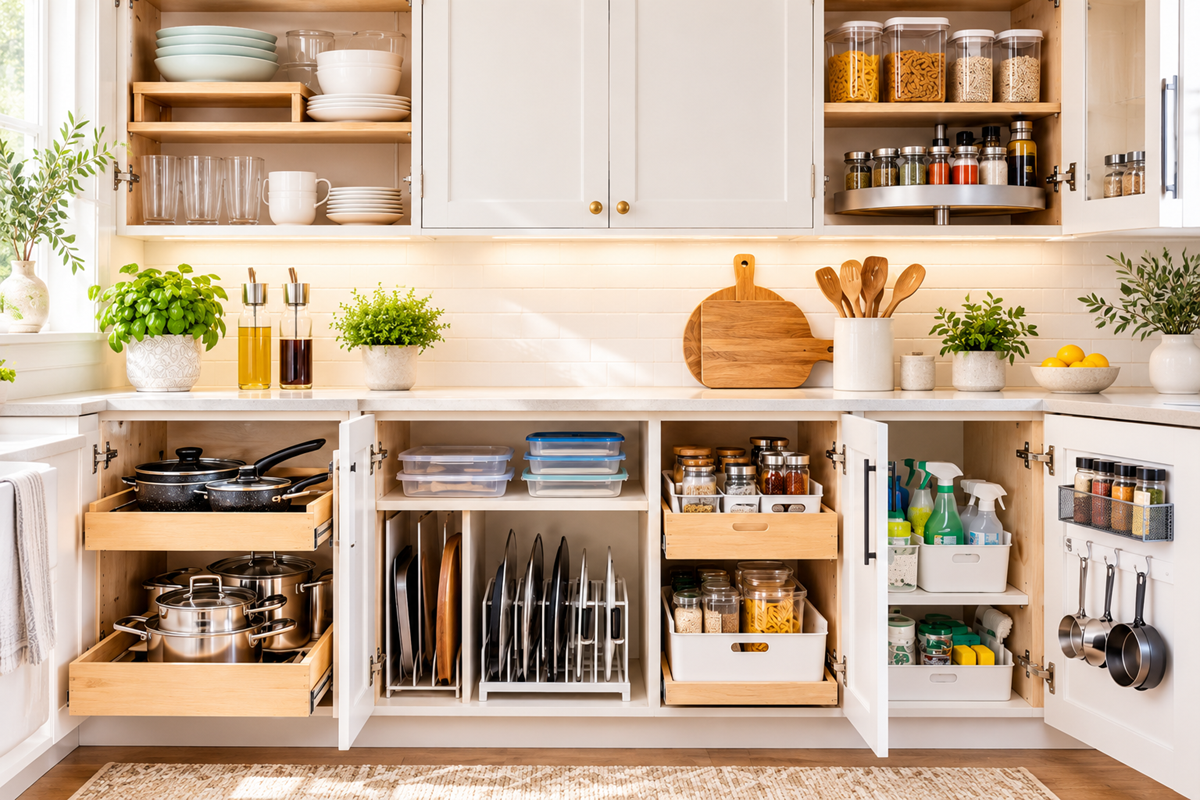
A shelf riser creates another level inside a tall cabinet. This can prevent plates, bowls, or mugs from being stacked too high.
Instead of lifting several dishes every time you need something from the bottom, you can separate categories into individual levels.
Use the full depth carefully
Deep cabinets can hide items at the back. Avoid placing small objects behind larger ones unless you use a pull-out basket or tray that makes them easy to access.
For pantry-style cabinets, grouping similar items in removable bins can make deep shelves much easier to manage.
Make Better Use of Lower Cabinets
Lower cabinets usually provide more space, but they can also become cluttered quickly because items are harder to see.
They are often the best place for cookware, larger mixing bowls, appliances, and heavier kitchen equipment.
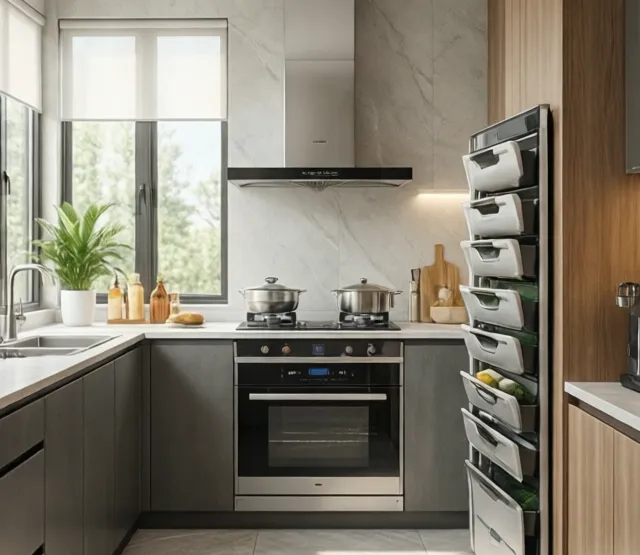
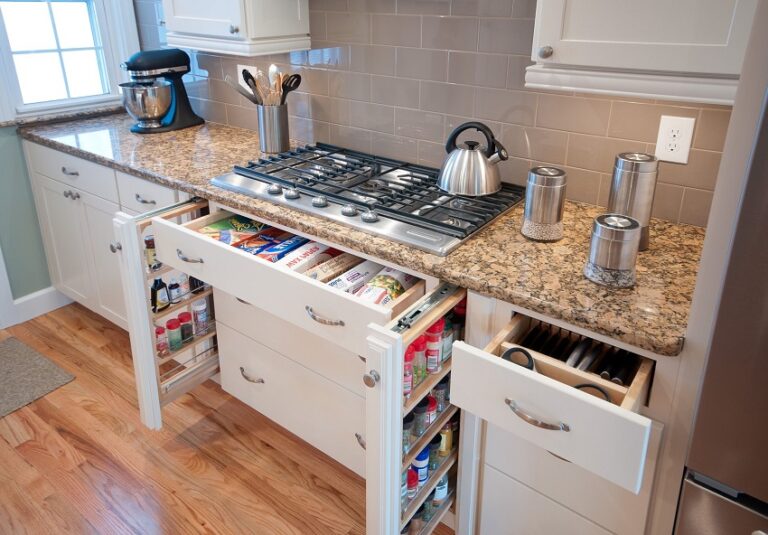
Use pull-out organizers
Pull-out shelves or baskets allow you to reach items stored at the back without removing everything in front of them.
This is especially useful for deep cabinets containing pots, appliances, food products, or cleaning supplies.
Store heavy items low
Heavy cookware and small appliances should generally be stored in lower cabinets. This reduces the need to lift bulky objects above shoulder height.
If you use an appliance frequently, try to keep it near the front of the cabinet instead of behind rarely used equipment.
How to Organize Corner Kitchen Cabinets
Corner cabinets often provide a surprising amount of storage, but much of that space can be difficult to reach.
A rotating organizer, commonly called a lazy Susan, can make jars, spices, oils, or small containers easier to access.
For larger corner cabinets, pull-out corner systems can bring stored cookware toward the cabinet opening.
If you do not want to install additional hardware, use the least accessible part of a corner cabinet for items you only need occasionally. Keep everyday equipment closer to the door.
Store Pots and Pans Efficiently
Pots, pans, and lids can consume a large amount of cabinet space when they are simply stacked together.
Nest cookware by size
When possible, place smaller pots inside larger ones. Use protective separators if you are concerned about scratching nonstick or delicate surfaces.
Store lids vertically
A vertical lid organizer can keep lids from sliding around the cabinet. Similar racks can also work for frying pans, baking sheets, and cutting boards.
Use cabinet doors carefully
The inside of a cabinet door can sometimes hold lightweight lids or small accessories. Before adding an organizer, make sure there is enough clearance for the door to close properly.
Organize Plates, Bowls, and Glasses
Everyday dishes should be among the easiest items to access in the kitchen.
Keep plates and bowls close to the dishwasher or drying area if possible. This makes unloading much quicker.
Group similar items together instead of mixing plates, serving bowls, mugs, and glasses on the same shelf.
If shelves are unusually tall, shelf risers can create additional storage without requiring permanent cabinet modifications.
Try not to stack too many heavy plates in one pile. Smaller stacks are easier to use and place less pressure on the dishes at the bottom.
Organize Food Storage Containers and Lids
Food containers are one of the most common sources of cabinet clutter.
Start by matching every container with its lid. Recycle or repurpose containers that no longer have a matching lid, are badly stained, cracked, or warped.
Stack containers by shape and size. Store lids separately in a vertical organizer, shallow basket, or dedicated drawer.
If you own many different container systems, consider gradually standardizing them. Containers that share similar dimensions usually stack more efficiently.
Improve Storage Under the Kitchen Sink
The cabinet under the sink can be difficult to organize because plumbing occupies much of the available space.
Instead of trying to fill every inch, focus on keeping frequently used cleaning supplies accessible.
- Use small baskets to group cleaning products.
- Keep dishwasher tablets or supplies in a closed container.
- Use a narrow organizer around pipes.
- Store trash bags together in one basket or holder.
- Avoid keeping unnecessary products that you rarely use.
Check occasionally for moisture or leaks. Keeping the space reasonably uncluttered makes plumbing problems easier to notice.
If you have children or pets, cleaning products should be stored according to their safety instructions and in a location that prevents unintended access.
Kitchen Cabinet Organization Ideas for Small Kitchens
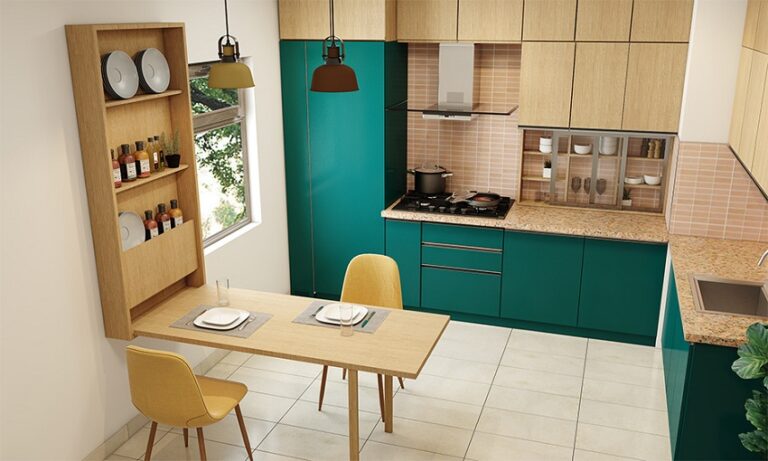
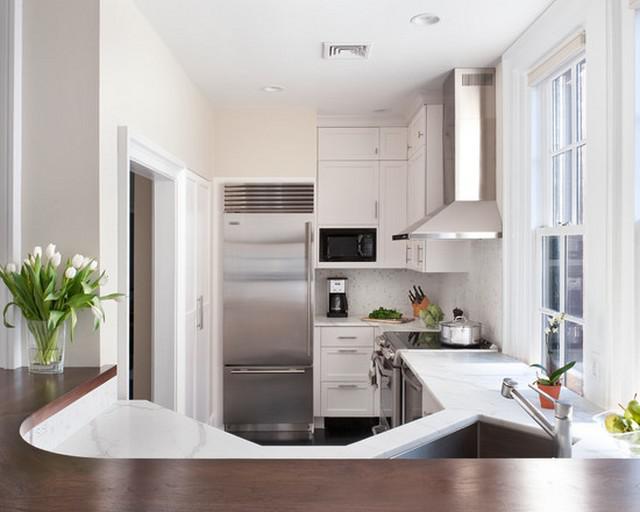
In a small kitchen, every shelf matters. The goal is not simply to fit more items inside cabinets but to make the available space easier to use.
Use vertical space
Add shelf risers, vertical racks, or stackable organizers where cabinet height would otherwise be wasted.
Use cabinet doors
Lightweight organizers mounted inside cabinet doors can provide storage for small items, provided they do not interfere with shelves or hinges.
Choose multi-purpose kitchenware
Items that serve several purposes can reduce the amount of equipment you need to store. Large collections of highly specialized gadgets can quickly overwhelm a small kitchen.
Move rarely used items elsewhere
Holiday dishes, large serving platters, and specialty appliances do not necessarily need to occupy prime kitchen storage all year.
If you are working with limited space, you may also find useful ideas in our guide to organizing a small kitchen for maximum storage.
Common Kitchen Cabinet Organization Mistakes
Even attractive storage systems can become inconvenient if they make everyday items harder to use.
Buying organizers before measuring
Measure the width, height, and depth of cabinets before purchasing bins, racks, or pull-out systems. An organizer only saves space if it actually fits correctly.
Overfilling every shelf
A completely full cabinet may technically hold more items, but it becomes difficult to use. Leave enough space to remove and replace things without rearranging half the shelf.
Keeping rarely used items in prime locations
The easiest shelves should be reserved for things you use often. Seasonal and specialty items can be stored higher or farther back.
Creating too many complicated categories
A storage system should be simple enough that everyone in the household understands it. If putting something away requires too much thought, the system probably will not last.
Ignoring cabinet dimensions
Different cabinets require different solutions. A system designed for a shallow upper cabinet may not work well in a deep lower cabinet.
How to Keep Kitchen Cabinets Organized
The best organization system is one that requires very little maintenance.
Return items to the same location after use and avoid adding new kitchenware without considering where it will be stored.
Every few months, check cabinets for duplicate items, expired food, unused gadgets, or containers that are no longer needed.
You do not need to reorganize the entire kitchen at once. Reviewing one or two cabinets at a time is usually enough to keep clutter under control.
It can also help to adjust the system when your habits change. A cabinet layout that worked several years ago may no longer suit the way you cook today.
Frequently Asked Questions
What is the best way to organize kitchen cabinets?
Start by grouping similar items together and storing them close to where they are normally used. Keep everyday items within easy reach and reserve less accessible shelves for things you use occasionally.
How can I create more space in kitchen cabinets?
Shelf risers, vertical dividers, pull-out baskets, door-mounted organizers, and stackable containers can help use available cabinet space more efficiently.
What should go in upper kitchen cabinets?
Upper cabinets are usually suitable for lighter items such as plates, glasses, mugs, bowls, food products, and other frequently used kitchen essentials.
What should be stored in lower cabinets?
Lower cabinets are generally better for heavier items such as pots, pans, mixing bowls, small appliances, and larger kitchen equipment.
How do I organize very deep kitchen cabinets?
Use pull-out baskets, trays, or removable bins so that items stored at the back can be reached without emptying the entire cabinet.
Should every cabinet have an organizer?
No. Organizers are useful only when they solve a specific storage problem. In some cabinets, simply grouping items logically and adjusting shelf height is enough.
Create a Kitchen Cabinet System That Works for You
The most useful kitchen cabinet organization ideas are the ones that match the way you actually use your kitchen. A beautifully arranged cabinet is not very helpful if everyday items are difficult to reach.
Start with the cabinets that cause the most frustration, remove what you no longer need, and create simple storage zones. Small improvements such as shelf risers, dividers, bins, and better placement can make a noticeable difference without requiring a complete kitchen renovation.
Once everything has a logical place, keeping the kitchen organized becomes much easier.