Practical laundry room ideas
A practical laundry room can make one of the most repetitive household tasks considerably easier. The key is not having a large room, but using the available space effectively with a sensible appliance layout, accessible storage, durable materials, good lighting, and enough room to sort, dry, and fold clothes.
Whether you have a dedicated utility room, a laundry closet, or a washing machine installed in a bathroom or kitchen, the same planning principles apply. Water, drainage, electricity, ventilation, appliance clearances, and daily workflow should be considered before decoration.
These practical laundry room ideas cover large and small layouts, storage, work surfaces, drying solutions, moisture control, lighting, noise, and appliance safety.
Explore related guides:
Small Apartment Design Ideas •
Small Apartment Furniture Ideas •
Home Cleaning Hacks
Plan Around Your Laundry Routine
Before choosing cabinets, baskets, or wall colors, consider every stage of your normal laundry routine:
- collecting dirty clothes;
- sorting loads;
- treating stains;
- washing;
- drying;
- folding or ironing;
- returning clean items to storage.
An efficient laundry area reduces unnecessary carrying, bending, and movement between unrelated surfaces. Products, baskets, hangers, and folding space should be close to the stage where they are used.
Identify the Main Problems
Common difficulties include:
- nowhere to place a laundry basket;
- insufficient space to fold clothes;
- detergent stored too far from the washer;
- no place to hang delicate garments;
- poor lighting for checking stains;
- appliance doors blocking the pathway;
- excessive humidity or slow drying;
- noise transmitted to nearby rooms.
Resolve the problems that interrupt the routine most often before adding decorative features.
Measure the Appliances Carefully
Use the complete appliance dimensions, including doors, hoses, plugs, controls, exhaust connections, and manufacturer-required clearances.
Front-loading doors need enough room to open without hitting cabinets, walls, baskets, or each other. Top-loading machines need sufficient clearance above the lid.
Choose the Right Location for a Laundry Area
The best location is normally the one that fits naturally into the household routine and provides suitable access to water, drainage, electricity, and ventilation.
Possible locations include:
- near bedrooms or a dressing area;
- next to a bathroom;
- inside a hallway or utility closet;
- in or near the kitchen;
- in a basement;
- inside a dedicated utility or mudroom.
Consider How Far Laundry Must Travel
A location near bedrooms reduces the distance required to carry clothes and bedding. A laundry area near the entrance or kitchen may work better when it also stores cleaning equipment, outdoor clothing, or pet supplies.
Check Services Before Finalizing the Location
Confirm access to:
- appropriate water connections;
- suitable drainage;
- the required electrical supply;
- gas where an approved gas appliance is proposed;
- dryer exhaust or room ventilation where required;
- safe installation and service access.
Installing appliances in a new location may require plumbing, electrical, ventilation, fire-safety, or building approval. Use appropriately qualified professionals where required.

Protect the Laundry Room Against Moisture and Leaks
Washing machines combine water, vibration, electricity, and considerable weight. Floors, cabinetry, connections, and surrounding finishes need to be suitable for these conditions.
Possible precautions include:
- water-resistant flooring suitable for the substrate;
- a compatible appliance drain pan where appropriate;
- easy access to water shutoff valves;
- periodic inspection of visible hoses and connections;
- a leak detector or automatic shutoff system where suitable;
- appropriate protection around a utility sink.
Keep Shutoff Valves Accessible
Cabinets and worktops should not make the water valves difficult to reach in an emergency. Leave enough access to inspect connections and service the appliance.
Choose Flooring Carefully
Ceramic or porcelain tile approved for flooring can work well, but resilient products, sealed concrete, and other suitable materials may also be considered.
Check slip resistance, joints, transitions, cleaning requirements, and compatibility with the existing floor construction.
Plan More Carefully on Upper Floors
Where appliances are installed above finished rooms, leak protection, vibration, drainage, and structural support require particular attention.

Practical Laundry Room Ideas for Small Spaces
A separate room is not essential. A closet, hallway niche, bathroom corner, or section of cabinetry may provide enough space when the layout is planned carefully.
Use Vertical Space
Shelves and cabinets above the appliances can provide useful storage without occupying more floor area. Leave the clearances needed for controls, connections, ventilation, and future service.
Add a Narrow Side Cabinet
A slim pull-out or shallow cabinet may hold detergents, stain-treatment products, hangers, and smaller accessories.
Use a Wall-Mounted Drying Rack
A folding rack can provide temporary drying space and close against the wall when it is not needed.
Add a Pull-Out Work Surface
A shelf concealed inside a cabinet can provide temporary space for folding or sorting. Check its load capacity and make sure it does not block the main pathway when open.
Use Doors Carefully
Doors can hide a compact laundry area, but they must not interfere with appliance ventilation, exhaust, controls, hoses, or required clearances.

Choose a Light but Practical Color Scheme
Laundry rooms are often compact and receive limited natural light. Warm white, beige, pale gray, soft green, or muted blue can help the space feel brighter and less enclosed.
The room does not need to be entirely white. Stronger colors can be introduced through:
- cabinet fronts;
- baskets and containers;
- a selected wall;
- washable wallpaper;
- artwork;
- hardware and lighting.
Consider Maintenance
Very dark glossy surfaces may show lint, dust, water marks, and fingerprints. Highly textured walls can also be more difficult to clean.
Choose paints, wallpaper, and cabinet finishes suitable for the room’s humidity and normal cleaning requirements.

Add a Countertop for Folding and Sorting
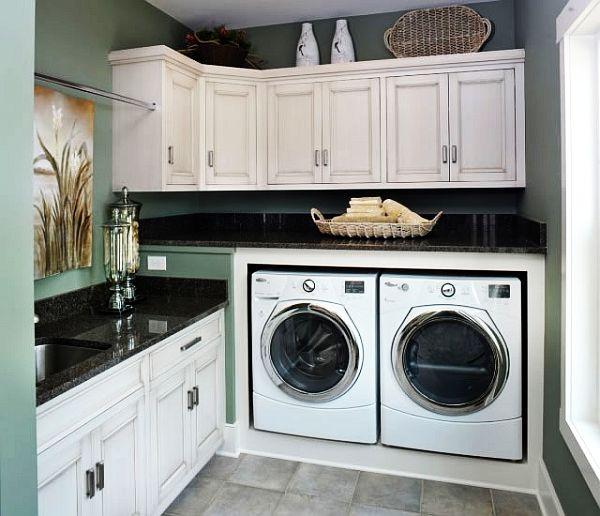
A work surface is one of the most useful additions to a laundry room. It provides a dedicated place to fold clothes, sort loads, treat stains, and temporarily hold baskets.
Countertop Above Front-Loading Machines
A worktop above side-by-side front loaders makes use of otherwise empty space. It should be supported appropriately rather than resting directly on the appliance housings.
Allow for vibration, ventilation, connections, movement, and future appliance removal.
Wall-Mounted Folding Surface
A folding worktop can be useful in a narrow room. It should be fixed to a suitable structure and positioned so that it does not block appliance doors or the main pathway.
Mobile Laundry Cart
A narrow rolling cart can provide storage and temporary folding space while remaining movable for cleaning or maintenance access.

Make Laundry Storage Easy to Reach
Cabinets keep detergents and cleaning products out of sight, while open shelves make frequently used items easier to reach. A combination of both usually works better than relying on only one type of storage.
Useful options include:
- closed wall cabinets;
- open shelves for frequently used supplies;
- pull-out laundry hampers;
- drawer organizers;
- wall hooks;
- a hanging rail;
- small labeled containers;
- tall storage for ironing and cleaning equipment.
Store Products Near Their Point of Use
Keep everyday detergent and stain products near the washing machine while reserving higher or deeper storage for less frequently used supplies.
Combine Different Storage Types
Laundry baskets, hangers, cleaning products, ironing equipment, clothespins, and household supplies have different storage requirements. One type of cabinet will not suit everything.
Use Separate Hampers
Several compartments can simplify sorting by color, fabric type, or household member. Keep the system simple enough that everyone in the household will use it.
Store Products Securely
Laundry detergents, packets, bleach, and stain treatments should remain in their original labeled containers and be stored securely away from children and pets.


Stack the Washer and Dryer When Space Is Tight
A compatible stacked arrangement can free floor space for a utility sink, cabinet, folding surface, or drying rack.
Use an Approved Configuration
Only stack appliances when the manufacturer permits the combination. Use the correct stacking hardware rather than placing one machine directly on another.
Check Access to Controls
Make sure the upper controls, detergent compartments, lint filter, and appliance door remain comfortable and safe to reach.
Allow for Ventilation and Service
Do not enclose the stack so tightly that required clearances, vents, hoses, electrical connections, or service access become obstructed.
Check the Floor and Installation
The floor needs to support the appliances and resist vibration. Both machines should be installed and leveled according to their instructions.

Create Space for Air-Drying Clothes
Not every garment should be placed in a dryer. A practical laundry room needs somewhere for delicates, knitwear, sportswear, and other items requiring air-drying.
Possible solutions include:
- a hanging rail beneath a cabinet;
- a fold-down wall rack;
- a ceiling-mounted drying rack;
- a retractable line;
- a removable flat-drying mesh rack.
Position Wet Laundry Carefully
Wet clothes should not drip onto appliance controls, electrical outlets, unsuitable cabinetry, or flooring that can be damaged by moisture.
Provide Ventilation
Drying clothes indoors adds moisture to the air. Use suitable ventilation or dehumidification and investigate persistent condensation, dampness, or musty odors.
Improve Laundry Room Lighting
Good lighting is important when sorting colors, checking stains, reading care labels, and folding clothes.
General Lighting
A ceiling fixture should illuminate the entire room without leaving the appliance fronts or floor in deep shadow.
Task Lighting
Under-cabinet or wall-mounted lighting can illuminate a worktop, sink, or stain-treatment area.
Use Clear, Neutral-Looking Light
Lighting that renders colors clearly makes it easier to distinguish fabrics and inspect stains. Strongly colored or excessively warm light may alter how materials appear.
Avoid Reflections
Glossy appliance fronts and worktops can reflect exposed lamps. Diffused fixtures and careful placement can provide clear light without uncomfortable glare.

Hide Equipment You Do Not Use Every Day
Ironing boards, drying racks, cleaning tools, hangers, and laundry accessories can create visual clutter when they do not have dedicated storage.
Fold-Down Ironing Board
A wall-mounted or cabinet-integrated ironing board remains accessible without permanently occupying floor space.
Tall Utility Cabinet
A narrow full-height cabinet can store a vacuum cleaner, mop, ironing board, and other long household equipment.
Pull-Out Accessories
Pull-out hanging rails, baskets, and shelves can use narrow gaps efficiently, provided their hardware is suitable for the anticipated load.
Maintain Appliance Access
Storage should not block electrical panels, water valves, ventilation grilles, drains, or the space needed to remove an appliance.

Give the Laundry Room Some Character
A utility room does not need to look purely functional. Paint, suitable wallpaper, artwork, shelving, cabinet color, or a restrained pattern can make it feel like a considered part of the home.
Choose Moisture-Appropriate Finishes
Wall coverings and paint need to suit the room’s humidity and cleaning requirements. Surfaces near a sink, washer connection, or wet clothing may require more protection.
Keep Decoration Clear of Work Areas
Artwork and accessories should not reduce folding space, block ventilation, or make shelves difficult to clean.
Use One Main Decorative Idea
A colored cabinet, patterned wall, distinctive floor, or attractive storage system may provide enough character. Several competing features can make a small room feel crowded.

Create a Multifunctional Laundry and Utility Room
If the room has enough space, it can support several compatible household activities.
It may also provide storage for:
- shoes and coats;
- cleaning supplies;
- pet accessories;
- household tools;
- sports equipment;
- recycling and waste sorting.
Separate Clean and Dirty Functions
Avoid folding clean laundry on a surface used for muddy shoes, pet care, tools, or waste sorting. Create distinct storage and work zones where possible.
Keep Pathways and Equipment Accessible
Appliances, water valves, electrical panels, ventilation equipment, and doors must remain accessible even when the room stores several categories of household items.
Use Clear Storage Categories
Labels and dedicated cabinets can prevent pet supplies, tools, cleaners, sports items, and laundry products from becoming mixed together.

Turn a Closet Into a Laundry Nook
A sufficiently sized closet can become a discreet laundry area, particularly in an apartment or small home.
Use the Space Above the Appliances
Shelves or cabinets can hold laundry products and baskets, provided they do not block connections, controls, ventilation, or service access.
Check Door Clearances
Closet doors and appliance doors should operate without colliding. Bi-fold, sliding, or opening doors each need different clearances.
Plan Ventilation
Enclosing appliances can trap heat and moisture. Follow the installation requirements for the washer, dryer, closet, and building ventilation.
Do not assume appliances can operate safely behind closed cabinet doors unless the product and installation instructions explicitly permit it.
Control Noise
Closet doors may reduce some audible noise but do not correct vibration caused by an unstable floor, incorrect leveling, or an unbalanced appliance.

Laundry Appliance Safety and Maintenance
Washers and dryers involve water, electricity, heat, moving components, and—in some installations—gas and exhaust ducts. Follow the instructions for the exact appliances and applicable local requirements.
Use the Correct Electrical Connection
Major appliances should use the electrical connection specified by the manufacturer. Avoid unsuitable extension cords, overloaded outlets, and cables positioned where they can be crushed or exposed to water.
Inspect Water Connections
Keep shutoff valves accessible and check visible hoses, connections, and the surrounding floor periodically. Address leaking, corrosion, bulging hoses, or other damage promptly.
Maintain the Dryer Lint System
Clean the dryer lint filter according to the appliance instructions, normally before or after every cycle. Periodically inspect the area behind and around the dryer for lint accumulation.
For a vented dryer, keep the exhaust path clear and arrange inspection or cleaning at appropriate intervals. Damaged, crushed, or obstructed ducts can reduce performance and create a fire risk.
Keep Combustible Materials Away
Do not allow cardboard, clothing, rubbish, cleaning supplies, or other combustible materials to accumulate around a dryer or other heat-producing equipment.
Store Laundry Products Safely
Keep detergent, bleach, stain treatments, and laundry packets in their original labeled containers and away from children and pets.
Investigate Unusual Operation
New vibration, repeated imbalance, leaking, grinding, burning odors, excessive heat, or substantially longer drying times may indicate a problem requiring inspection.
Use Professional Installation Where Required
Electrical, gas, plumbing, drainage, and exhaust work may require an appropriately qualified professional. Incorrect installation can cause leaks, electrical hazards, fire risks, or poor appliance performance.
Common Laundry Room Design Mistakes
Planning Cabinets Before Choosing Appliances
Appliance dimensions, door movement, controls, connections, ventilation, and service access affect the entire cabinet layout.
Forgetting the Open Door Dimensions
A machine may fit the niche but block the passage when its door is open. Test the complete movement on the room plan.
Stacking Incompatible Appliances
Only stack washer and dryer combinations approved by their manufacturer and use the specified hardware.
Leaving No Folding Surface
Without an appropriate worktop, clean laundry often moves to a bed, sofa, or dining table. Even a small pull-out shelf can improve the routine.
Ignoring Air-Drying
A design focused entirely on the washer and dryer may leave nowhere for garments that should not be tumble-dried.
Using Only Open Shelves
Rows of bottles, baskets, and cleaning products can make a small room look cluttered. Combine quick-access shelves with closed storage.
Blocking Valves and Connections
Cabinets and countertops should not make emergency shutoff, inspection, or appliance service unnecessarily difficult.
Providing Inadequate Ventilation
Enclosing appliances without considering heat, moisture, exhaust, and required clearances can affect performance and damage the room.
Using One Dim Ceiling Light
Laundry tasks need clear light at the appliances, sink, and folding surface. Add task lighting where cabinets or the user create shadows.
Storing Chemicals Unsafely
Decorative jars and low open shelves may look attractive but can cause confusion or unsafe access. Keep products labeled and secure.
Choosing Appearance Over Maintenance
Delicate wallpaper, deeply textured walls, and difficult-to-clean worktops may be unsuitable near detergent, water, and damp clothing.
Final Thoughts
A good laundry room is defined less by its size than by its organization. A sensible appliance layout, accessible storage, a useful folding surface, drying space, effective lighting, and appropriate ventilation can make even a compact laundry closet easier to use.
Start with the problems that slow the routine down most—lack of storage, nowhere to fold clothes, poor lighting, inadequate drying space, or awkward appliance access—and improve those first.
Plan water, drainage, electricity, ventilation, appliance clearances, and maintenance access before cabinetry and decoration. Once those essentials are resolved, color and finishing details can make the laundry area feel like a considered part of the home.