Home Hacks: Useful Tips for Clean Rooms
A clean home does not always require hours of work or an exhausting weekend cleaning session. Small, repeatable habits often make the greatest difference because they prevent clutter, dust, dishes, and everyday mess from accumulating.
The goal is not to keep every room perfect at all times. A realistic routine should make frequently used areas easier to reset, surfaces quicker to clean, and household items simpler to find.
These practical home cleaning hacks focus on prevention, organization, and short maintenance tasks. They can be adapted to the size of your home, the number of people living there, and the amount of time you have available.
1. Ventilate When Conditions Allow
Fresh outdoor air can reduce stale odors and help remove some pollutants generated by cooking, cleaning, decorating, and other indoor activities.
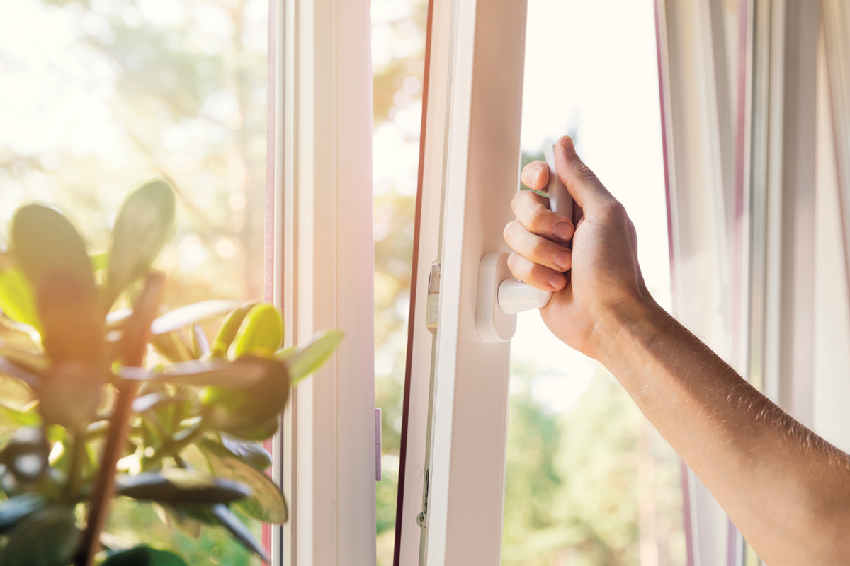
When weather, security, and outdoor air quality permit, briefly opening windows or doors can increase air exchange. Mechanical ventilation and extraction fans should also be used and maintained according to their instructions.
Pay particular attention to:
- bathrooms after bathing or showering;
- kitchens during and after cooking;
- bedrooms after sleeping;
- rooms where laundry is dried indoors;
- areas where cleaning or decorating products are being used.
Opening windows is not always appropriate—for example, during severe outdoor pollution, extreme weather, or unsafe conditions. Adapt ventilation to the building and local environment.
2. Keep Open Surfaces Clear
Tables, worktops, nightstands, shelves, and window sills can make an otherwise clean room look cluttered when unrelated objects collect on them.
You do not need to remove every useful or decorative item. Instead, separate objects that belong on display from things that have been left there temporarily.
Try this simple approach:
- keep only regularly used or intentionally displayed items on open surfaces;
- place incoming paperwork in one dedicated location;
- return chargers, keys, glasses, and tools after use;
- remove empty packaging and rubbish promptly;
- leave some visible space on shelves and tables.
Clear surfaces make a room look calmer and take less time to wipe because objects do not need to be moved repeatedly.
Use a Temporary Collection Basket
When tidying quickly, carry one basket through the room and collect objects that belong elsewhere. Return them at the end of the reset instead of making a separate journey for every item.
Do not leave the basket permanently unsorted, or it will become another form of hidden clutter.

3. Create a Home for Small Items
Keys, remote controls, chargers, pens, receipts, batteries, hair accessories, and other small objects can create more visible clutter than larger belongings.
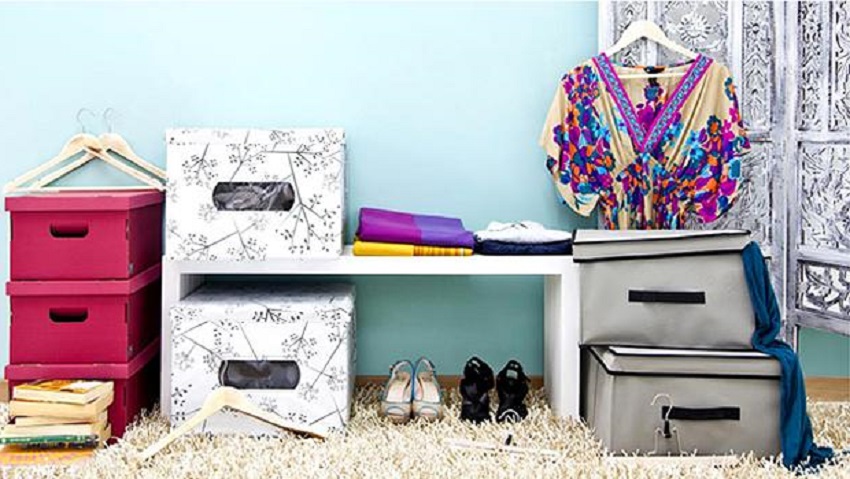
Instead of moving these items from one surface to another, give each category a consistent storage location near the place where it is normally used.
Useful options include:
- a tray or small drawer near the entrance;
- drawer organizers for office and personal items;
- a ventilated container for cables and chargers;
- one place for remote controls;
- a dedicated location for incoming mail;
- labeled boxes for batteries, tools, and spare parts.
Store by Category and Location
Storage is easier to maintain when similar objects remain together. Keep cleaning supplies near the area where they are used when it is safe to do so, work supplies near the desk, and everyday entrance items near the door.
Cleaning products, batteries, medicines, tools, and other potentially hazardous items must be stored securely and away from children and pets.
4. Use a Short Daily Reset
A brief daily reset can prevent small tasks from becoming a major weekly cleanup. It does not need to last an exact number of minutes; consistency matters more than the timer.
A simple evening reset might include:
- returning objects to their storage locations;
- clearing the dining table;
- loading or washing dishes;
- wiping the kitchen worktop;
- removing visible crumbs or debris from a high-traffic area;
- straightening cushions and bedding;
- preparing clothes or essential items for the next day.
Concentrate on the tasks that make the greatest visible or practical difference. There is no need to clean the entire home every day.
Attach the Reset to an Existing Habit
A routine may be easier to remember when it follows an activity that already happens every day, such as finishing dinner or preparing for bed.
Keep the routine small enough that it remains realistic on busy days.
For a more structured approach, see our
daily cleaning routine for a tidy home.
5. Clean in an Efficient Order
A consistent order reduces repeated work. In most rooms, begin by removing rubbish and returning objects to their places before cleaning surfaces.
A practical sequence is:
- remove rubbish and dishes;
- collect misplaced belongings;
- deal with laundry and textiles;
- clean higher surfaces;
- wipe lower surfaces;
- vacuum or sweep the floor;
- mop where appropriate.
Working generally from higher areas toward the floor helps collect fallen dust and debris during the final floor-cleaning step.
Allow Products to Work as Directed
Scrubbing immediately is not always the most efficient method. Apply a suitable product according to its label and allow the stated time before wiping or rinsing.
Do not leave a product on a surface longer than instructed, and test it in an inconspicuous area when compatibility is uncertain.
6. Control Dust Before It Builds Up
Dust is easier to manage when it is removed regularly from the areas where it collects most quickly.
Pay attention to:
- television stands and electronics;
- bedside tables;
- open shelves;
- window sills;
- baseboards;
- tops of cabinets;
- ceiling fans and accessible light fixtures;
- areas beneath furniture.
Use a Method Suitable for the Surface
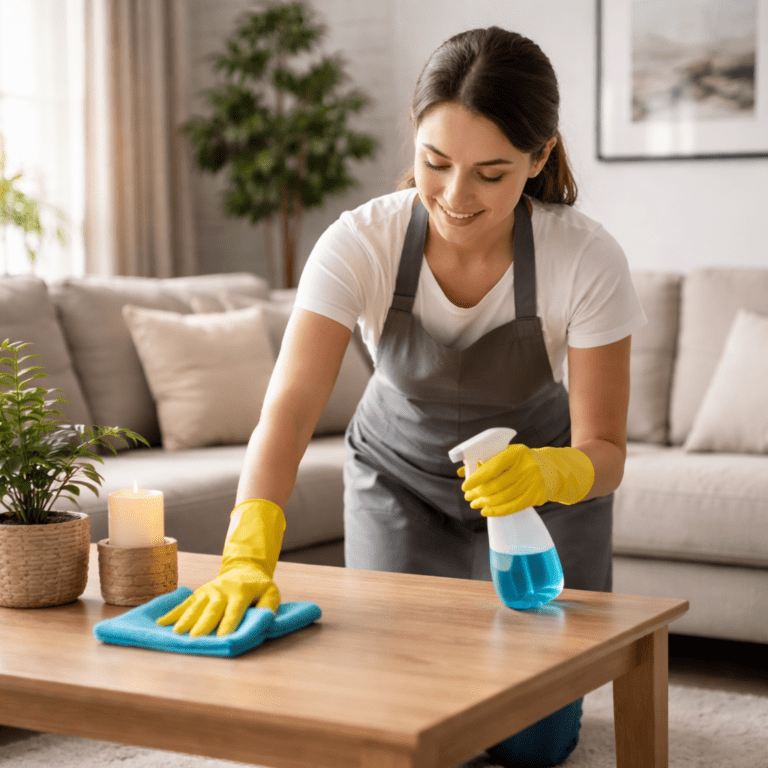
A clean, slightly damp microfiber cloth can collect dust effectively from many hard surfaces. Delicate wood, stone, artwork, screens, and electronic equipment may require different methods.
Follow the manufacturer’s instructions for electronics and special finishes. Avoid spraying liquid directly onto screens, switches, sockets, or electronic devices.
Vacuum Strategically
Frequently used pathways and areas near the entrance may need attention more often than rarely used rooms. Vacuum beneath movable furniture and around edges periodically rather than limiting cleaning to the most visible floor area.
Empty or replace vacuum containers and filters as instructed so the appliance continues to operate effectively.
7. Refresh Household Textiles Regularly
Bedding, curtains, sofa covers, blankets, rugs, and cushions can hold dust, hair, debris, and odors even when the room appears tidy.
Depending on their materials and use:
- wash bedding regularly;
- vacuum rugs and upholstered furniture;
- wash removable cushion and furniture covers when necessary;
- clean curtains according to their care instructions;
- allow damp towels and cleaning cloths to dry properly;
- deal with spills before they become difficult stains.
Read the Care Label First
Do not assume every fabric can be washed, dried, or treated in the same way. Some textiles may shrink, fade, distort, or develop water marks when cleaned incorrectly.
For valuable or delicate upholstery, rugs, and curtains, professional cleaning may be more appropriate than experimenting with household products.
8. Keep the Kitchen Under Control
A kitchen can look untidy quickly because dishes, food packaging, crumbs, and utensils accumulate throughout the day.
A simple evening routine can make the next morning easier:
- load, wash, or put away dishes;
- wipe the worktop with a product suitable for the surface;
- clean fresh spills from the cooktop after it is safe to do so;
- remove food waste when necessary;
- return ingredients and utensils to their places;
- check the floor for visible crumbs or spills.
Clean Spills Promptly
Fresh spills are generally easier to remove than dried residue. Deal with them when the surface and appliance are safe to touch, using the method recommended for that material.
Keep Worktops Functional
Store rarely used appliances elsewhere when possible and leave enough open surface for food preparation. Frequently moving several appliances makes routine wiping more time-consuming.
Review the Refrigerator Regularly
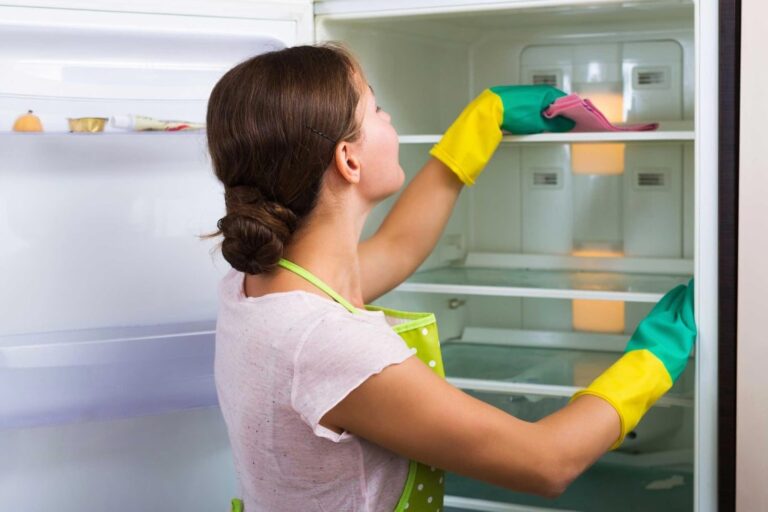
Check for spoiled food, leaking containers, and forgotten leftovers before shopping. Wipe spills when they occur and clean removable parts according to the appliance instructions.
This daily maintenance does not replace periodic deeper cleaning of appliances, cabinets, extraction filters, and difficult-to-reach areas.
9. Use a Quick Bathroom Routine
Bathrooms are easier to maintain when water, soap residue, hair, and clutter are managed before they build up.
Small routine actions include:
- returning toiletries to their storage locations;
- wiping obvious water around the sink;
- hanging towels so they can dry;
- using available ventilation after bathing;
- removing hair and visible debris;
- allowing shower surfaces and curtains to dry where possible.
Address Moisture, Not Just Appearance
Persistent condensation, damp materials, water leaks, and inadequate ventilation should not be treated only as cleaning problems. Identify and address the moisture source.
Use Suitable Products
Bathroom materials may include stone, tile, grout, acrylic, glass, metal, wood, and painted surfaces. A product that is appropriate for one may damage another.
Follow the cleaner and surface manufacturer’s instructions, especially when dealing with natural stone, specialty coatings, and metal finishes.
10. Reset the Bedroom
A bedroom often feels cleaner after a few simple tasks, even when deeper cleaning is scheduled for another day.
A quick reset can include:
- placing clothes in the wardrobe or laundry basket;
- clearing glasses, dishes, and packaging;
- organizing the bedside surface;
- straightening the bed;
- returning books and chargers to their places;
- ventilating when conditions allow.
Keep Storage Easy to Use
Laundry baskets, hangers, drawers, and everyday clothing storage should be accessible. An inconvenient organization system can encourage clothes to collect on chairs or the floor.
Do Not Overload Bedside Tables
Keep only items needed at night or in the morning. A clear bedside surface is easier to dust and can make the entire room appear calmer.
11. Keep the Entryway Tidy
Dirt and clutter often enter the home through the front door. A practical entrance can reduce the amount carried into other rooms.
Consider:
- an effective doormat;
- accessible shoe storage;
- hooks for frequently used coats and bags;
- a tray for keys and small essentials;
- a basket for reusable bags or accessories;
- closed storage for less frequently used items.
Limit What Remains at the Door
Store only current coats, shoes, and accessories near the entrance. Seasonal or rarely used belongings can make a small entryway difficult to maintain.
Clean High-Traffic Flooring More Often
The entrance may require more frequent sweeping or vacuuming than the rest of the home. Removing grit and debris near the door can reduce how far it spreads.
12. Create a Simple Cleaning Schedule
Not every task needs to be completed every day. Dividing work by frequency makes the routine easier to understand and reduces the temptation to postpone everything until the weekend.
Daily or As Needed
- deal with dishes and food spills;
- clear important surfaces;
- return frequently used items;
- manage rubbish and laundry;
- address visible bathroom moisture.
Weekly
- vacuum or clean floors as required;
- clean bathroom fixtures;
- dust commonly used surfaces;
- change or wash bedding as appropriate;
- clean mirrors and frequently touched surfaces.
Periodically
- clean beneath and behind movable furniture;
- review cupboards and storage;
- clean curtains, rugs, and upholstery as required;
- maintain filters and extraction equipment;
- clean appliances according to their instructions;
- inspect areas where moisture or dust tends to accumulate.
The ideal frequency depends on household size, pets, allergies, cooking habits, flooring, local conditions, and how each room is used.
13. Use Household Cleaning Products Safely
Cleaning products should be used only as directed on their labels. More product is not necessarily more effective and can leave residue, damage materials, or increase exposure to irritating chemicals.
- Never mix cleaning products or disinfectants.
- Never combine bleach with ammonia, acids, or other cleaners.
- Use only the amount and dilution stated on the label.
- Provide appropriate ventilation during and after use.
- Wear any protective equipment required by the instructions.
- Check that the product is suitable for the surface.
- Keep products in their original labeled containers.
- Store chemicals securely away from children and pets.
Cleaning and Disinfecting Are Not the Same
Routine cleaning with soap or detergent removes dirt and many germs from surfaces. Additional disinfection may be appropriate in particular circumstances, but it is not necessary for every household surface during every cleaning session.
When a disinfectant is used, follow its instructions, including any required surface preparation, dilution, ventilation, and contact time.
Stop If a Product Causes Symptoms
If using a product causes breathing difficulty, dizziness, significant irritation, or other concerning symptoms, leave the affected area and seek appropriate medical or emergency advice.
For current safety information, consult official public-health guidance and the product label.
14. Common Cleaning Mistakes to Avoid
Waiting Until Everything Is Dirty
Small maintenance tasks are generally easier than one large cleanup. Deal with dishes, spills, and visible clutter before they spread into other areas.
Moving Clutter Instead of Organizing It
Moving objects from one surface to another does not solve the problem. Give regularly used items permanent and accessible storage locations.
Using Too Much Cleaning Product
Excess product may leave residue and require additional rinsing or wiping. Follow the label rather than estimating a stronger concentration.
Mixing Household Cleaners
Combining products can create dangerous fumes or unexpected chemical reactions. Never mix cleaners or disinfectants unless the product instructions explicitly direct you to do so.
Ignoring High-Touch Areas
Handles, switches, remote controls, taps, and frequently used surfaces may need attention even when they do not look visibly dusty.
Cleaning in a Random Order
Tidying first and generally working from higher surfaces toward the floor can reduce repeated effort.
Using One Product on Every Surface
Wood, natural stone, glass, electronics, painted finishes, and upholstery have different requirements. Check compatibility before applying a cleaner.
Buying Too Many Organizers
Containers do not solve clutter when their contents are unnecessary or poorly categorized. Review what you own before purchasing more storage.
Expecting One Routine to Work for Every Home
A household with children, pets, allergies, frequent cooking, or several residents may require a different schedule from a home occupied by one person.
Final Thoughts
Keeping a home clean is often easier when cleaning becomes a series of small habits rather than an occasional major project.
Keep important surfaces clear, give everyday items a consistent place, manage kitchen and bathroom mess promptly, and spend a few minutes resetting the areas used most often.
You do not need a perfectly spotless home. A realistic routine that prevents dirt and clutter from accumulating can make rooms feel cleaner, calmer, and easier to live in throughout the week.