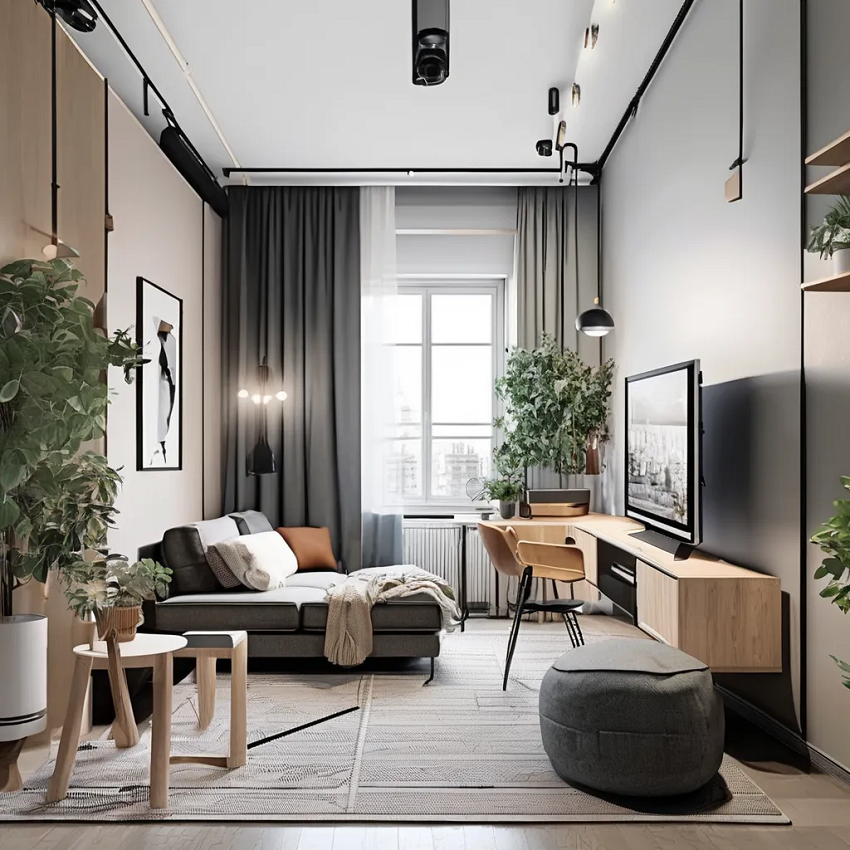
Small Apartment Furniture Ideas: How to Furnish a Small Space
The best small apartment furniture ideas are not simply about buying smaller pieces—they are about using limited space efficiently. A successful layout should provide comfortable seating, useful storage, clear walking paths, and enough flexibility for everyday activities without making the apartment feel crowded.
From the entrance to the bedroom, every piece of furniture should earn its place. Appropriate proportions, multifunctional designs, vertical storage, and careful planning can make a compact apartment feel more organized and comfortable.
This guide explains how to measure the available space, choose furniture for each room, combine dining and working areas, and avoid common mistakes that make small interiors feel unnecessarily cramped.
Explore related guides:
Small Modern Bedroom Designs •
Minimalist Interior Design •
Smart Lighting for Small Apartments
Measure Before Buying Small Apartment Furniture
The most important step comes before you buy anything: measure the apartment carefully. Dimensions shown in a product listing do not reveal how a piece will affect movement, storage access, or the balance of the room.
Record the size of each room as well as the position of:
- doors and their opening direction;
- windows and window sills;
- radiators and heating equipment;
- electrical outlets;
- built-in cabinets;
- structural columns and recesses;
- hallways and narrow passages.
Do not check only whether a sofa, table, bed, or wardrobe physically fits. Consider the space required to walk around it and to open doors, drawers, cabinets, and nearby appliances.
Check the Delivery Route
Measure the entrance door, hallways, staircase, elevator, and any corners through which large furniture must pass. Check whether removable legs, doors, or cushions reduce the delivery dimensions.
A sofa that fits perfectly in the living room is not useful if it cannot enter the apartment.
Mark Furniture Dimensions on the Floor
Use removable tape or sheets of paper to represent the size of proposed furniture. This makes it easier to evaluate pathways, door clearance, and the amount of open floor area that will remain.
Include the full depth of open drawers, dining chairs pulled away from the table, and any extending or folding parts.
Set Your Furniture Priorities
Small apartments rarely have enough space for every piece of furniture that might be useful. Begin with the items required for daily life and add secondary pieces only after the main layout works.
The usual priorities include:
- a comfortable bed;
- appropriate clothing storage;
- seating for the people who live in the apartment;
- a practical table or work surface;
- storage for frequently used belongings.
Your priorities may differ. Someone who works from home may need a proper desk more than a large dining table, while someone who entertains frequently may prefer flexible seating and an extendable table.
Choose Furniture for Real Habits
Do not allocate valuable space to an imagined lifestyle. A large dining table used twice a year, a decorative chair nobody sits in, or an oversized television unit may contribute less than flexible storage or a comfortable workspace.
Furniture should support what happens in the apartment regularly rather than reproduce the arrangement of a much larger home.
Create Storage at the Entrance
In a small apartment, clutter often begins at the front door. Shoes, coats, bags, umbrellas, keys, and deliveries can quickly occupy valuable floor and surface space.
A compact entrance may benefit from:
- a narrow shoe cabinet;
- wall hooks for frequently used coats and bags;
- a small bench with internal storage;
- a wall-mounted shelf for keys and small items;
- a mirror combined with concealed storage;
- a tall cabinet that uses the full wall height.
Keep the Floor as Clear as Possible
Wall-mounted furniture and shallow cabinets can preserve circulation in a narrow entrance. Check that storage does not interfere with the front door, internal doors, or access to electrical panels and other building services.
Combine Open and Closed Storage
A few hooks provide quick access to everyday items, while closed storage hides less frequently used belongings. This combination is usually more practical than either completely open or completely concealed organization.
Avoid allowing open hooks to become permanent storage for every coat and bag. Keeping only current items near the entrance helps the area remain manageable.
Choose Living Room Furniture Carefully
The sofa is normally one of the largest pieces in a small apartment, so its proportions matter more than its style.
Consider the total width and depth rather than relying only on the advertised number of seats. A compact sofa with narrow arms may provide almost the same usable seating as a much larger model with oversized armrests.
Look Beyond the Sofa Width
Deep seating can be comfortable, but it also consumes more floor space and may not suit every person. Check the seat depth, back height, arm width, and space required for reclining mechanisms or a sofa bed.
Do All Furniture Pieces Need to Touch the Walls?
Not necessarily. Pushing every item against a wall can sometimes leave an awkward unused area in the center of the room.
In an open-plan apartment, a sofa can separate the living area from the kitchen or dining space. A narrow console behind it may add storage or create a useful visual boundary.
The priority is comfortable circulation and a coherent arrangement, not following a fixed rule about wall placement.
Replace the Traditional Coffee Table When Necessary
A large rectangular coffee table may occupy too much space in a compact seating area. Alternatives include:
- nesting side tables;
- a small round table;
- a movable C-shaped table;
- a storage ottoman;
- two lightweight tables instead of one large piece.
Rounded designs can be particularly useful in tight circulation areas because they remove projecting corners.
Add Flexible Occasional Seating
Lightweight stools, poufs, and compact chairs can provide extra seating for visitors and move out of the way when they are not needed.
Do not fill the room permanently for the maximum possible number of guests unless that seating is used regularly.
Use Multifunctional Furniture
Furniture that performs more than one function can be extremely useful when floor area is limited.
Practical examples include:
- an ottoman with internal storage;
- a coffee table with drawers or a lift-up surface;
- a sofa bed for occasional guests;
- a dining table that also serves as a desk;
- nesting tables that can be separated when needed;
- a bed with drawers underneath;
- a folding or extendable dining table;
- a desk incorporated into a shelving system.
Make Sure the Second Function Is Practical
A multifunctional piece is valuable only when each function is easy to use. A complicated transforming table that requires moving several objects every day can quickly become inconvenient.
Before purchasing, consider:
- how often it will need to be transformed;
- whether there is enough clearance when it is extended;
- where displaced objects will go;
- whether the mechanism is easy to operate;
- whether it remains comfortable in each configuration.
Avoid Depending on One Piece for Everything
Multifunctional furniture can reduce clutter, but expecting one item to serve too many unrelated purposes often creates compromises. A dining table may work well as a desk, but a coffee table may be unsuitable as a permanent workstation.
Furnish a Small Bedroom Without Overcrowding It
In a compact bedroom, begin with the bed and organize the remaining layout around it. Consider how many people use the bed and whether access is needed from one or both sides.
Leave enough room to enter the bed comfortably and to use wardrobes, drawers, and doors.
Use Compact Bedside Furniture
If conventional nightstands occupy too much space, consider:
- narrow bedside tables;
- floating shelves;
- small wall-mounted cabinets;
- a headboard with integrated storage;
- wall-mounted reading lights.
Wall lights can free the bedside surface, but their placement should suit the height of the mattress and normal reading position.
Consider Under-Bed Storage
A storage bed can provide valuable room for bedding, seasonal clothing, or other items that are not needed every day.
Check how the storage opens and whether there is enough clearance. Drawers need free floor space beside the bed, while a lifting base needs to be easy to operate.
Choose the Wardrobe Layout Carefully
Sliding wardrobe doors can be useful where hinged doors would obstruct movement, but the interior arrangement still needs to match the clothing being stored.
A full-height wardrobe can use space efficiently, with everyday items at accessible levels and less frequently used belongings stored higher.
For more bedroom planning ideas, see
Small Modern Bedroom Designs.
Use Vertical Space for Storage
When floor space is limited, look upward. Tall storage can substantially increase capacity without occupying additional floor area.
Useful vertical solutions include:
- full-height wardrobes;
- tall bookcases;
- wall-mounted shelves;
- storage above a desk;
- high kitchen cabinets;
- cabinets installed above suitable doorways or recesses.
Do Not Fill Every Wall
Using vertical space does not mean covering the entire apartment with open shelving. Too many visible objects can make a compact interior look busy.
A combination of closed cabinets, limited open shelving, and some empty wall area usually creates a calmer result.
Keep Frequently Used Items Accessible
Store everyday belongings at a comfortable height. Reserve the highest shelves for seasonal or rarely used items.
Tall and heavy furniture should be installed and secured appropriately according to its instructions and the wall construction.
Create a Compact Dining and Work Area
Many small apartments do not have enough space for separate dining and home-office areas. One carefully selected table can often support both activities.
Options include:
- a narrow rectangular table placed against a wall;
- a round table for an area with tight circulation;
- an extendable table for occasional guests;
- a wall-mounted folding table or desk;
- a table with integrated storage;
- a desk incorporated into a cabinet or shelving unit.
Choose Chairs That Store Efficiently
Dining chairs that slide completely beneath the table preserve circulation when they are not in use. Stackable or folding chairs may provide additional occasional seating if there is a practical place to store them.
Prioritize Ergonomics for Regular Home Working
If you work from home frequently, use a supportive chair and a work surface at an appropriate height. A sofa or coffee table may be adequate for occasional tasks but is rarely suitable as a permanent workstation.
Consider the position of electrical outlets, charging cables, daylight, screen glare, and task lighting when deciding where to place the work area.
Make It Easy to Change Functions
Provide nearby storage for a laptop, documents, and work accessories so that the table can return to dining use without moving supplies through the entire apartment.
Choose Furniture That Looks Visually Lighter
Furniture does not need to be white or transparent to work in a small apartment. Proportion and visual weight are normally more important than color alone.
Furniture can appear lighter when it has:
- slim or raised legs;
- simple silhouettes;
- limited decorative detailing;
- visible floor beneath it;
- shallow dimensions where practical;
- colors and materials that coordinate with the room.
Balance Open and Solid Furniture
A room filled entirely with heavy cabinets can feel closed, while too many open shelves may look cluttered. Combine visually lighter tables and seating with enough closed storage to keep belongings organized.
Use Dark Furniture Selectively
Dark furniture can work well in a small interior when it is appropriately sized and balanced with the flooring, walls, lighting, and surrounding space.
One dark cabinet or table can add depth and definition. Several bulky dark pieces may feel heavier, particularly in a room with little natural light.
Avoid Matching Sets Automatically
A matching sofa, chairs, tables, and cabinets can make a compact room feel rigid. Compatible pieces with varied shapes or materials often create a more flexible and personal interior.
Use Lighting to Support the Furniture Layout
Good lighting can make a compact apartment more comfortable and prevent corners from feeling dark or disconnected.
Instead of relying only on one central ceiling fixture, combine:
- general ceiling lighting;
- wall-mounted lights;
- floor or table lamps;
- desk and reading lights;
- cabinet or shelf lighting where appropriate.
Use Wall Lights Where Floor Space Is Limited
Wall-mounted fixtures can illuminate reading areas, bedsides, or dining tables without requiring a floor lamp or large side table.
Connect Different Zones With Light
In an open-plan apartment, individual light sources can define the living, dining, and working areas. Keeping the light color and fixture finishes coordinated helps the entire space feel connected.
Avoid Blocking Natural Light
Do not place unnecessarily tall or bulky furniture where it blocks the main source of daylight. Lightweight window treatments and carefully positioned mirrors can help distribute available light, although mirrors should be used for a practical visual purpose rather than added automatically.
See
Smart Lighting for Small Apartments
for more ideas.
Common Small Apartment Furniture Mistakes
Buying Furniture Without Measuring
Always consider the furniture dimensions, delivery route, circulation space, and clearance required to open doors and drawers.
Choosing Too Many Small Pieces
Several tiny cabinets, tables, and chairs may create more clutter than a smaller number of appropriately proportioned items.
Using an Oversized Sofa
Wide arms, deep seats, large corner sections, and reclining mechanisms can consume valuable floor space without providing proportionally more seating.
Ignoring Vertical Storage
Low furniture alone may leave useful wall space unused. A carefully placed tall cabinet can provide more storage while preserving the floor area.
Keeping Everything on Display
Too much open storage creates visual noise. Use closed cabinets for practical belongings and reserve open shelves for a limited selection of books and decorative objects.
Buying Inconvenient Convertible Furniture
A multifunctional piece is useful only when its mechanisms are easy to operate and there is enough room to use every configuration.
Trying to Fill Every Empty Corner
Open space is necessary for comfortable movement and visual balance. An empty corner does not always require a chair, shelf, or decorative table.
Choosing Appearance Over Everyday Function
Furniture should match your real habits. A beautiful but uncomfortable chair, delicate table, or inadequate wardrobe can make daily life more difficult.
Forgetting Doors, Drawers, and Appliances
Furniture may technically fit while blocking a wardrobe door, dishwasher, refrigerator, or storage drawer. Plan for moving components rather than measuring only the closed dimensions.
Assuming Every Piece Must Be Multifunctional
Simple furniture can sometimes be more effective. A comfortable sofa or durable table that performs one important function well may be a better choice than a complicated transforming design.
Final Thoughts
Furnishing a small apartment successfully is mainly about setting priorities. Measure carefully, choose furniture with suitable proportions, use vertical space, and add multifunctional pieces only where they genuinely simplify everyday life.
You do not need to fill every corner or buy a separate item for every possible task. A smaller number of well-chosen pieces can make an apartment feel more spacious, organized, and comfortable.
Start with the furniture used every day—the bed, sofa, table, seating, and essential storage. Add decorative and occasional pieces only after the practical layout works.