The Importance of a Good Subwoofer for Music and Home Theater
A good subwoofer adds more than loud bass to a music or home theater system.
It reproduces low frequencies that many ordinary speakers cannot handle effectively.
It can also make the entire system sound fuller, cleaner, and more convincing.
Quality does not mean producing as much bass as possible.
A well-designed subwoofer should deliver useful low-frequency extension with controlled output.
It should also integrate smoothly with the main speakers.
Driver size and amplifier power are important, but they do not tell the whole story.
The enclosure, available output, distortion, room, placement, crossover, and calibration also affect performance.

What Is a Subwoofer?
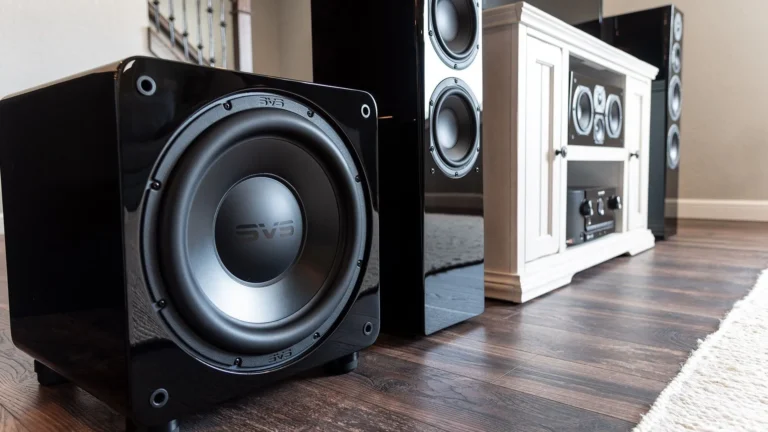
A subwoofer is a speaker designed to reproduce low-frequency sound.
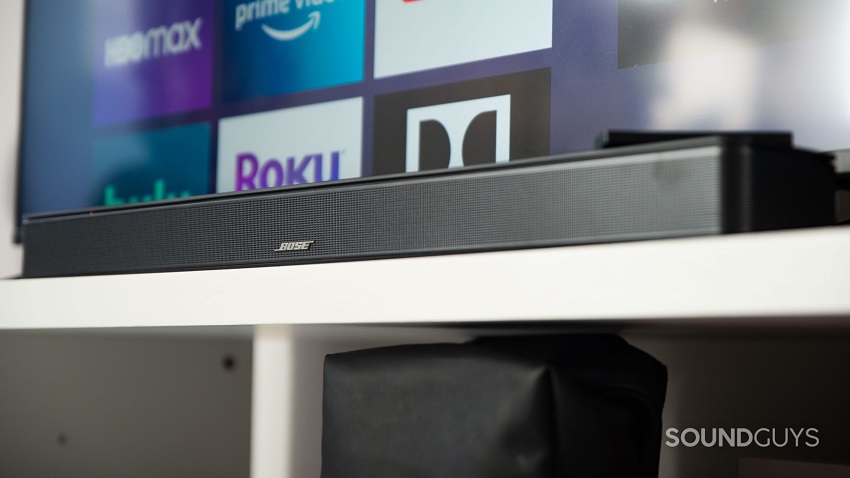
It usually works with stereo speakers, surround speakers, a soundbar, or another full-range audio system.
Bass appears in many types of content.
Examples include drums, bass guitar, electronic music, thunder, engines, and cinematic effects.
Some low frequencies are heard clearly, while very deep sounds may also be felt.
Small speakers often cannot reproduce deep bass at useful levels.
Their drivers and cabinets have limited displacement and internal volume.
A dedicated subwoofer handles this demanding part of the audio spectrum.
This division of work can benefit the complete system.
The main speakers reproduce the frequencies they handle well.
The subwoofer takes responsibility for the lowest portion of the signal.
Why a Good Subwoofer Matters
The difference between subwoofers is not limited to loudness.
A better design may reach lower frequencies and maintain control at higher listening levels.
It may also produce less unwanted noise and distortion.
A capable subwoofer can improve:
- Low-frequency extension: deeper notes remain audible instead of disappearing.
- Dynamic impact: sudden effects have greater weight and scale.
- Bass definition: separate notes are easier to distinguish.
- System headroom: smaller speakers do not have to reproduce demanding bass.
- Soundstage scale: films and music can feel larger and more realistic.
- Listening consistency: proper placement can reduce large bass variations.
These benefits depend on correct setup.
An expensive subwoofer can still sound weak, uneven, or excessive when poorly positioned or calibrated.
What Does Good Bass Sound Like?
Good bass should support the rest of the soundtrack.
It should not attract attention during every scene or song.
A well-integrated subwoofer may seem quiet until the content contains deep bass.
When that moment arrives, the system should reproduce it without obvious strain.
Useful signs of good bass include:
- individual bass notes remain distinct
- kick drums have impact without excessive ringing
- dialogue is not covered by low-frequency energy
- the subwoofer does not reveal its location easily
- output remains controlled at the required listening level
- the transition from speakers to subwoofer sounds natural
Boomy bass often comes from room interactions or incorrect settings.
It does not always mean that the subwoofer itself is defective.
A deep bass cancellation can create the opposite problem.
The subwoofer may seem underpowered at the listening position even when it produces substantial output elsewhere.
Subwoofers for Music, Movies and Games
Music
A subwoofer can reproduce the lowest parts of bass instruments, drums, organs, synthesizers, and orchestral recordings.
It can also add scale to music played through compact speakers.
Musical bass should have definition and appropriate decay.
It should not turn every instrument into the same low-frequency sound.
Correct crossover and level settings are especially important.
Movies and Television
Movie soundtracks may contain dedicated low-frequency effects.
These can include explosions, vehicles, storms, and other large-scale events.
A capable subwoofer reproduces these effects with greater depth and headroom.
It also handles bass redirected from speakers that cannot reproduce low frequencies safely.
Video Games
Games use bass for impact and environmental information.
Engines, weapons, machinery, and cinematic sequences can all benefit from low-frequency extension.
Excessive bass can mask directional details.
The subwoofer level should remain balanced with the other channels.

LFE and Bass Management
The subwoofer can perform two related jobs in a home theater.
It can reproduce the dedicated low-frequency effects channel.
It can also handle bass redirected from the other speakers.
The LFE Channel
LFE means low-frequency effects.
It is the “.1” in descriptions such as 5.1, 7.1, and 7.1.4.
The number does not state how many physical subwoofers you own.
A system with two subwoofer cabinets may still be described as 5.1.
Both cabinets can reproduce the same LFE signal.
Bass Management
Bass management redirects low frequencies from speakers to the subwoofer.
This is useful when the main or surround speakers cannot reproduce deep bass effectively.
For example, an AV receiver may redirect frequencies below the selected crossover point.
The subwoofer then reproduces that content along with the LFE channel.
This can reduce the low-frequency workload placed on compact speakers.
It may also allow the system to play more cleanly at the preferred volume.
What Makes a Good Subwoofer?
No single specification defines subwoofer quality.
Several parts must work together.
Useful Low-Frequency Extension
A subwoofer should reproduce low frequencies with usable output.
A frequency number without a tolerance does not show how loudly or evenly the subwoofer reaches that point.
For example, a manufacturer may list a very low frequency where output has already dropped substantially.
A specification that includes a measurement tolerance provides more context.
Clean Output
The subwoofer should reach the required listening level without excessive distortion.
It should also avoid distracting port noise, rattles, or mechanical sounds.
Deep bass requires substantial driver movement.
The driver, motor, amplifier, enclosure, and protection system must work together.
Appropriate Headroom
Headroom allows the subwoofer to reproduce short peaks without reaching its limits.
This is important in movies with demanding effects.
It also helps with music that contains strong low-frequency transients.
Controlled Enclosure
A strong cabinet reduces unwanted vibration and resonance.
Both sealed and ported designs can perform well when properly engineered.
The enclosure type alone does not determine quality.
Useful Controls
Common controls include gain, phase, low-pass frequency, presets, and automatic standby.
Some models also provide parametric equalization or app-based adjustment.
These features can simplify integration.
However, controls cannot fully correct a poor listening position or severe room cancellation.
Reliable Protection
Modern powered subwoofers may use electronic limiting and thermal protection.
These systems help control the driver and amplifier near their operating limits.
Protection is still not a reason to use maximum volume continuously.
Audible distress means the output should be reduced.
Sealed and Ported Subwoofers
Sealed Subwoofers
A sealed subwoofer places the driver in an airtight enclosure.
These models are often relatively compact.
Their low-frequency response usually rolls off gradually.
A sealed design is not automatically more accurate.
Performance depends on the complete engineering of the product.
Ported Subwoofers
A ported enclosure uses one or more tuned openings.
This design can increase output around its tuning range.
It may provide greater efficiency or extension for a given driver and amplifier.
Ported models are often larger than sealed alternatives.
Poorly designed or overloaded ports may produce audible airflow noise.
A well-engineered ported subwoofer can still deliver controlled and accurate bass.
Which Design Is Better?
Neither type is universally better.
Compare extension, maximum output, distortion, cabinet size, controls, and price.
The room and required listening level matter more than a simple sealed-versus-ported label.
Active vs Passive Subwoofers
Active Subwoofers
An active subwoofer contains a built-in power amplifier.
This is the most common format for home audio and home theater.
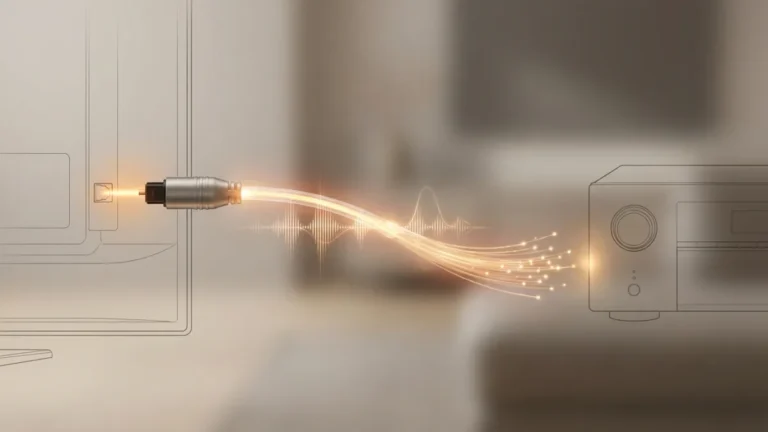
It normally connects to an AV receiver through an RCA subwoofer or LFE cable.
The subwoofer must also connect to an electrical outlet.
The internal amplifier is designed to work with the driver and enclosure.
This makes installation simpler than choosing separate amplification.
Passive Subwoofers
A passive subwoofer requires an external amplifier.
It may be used in custom installations or specialized audio systems.
The amplifier must match the subwoofer’s impedance and power requirements.
The system may also need separate crossover or signal-processing equipment.
A passive design is not inherently more professional or better.
It simply separates the speaker enclosure from the amplifier.
For more information about amplification, see
Do I Need an Amplifier?
Important Subwoofer Specifications
Frequency Response
Frequency response indicates the range a subwoofer can reproduce.
Look for measurement conditions and tolerances whenever possible.
A claim such as “20 Hz” provides limited information on its own.
It does not describe output level, distortion, or how rapidly response falls near that frequency.
Driver Size
Common home subwoofer drivers measure 8, 10, 12, 15 inches, or more.
A larger driver can move more air when other factors are equal.
However, those factors are rarely equal between products.
A well-designed smaller subwoofer may outperform a poorly engineered larger model.
Excursion, motor strength, enclosure, amplifier, and processing also affect output.
Amplifier Power
Power ratings are normally expressed in watts.
Continuous or RMS figures are generally more informative than unspecified peak ratings.
Even so, amplifier power cannot be judged in isolation.
Driver efficiency, cabinet design, limiting, distortion, and measurement conditions influence the final result.
Maximum Output
Maximum clean output describes how much bass the subwoofer can produce before distortion or limiting becomes excessive.
This is important in large rooms and at long listening distances.
Not every manufacturer publishes comparable output measurements.
Independent testing can help when two products use different rating methods.
Connections
A home theater subwoofer usually needs an RCA or LFE input.
Stereo systems may also benefit from left and right line inputs.
Some products provide speaker-level inputs, balanced connections, or wireless adapters.
Dimensions and Weight
Confirm that the cabinet fits the available space.
Leave clearance around ports, controls, connectors, and ventilation areas as required by the manufacturer.

Subwoofer Placement and Room Acoustics
Low frequencies interact strongly with room dimensions and boundaries.
This creates areas where particular bass frequencies become louder or quieter.
The same subwoofer can therefore sound very different in two locations.
It can also produce different results at separate seats in the same room.
Start Near the Front Wall
The front of the room is a practical starting point.
Try a position slightly away from the exact center line.
Then evaluate bass from the main listening position.
Placement near a wall often increases low-frequency output.
A corner may add even more reinforcement.
This can be useful, but it may also exaggerate certain room modes.
There is no universal rule that a subwoofer must stay away from every wall.
The best position is the one that produces useful and reasonably even response at the seats.
Use the Subwoofer Crawl
Place the subwoofer temporarily at the main listening position.
Play a repeating bass sweep or familiar low-frequency material.
Move around possible installation locations and listen for smooth response.
Place the subwoofer in one of the better-sounding positions.
This method is approximate but can reveal obvious problems.
Measure When Possible
A measurement microphone and suitable software provide more reliable information.
Measurements can reveal peaks, cancellations, extension, and decay that are difficult to judge by ear.
Move the subwoofer before applying heavy equalization.
Electronic correction can reduce some peaks.
It usually cannot restore a deep cancellation caused by the room.
Crossover, Phase and Calibration
Crossover Frequency
The crossover determines where bass begins moving from the speakers to the subwoofer.
The appropriate setting depends on the speakers and room.
An 80 Hz crossover is a common starting point, not a universal requirement.
Small speakers may need a higher setting.
Large capable speakers may work with a lower crossover.
If an AV receiver manages the crossover, the subwoofer’s own low-pass control is often set to its bypass or highest position.
Follow the instructions for your specific equipment.
Gain
Gain controls the subwoofer’s input level.
Too little gain makes the system sound thin.
Too much can overwhelm dialogue, music, and the front soundstage.
Begin with the manufacturer’s recommended position.
Run the receiver’s calibration system and make small adjustments afterward.
Phase
Phase affects how the subwoofer combines with the main speakers near the crossover region.
An unsuitable setting may weaken bass around the listening position.
Some subwoofers provide a simple 0- or 180-degree switch.
Others offer continuously variable phase or delay controls.
Choose the setting that produces the smoothest integration.
Room Correction
Automatic calibration can set distance, level, and crossover values.
Some systems also apply equalization to the subwoofer channel.
Review the calculated settings before saving them permanently.
Calibration systems can make mistakes when the room is noisy or the microphone is poorly positioned.
Do You Need Two Subwoofers?
A second subwoofer does not change a 5.1 system into 5.2 content.
The soundtrack still contains one LFE channel.
The receiver may distribute that signal to multiple subwoofers.
Multiple subwoofers can provide several benefits:
- smoother response across several seats
- greater available output and headroom
- less demand on each individual driver
- more placement options for managing room modes
Two poorly placed subwoofers can still produce uneven bass.
They need suitable positioning, level matching, delay, and calibration.
A single capable subwoofer may be sufficient for one main listener.
Multiple units become more useful when several seats require consistent bass.
Common Subwoofer Mistakes
Choosing Only by Driver Size
A larger driver does not guarantee deeper or cleaner bass.
Compare the complete product, not one dimension.
Choosing Only by Wattage
Power ratings use different measurement methods.
A high peak figure does not reveal frequency response, output, or distortion.
Setting the Bass Too Loud
Overstated bass can sound impressive during a short demonstration.
It often becomes tiring and hides details during normal listening.
Ignoring Placement
Room position can have a greater effect than a small difference between two models.
Test several practical locations before judging performance.
Using an Unsuitable Crossover
A crossover set too low may leave a gap between the subwoofer and small speakers.
A setting that is too high may make the subwoofer easier to locate.
Increasing EQ into a Deep Cancellation
A severe dip may result from destructive interaction in the room.
Large boosts can consume headroom without correcting the problem.
Try another location first.
Assuming Large Speakers Make a Subwoofer Unnecessary
Some floorstanding speakers reproduce substantial bass.
However, they may not match a dedicated subwoofer’s extension or output.
A subwoofer is not mandatory for every music system.
The decision depends on the speakers, content, room, and desired listening level.
How to Choose the Right Subwoofer
Choose a subwoofer according to the room and required performance.
Avoid starting with a fixed driver size or wattage target.
Consider the following:
- Room volume: open spaces can require more output than enclosed rooms.
- Listening distance: greater distances increase output demands.
- Playback level: moderate listening requires less headroom than reference-style movie playback.
- Content: films may demand deep effects, while music places emphasis on integration and definition.
- Main speakers: their extension helps determine the crossover requirement.
- Placement: cabinet size must fit one or more acoustically useful positions.
- Connections: confirm compatibility with the receiver, amplifier, or powered speakers.
- Controls: phase, presets, EQ, and app control can simplify setup.
- Multiple seats: two subwoofers may improve consistency across a wide seating area.
For a detailed selection and installation process, continue with our
home theater subwoofer guide.

Frequently Asked Questions About Subwoofers
Do I need a subwoofer if I have floorstanding speakers?
Not always.
Some floorstanding speakers reproduce enough bass for the owner’s music and listening level.
A subwoofer can still add extension, output, and bass-management flexibility.
Can a subwoofer improve small speakers?
Yes.
Bass management can redirect demanding low frequencies from small speakers to the subwoofer.
This may reduce distortion and increase available headroom.
Does a more expensive subwoofer always sound better?
No.
Higher cost may provide better output, construction, controls, or extension, but price does not guarantee correct placement or integration.
Compare measured performance and useful features.
Is a 12-inch subwoofer always better than a 10-inch model?
No.
Driver size is only one factor.
Excursion, amplifier capability, enclosure design, processing, distortion, and maximum output also matter.
Should a subwoofer be placed in a corner?
A corner can increase output but may exaggerate some room modes.
It is a useful location to test rather than a universal best position.
Can I place a subwoofer inside a cabinet?
This is generally risky unless the installation was designed for it.
A cabinet can restrict ports, ventilation, driver movement, and wireless communication.
It may also create rattles and resonances.
What crossover should I use?
An 80 Hz setting is a common starting point.
The best value depends on the main speakers, subwoofer, placement, and room.
Small speakers may need a higher crossover.
What is the difference between LFE and bass management?
LFE is a dedicated effects channel in a multichannel soundtrack.
Bass management redirects low frequencies from other speakers to the subwoofer.
The subwoofer may reproduce both.
Can I use two different subwoofer models?
It is possible, but integration can be more difficult.
Different extension, output, phase behavior, and limiting may produce inconsistent results.
Matching models usually simplify setup.
Do I need two subwoofers?
One subwoofer may work well for a single listening position.
Two properly placed and calibrated units can improve consistency across several seats.
Final Thoughts
The importance of a good subwoofer extends beyond powerful effects.
A capable model adds low-frequency extension, preserves clarity, and supports the main speakers.
Quality bass should be deep when the content requires it.
It should remain controlled during music, dialogue, movies, and games.
The subwoofer should blend with the system instead of drawing constant attention to itself.
Specifications provide useful clues, but they do not replace correct setup.
Room placement, crossover, gain, phase, and calibration can change the result substantially.
Choose the subwoofer for your room, listening distance, speakers, and playback level.
A properly selected and calibrated model can improve the entire audio system.