How to Choose the Best 5.1 Surround Sound System
This guide explains how to compare receiver-based speakers, all-in-one packages, and 5.1 soundbar systems. It also covers room size, connections, placement, calibration, and the most important specifications to check before buying.
1. What Is a 5.1 Surround Sound System?
A traditional 5.1 system contains five main speaker channels and one low-frequency effects channel:
- Front-left speaker
- Center speaker
- Front-right speaker
- Left-surround speaker
- Right-surround speaker
- Subwoofer channel
In a 5.1 system, the number “5” refers to five main speakers, while “.1” identifies the dedicated bass channel played through an active subwoofer.
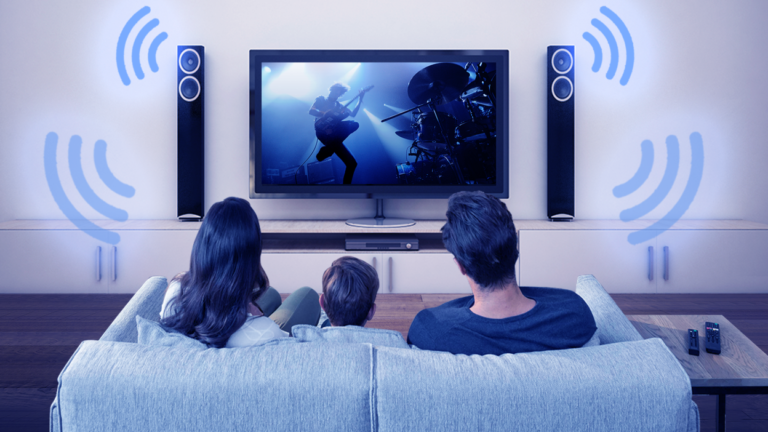
The left and right front speakers establish the primary audio field. Most speech in films and television programs comes from the center speaker. The surround channels add environmental sounds and directional effects around the audience, and the subwoofer reproduces the lowest frequencies.
Is 5.1 the same as Dolby Atmos?
No. A conventional 5.1 system uses ear-level channels and a subwoofer. A configuration such as 5.1.2 adds two height or overhead channels for compatible immersive-audio formats.
A well-positioned 5.1 system can provide excellent surround sound without height speakers.
2. Main Types of 5.1 Surround Sound Systems
There are several ways to build a 5.1 surround sound setup. The right option depends on room size, installation flexibility, budget, and future upgrade plans.
Separate passive speakers with an AV receiver
This is the traditional and most flexible approach. The system normally includes:
- Five passive speakers
- One powered subwoofer
- One compatible AV receiver
- Speaker wire and signal cables
Advantages include:
- Freedom to choose speakers and subwoofer separately
- Individual component upgrades
- Flexible speaker placement
- Multiple HDMI inputs
- Room calibration on many receivers
- Potential expansion to additional channels
Considerations include additional wiring, equipment space, setup time, and the need to confirm speaker and receiver compatibility.
Home theater speaker package
A package may include five matching speakers and a subwoofer. Some packages also include an AV receiver, while others require one to be purchased separately.
Advantages may include:
- Simpler component selection
- Matching speaker appearance
- Consistent speaker family
- Compact dimensions
Check whether the receiver is included and whether the speakers use ordinary connections. Some proprietary packages offer limited upgrade and replacement options.
5.1 soundbar package
A 5.1 soundbar system typically combines:
- A front soundbar
- A wireless or wired subwoofer
- Two separate surround speakers
This can provide genuine rear-channel effects with less equipment and speaker wire than a conventional receiver-based system.
A soundbar package may be useful for:
- Apartments
- Small living rooms
- Multipurpose spaces
- Rooms where conventional front speakers cannot be positioned
- Users who prefer simple setup
The main limitation is ecosystem dependence. Speakers and subwoofers may work only with the original soundbar, making upgrades and replacement less flexible.
For a more detailed comparison, see our guide to the advantages and limitations of soundbars.
Powered wireless speaker system
Some multichannel systems use powered speakers connected wirelessly or through a dedicated controller.
“Wireless” normally means fewer audio cables, not a complete absence of wiring. Powered speakers and wireless surround units still require electrical power.
Check whether the system supports the inputs, formats, room arrangement, and future replacements you need.
3. How to Choose the Five Speakers
Speaker quality, placement, and consistency influence how smoothly sound moves around the room.
Front-left and front-right speakers
The main speakers reproduce music, effects, and much of the front soundstage.
Common options include:
- Compact satellite speakers
- Bookshelf speakers
- Floorstanding speakers
- On-wall speakers
- In-wall speakers
Satellite speakers
Small satellite speakers are easy to place and can work well in compact rooms. They generally rely more heavily on the subwoofer because their low-frequency output is limited.
Bookshelf speakers
Bookshelf speakers often provide a useful balance of size, output, and placement flexibility. They still need suitable stands, shelves, or furniture.
A speaker described as bookshelf-size should not automatically be pushed against the back of an enclosed shelf. Follow the manufacturer’s placement guidance.
Floorstanding speakers
Floorstanding speakers can provide greater output and bass extension, but they require more floor space and may be unnecessary in a small room with a capable subwoofer.
Larger cabinets do not automatically produce better sound. Room size, speaker design, placement, and listening distance remain important.
Surround speakers
Surround speakers can be smaller than the front pair, but they should still provide suitable output at the listening distance.
Using models from the same speaker family can help maintain a similar sound character, particularly as effects move between channels.
Speaker sensitivity and impedance
Sensitivity indicates how much sound output a speaker produces for a given input under specified test conditions. Higher sensitivity can reduce the amplifier power required for a particular volume.
Impedance varies with frequency and affects the electrical load seen by the receiver. Follow the speaker and receiver manufacturers’ compatibility guidance rather than comparing only one nominal number.
4. Why the Center Speaker Matters
The center speaker is particularly important for movies and television because it reproduces much of the dialogue and other information tied to the screen.
A weak, unsuitable, or badly positioned center channel can make voices difficult to understand even when the other speakers are capable.
Check furniture clearance
Measure the space below or above the television before buying. A large center speaker may not fit inside existing furniture or beneath a low-mounted screen.
Do not place the speaker deep inside a cabinet where the enclosure blocks or alters its sound.
Keep it close to the screen
Position the center channel as close to the screen as practical so voices appear connected to the image.
If it must be above or below ear level, angle it toward the main listening area where appropriate.
Match the front soundstage
Using a center speaker designed to complement the front-left and front-right speakers can create a more consistent sound as effects and voices move across the screen.
A very small center speaker may struggle to match large, high-output front speakers in a large room.
5. Choose a Suitable Subwoofer
The subwoofer has a major influence on movie effects, music weight, and the overall sense of scale.
Do not choose one from advertised wattage or driver diameter alone.
Consider:
- Room volume
- Listening distance
- Desired playback level
- Low-frequency extension
- Maximum clean output
- Cabinet size
- Available placement locations
- Control and connection options
Sealed and ported subwoofers
Sealed and ported designs can both perform well. Ported models may provide greater output over part of their operating range for a given size, while sealed models can be more compact.
Actual performance depends on the complete design rather than enclosure type alone.
Subwoofer placement
Low frequencies interact strongly with the room. Moving a subwoofer can change the amount and smoothness of bass heard at the seating position.
Possible starting locations include:
- Along the front wall
- Near one front speaker
- Along a side wall
- Another tested location with suitable power and cabling
A corner can increase bass output but may also exaggerate particular frequencies. Test more than one position when possible.
One or two subwoofers?
A second subwoofer can help produce more consistent bass across several seats when both units are positioned and calibrated correctly.
Two poorly positioned subwoofers are not automatically better than one suitable unit. Room measurements or professional assistance may help with a complex installation.
For further guidance, read about the role of a subwoofer in home theater.
6. Choose the Right AV Receiver
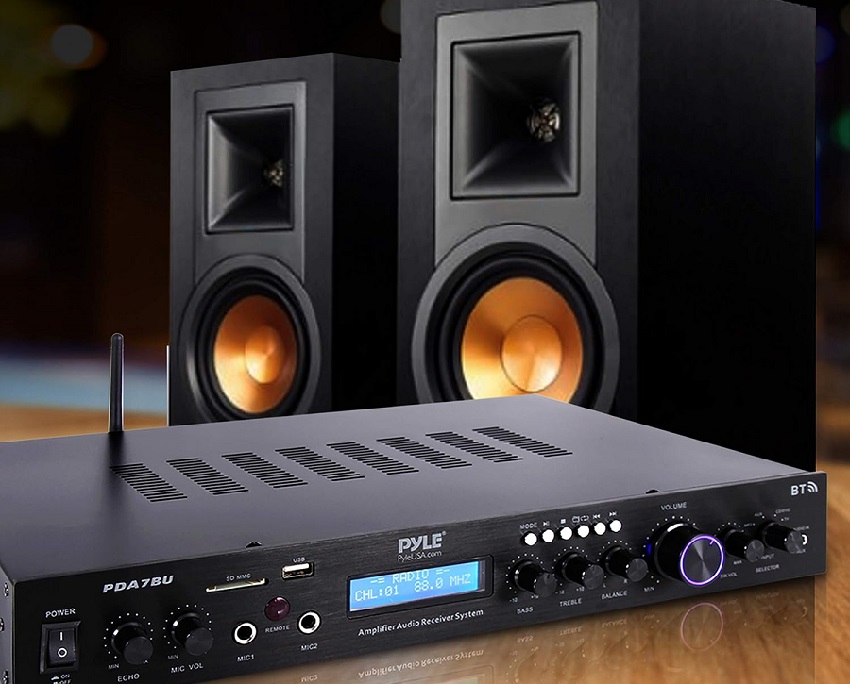
A conventional 5.1 system with passive speakers requires an AV receiver to decode audio, power the speakers, manage inputs, and send video to the display.
Check for:
- At least five suitable amplified channels
- One or more subwoofer pre-outs
- Enough HDMI inputs
- Required video and HDR compatibility
- ARC or eARC where needed
- Support for the audio formats you use
- Automatic speaker calibration
- Suitable speaker-impedance guidance
- Network features if required
- Potential expansion to height or additional surround channels
Do not compare only the largest wattage number
Receiver power ratings may be measured using different frequencies, distortion levels, impedances, and numbers of driven channels.
Speaker sensitivity, listening distance, room size, crossover settings, and preferred volume all affect the power required.
Plan for future expansion
If you may add two height channels later, consider a receiver capable of processing and powering a 5.1.2 layout.
Do not pay for extra channels only because they are available. Expansion is useful only when the room can accommodate the additional speakers correctly.
Check physical dimensions and ventilation
AV receivers can be large and produce heat. Measure the equipment furniture and preserve the ventilation clearance specified by the manufacturer.
Do not install a receiver in a tightly enclosed cabinet without appropriate airflow.
7. Match the 5.1 System to the Room
Room size is important, but listening distance and available speaker positions can matter just as much.
Small rooms
A small room may work well with:
- Compact satellite speakers
- Bookshelf front speakers
- On-wall speakers
- A suitable compact subwoofer
- A 5.1 soundbar package
Avoid buying speakers that cannot be positioned away from walls, furniture, or listeners as required.
Medium rooms
A bookshelf-based 5.1 system is a flexible option for many living rooms.
A typical configuration may include:
- Two bookshelf front speakers
- A matching center speaker
- Two compact surround speakers
- One powered subwoofer
- A compatible AV receiver
Large or open rooms
Larger spaces and longer listening distances may require speakers and subwoofers capable of greater clean output.
Open-plan rooms can be more demanding because bass and sound energy are not limited to the visible seating area.
Possible priorities include:
- Higher-sensitivity speakers
- A capable center speaker
- Greater subwoofer output
- Appropriate amplification
- Careful acoustic and seating planning
Room acoustics
Bare floors, large windows, and minimally furnished walls can create strong reflections. Rugs, curtains, upholstered seating, bookshelves, and suitable acoustic treatment may improve clarity.
For complete room, display, seating, and equipment planning, see our home theater setup guide.
8. HDMI, eARC, and Audio Formats
The audio system must work with the television, streaming devices, game consoles, disc players, and other sources.
Connecting sources through the receiver
Source devices can connect to the AV receiver, which processes the audio and sends video to the television or projector.
The receiver must support the required resolution, refresh rate, HDR format, and gaming features.
Connecting sources through the TV
Devices can also connect directly to the television, with audio returned to the receiver through ARC or eARC.
HDMI eARC
eARC can carry compatible high-quality audio from a TV to a receiver or soundbar. This is useful for television applications and devices connected directly to the TV.
The television, receiver, source, application, content, and settings all need to support the intended audio path.
Optical audio
Optical connections remain useful with older equipment but do not support every format available through modern HDMI connections.
Common audio formats
A 5.1 system may encounter:
- Multichannel PCM
- Dolby Digital
- Dolby Digital Plus
- DTS formats
- Dolby TrueHD
- DTS-HD Master Audio
Availability depends on the content, service, player, television, receiver, connection, and regional licensing.
A receiver can also downmix or adapt compatible content to the installed speaker configuration.
9. Correct 5.1 Speaker Placement
Correct placement can provide a larger improvement than spending the same amount on more expensive speakers positioned badly.
Front-left and front-right speakers
Place the speakers on either side of the screen, forming a balanced front soundstage around the main seating position.
Tweeters near seated ear height are a useful starting point for many conventional speakers. Follow the individual manufacturer’s guidance.
Center speaker
Place the center channel close to the screen, normally directly above or below it. Aim it toward the main listening area if necessary.
Surround speakers
In a conventional 5.1 arrangement, the surround speakers belong beside or somewhat behind the main listening area rather than at the front of the room.
Use the placement guidance for the selected format and speaker design. Avoid positioning one surround speaker extremely close to a listener.
Subwoofer
Test several practical subwoofer locations. The visually neatest position may not provide the most even bass.
Do not hide speakers inside furniture
Cabinet doors, shelves, decorative objects, and television furniture can block or alter sound. Keep speaker drivers and ports clear according to the product instructions.
10. Calibrate the 5.1 Surround Sound Setup
Many AV receivers include a microphone-based calibration system.
Depending on the receiver, calibration may adjust:
- Speaker distances or timing
- Channel levels
- Speaker size or bass-management settings
- Crossover frequencies
- Subwoofer integration
- Frequency-response correction
Follow the calibration instructions
Place the microphone at the required listening positions and keep the room quiet during measurements.
Do not place the microphone on a soft cushion or hold it in your hand unless the manufacturer specifically instructs you to do so.
Review the results
Check that:
- Every speaker was detected correctly.
- Distances are plausible.
- Channel levels are reasonable.
- Crossover settings suit the speakers.
- The subwoofer is active.
Automatic calibration is a useful starting point, but obvious errors should be investigated.
Test familiar content
Use familiar dialogue, music, and movie scenes. Check that voices remain connected to the screen and that surround effects are audible without drawing constant attention to individual speakers.
11. Plan the 5.1 System Budget
A balanced budget is more useful than spending most of the money on one component while compromising the rest of the system.
Entry-level system
Prioritize:
- A reliable receiver or complete powered system
- A clear center speaker
- Five speakers that can be positioned correctly
- A suitable subwoofer
- Basic stands, mounts, and cables
Compact speakers can provide convincing surround sound when supported by a suitable subwoofer.
Mid-range system
A larger budget may allow:
- More capable front speakers
- A stronger center channel
- A subwoofer with greater extension and output
- A receiver with better room correction
- Higher-quality stands and installation hardware
Higher-end system
Higher spending can provide greater output, lower distortion, better construction, advanced calibration, and more upgrade flexibility.
Room layout, acoustics, speaker placement, and calibration remain essential regardless of equipment cost.
Remember installation costs
Include:
- Speaker stands or wall mounts
- Speaker wire
- HDMI cables
- Cable management
- Furniture or equipment ventilation
- Professional installation where required
12. Buying Used Surround Speakers
Passive speakers can remain useful for many years, making used equipment worth considering.
Before buying, inspect:
- Driver condition
- Surround deterioration
- Dented tweeters or dust caps
- Cabinet swelling or water damage
- Loose terminals
- Unusual buzzing or distortion
- Whether every speaker in the package is included
Be more cautious with receivers
An older AV receiver may lack modern HDMI, HDR, eARC, gaming, or audio-format support even if its amplifier section works well.
Check the exact model specifications and available firmware before buying.
Check powered subwoofers
Powered subwoofers contain an amplifier that can fail with age. Listen for hum, rattling, intermittent operation, and driver damage.
13. 5.1 Surround Sound Buying Checklist
- Measure the room and listening distance.
- Choose receiver-based, soundbar, or powered wireless architecture.
- Plan every speaker position before buying.
- Measure space for the center speaker.
- Confirm speaker and receiver compatibility.
- Select a subwoofer suitable for the room.
- Check HDMI input requirements.
- Confirm ARC or eARC compatibility where needed.
- Verify required audio formats.
- Check whether room calibration is included.
- Plan stands, wall mounts, and cables.
- Preserve ventilation around powered equipment.
- Check upgrade and replacement options.
- Review warranty and return conditions.
- Reserve time and budget for calibration.
14. Common 5.1 Surround Sound Buying Mistakes
- Buying by wattage alone: headline power figures do not describe complete system performance.
- Ignoring the center speaker: dialogue clarity is a major part of home theater sound.
- Buying before planning placement: speakers need suitable positions in the actual room.
- Putting all speakers at the front: surround channels must be positioned around the listening area.
- Buying speakers that do not fit the furniture: measure the center channel and stands.
- Choosing a subwoofer by driver size alone: complete performance and placement matter.
- Assuming wireless means cable-free: powered components still need electricity.
- Ignoring receiver video compatibility: it must pass the required display and gaming signals.
- Using unmatched volume levels: one overly loud surround speaker can make the system distracting.
- Skipping calibration: channel levels, distances, and crossovers affect the result.
- Blocking equipment ventilation: receivers and powered speakers produce heat.
- Ignoring the room: reflections and seating position influence clarity and bass.
Frequently Asked Questions
Is 5.1 surround sound still worth it?
Yes. A properly installed 5.1 system remains an effective and relatively manageable way to add multichannel sound for movies, television, and games.
Is a 5.1 system better than a soundbar?
A receiver-based 5.1 system provides greater flexibility in speaker choice, placement, and upgrades. A soundbar package is simpler and may be more practical in a small or multipurpose room.
Do I need an AV receiver for 5.1 surround sound?
An AV receiver is required for a conventional system using passive speakers. Soundbar and powered-speaker packages normally include their own amplification and processing.
Can different speaker brands be used together?
Yes, but speakers from the same series across the front soundstage can provide a more consistent tonal character. Surround speakers do not always need to be identical.
Where should the surround speakers be placed?
In a conventional 5.1 layout, they are normally positioned beside or somewhat behind the main listening area. Follow the placement guide for the system and speaker design.
How important is the center speaker?
It is particularly important for movies and television because it reproduces much of the dialogue. Placement close to the screen also helps voices appear connected to the picture.
How important is the subwoofer?
A subwoofer reproduces deep bass and low-frequency effects that small speakers cannot handle effectively. Its placement and calibration are as important as its specifications.
Can a 5.1 system play stereo music?
Yes. AV receivers normally provide stereo playback through the front-left and front-right speakers. The subwoofer may also operate depending on the receiver and bass-management settings.
Can Dolby Atmos content play on a 5.1 system?
A compatible receiver can generally adapt supported content to the installed speaker layout. A conventional 5.1 system will not reproduce separate height channels.
Should I buy a package or separate components?
A package simplifies selection and may cost less. Separate components offer more flexibility, easier upgrades, and greater freedom to select the center speaker and subwoofer.
Final Thoughts
The best 5.1 surround sound system is not necessarily the most expensive package or the one with the largest speakers.
Start with the room and speaker positions. Choose a center channel that fits near the screen, a subwoofer appropriate for the space, and an AV receiver or powered system with the connections and formats you need.
A carefully positioned and calibrated mid-range 5.1 speaker system can provide a more convincing result than expensive equipment installed without attention to room layout and channel balance.