Modern Log House Interior Design Ideas
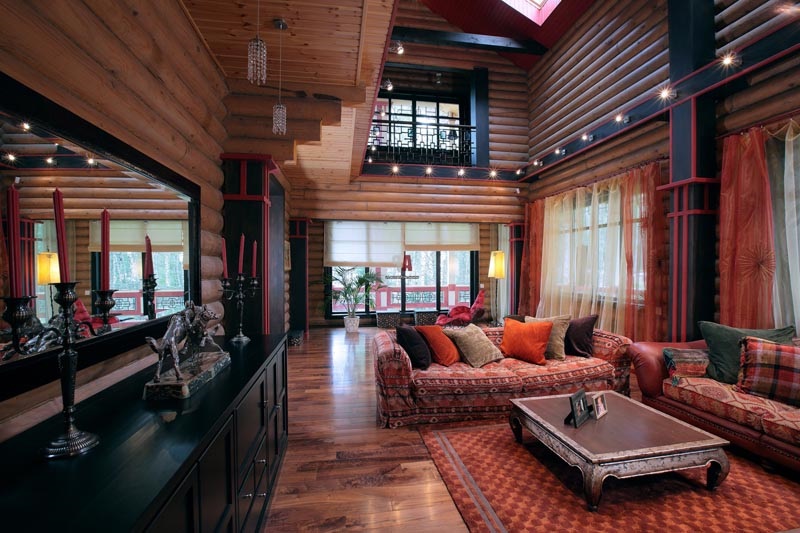
The goal is not to hide the character of the logs, but to balance their strong visual presence with lighter colors, simpler forms, and modern materials.
Whether you are building a new log home or updating an older one, thoughtful choices in layout, color, lighting, furniture, and technology can make the interior feel fresh without losing its natural character.
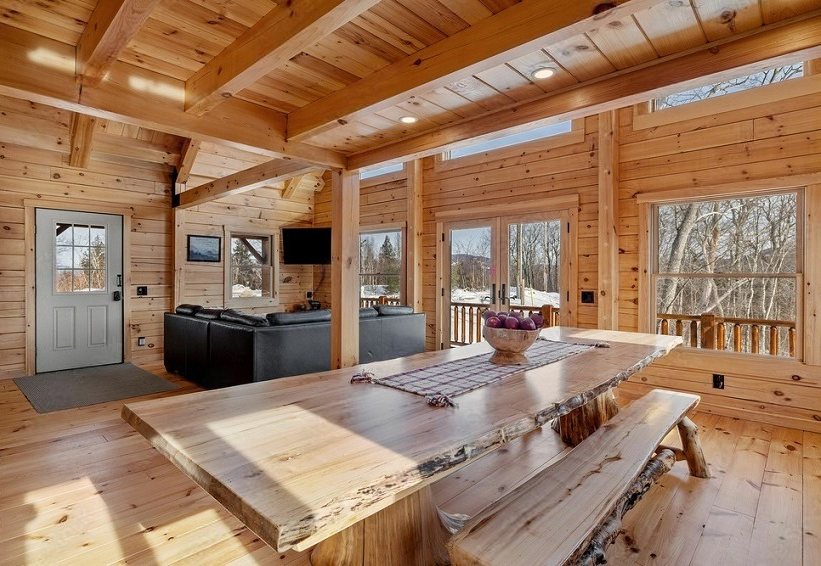
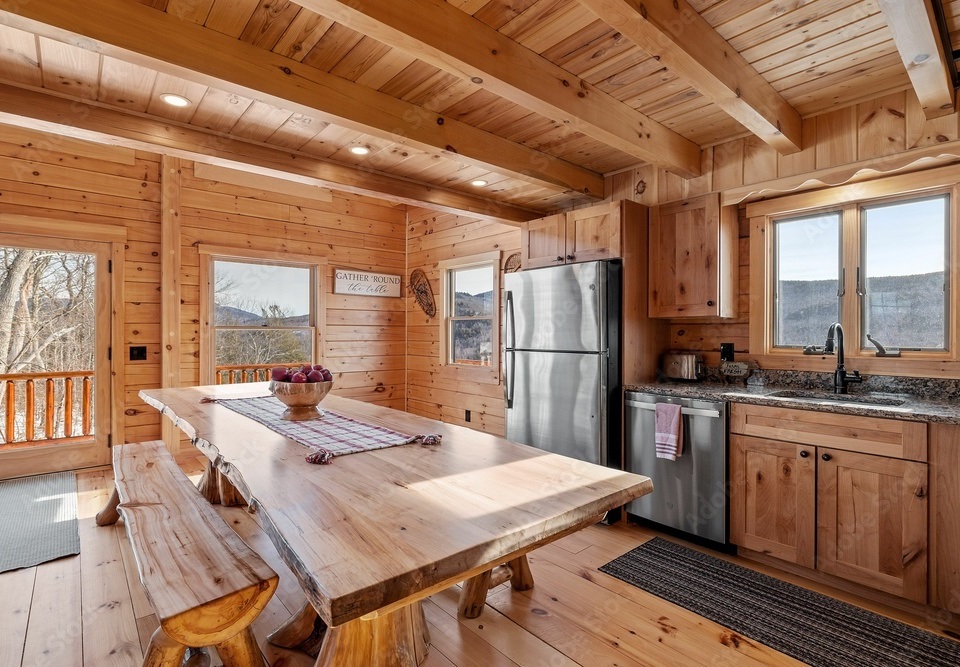
Use an Open, Practical Layout
Log houses often benefit from open-plan living areas because fewer internal divisions allow the timber structure to remain visually connected across the room.
An open layout can combine:
- living area
- dining area
- kitchen
- reading or relaxation zone
The space can still be divided visually using furniture placement, rugs, lighting, or changes in ceiling height rather than adding unnecessary walls.
If you are renovating an existing log structure, do not remove walls or structural elements without professional assessment. In timber construction, some walls may play an important structural role.
Balance Wood With a Calm Color Palette
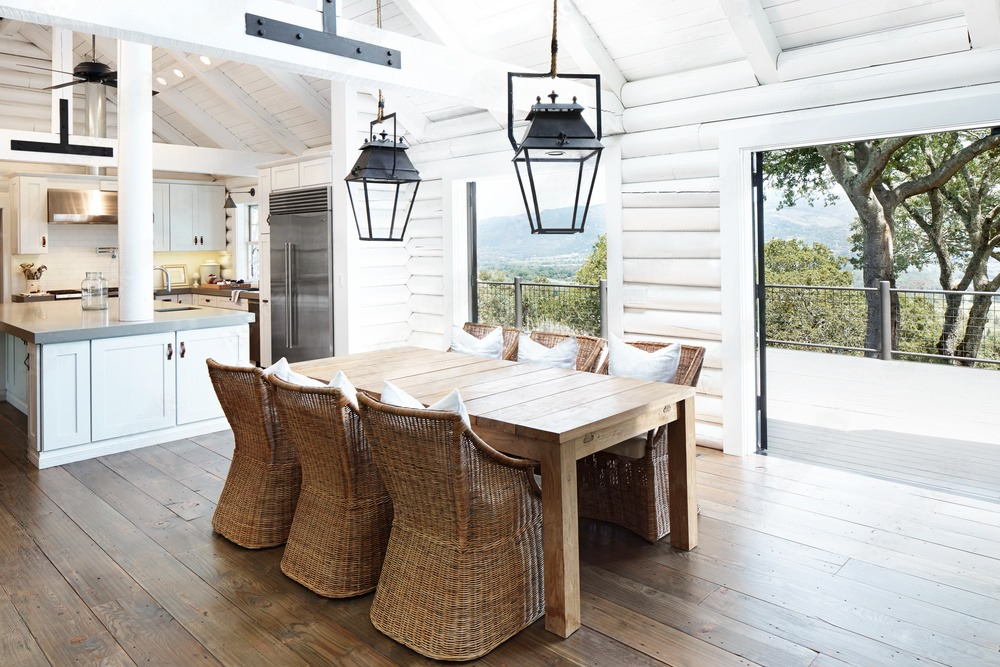
Natural logs already introduce a strong color and texture, so the rest of the interior usually works best when it does not compete with them.
Useful wall, textile, and furniture colors include:
- warm white
- cream
- soft beige
- light gray
- muted green
- charcoal or black as accents
Light colors can balance darker timber and help prevent the room from feeling visually heavy.
If the logs themselves are pale, deeper furniture or textile tones can add contrast without overwhelming the space.
Choose Simple Modern Furniture
Because log walls already have strong texture and visual rhythm, overly ornate furniture can make the room feel busy.
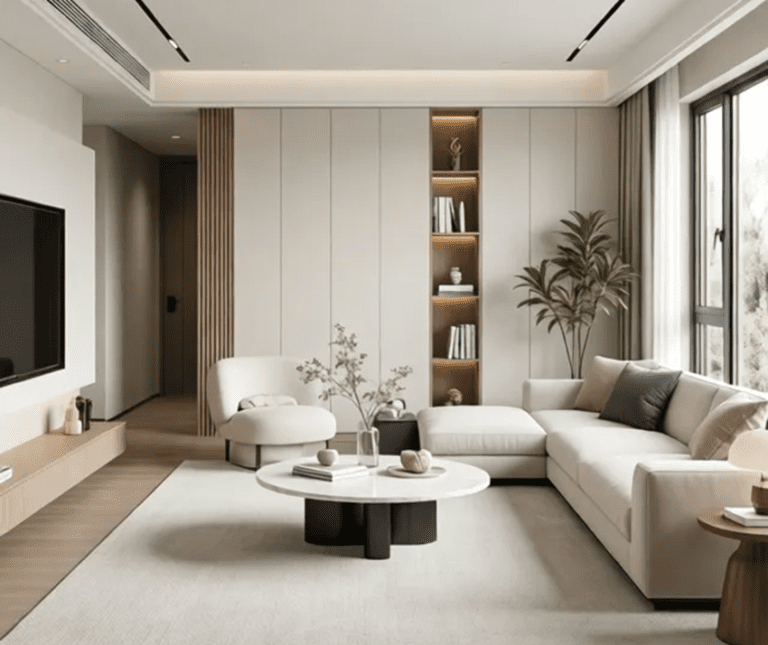
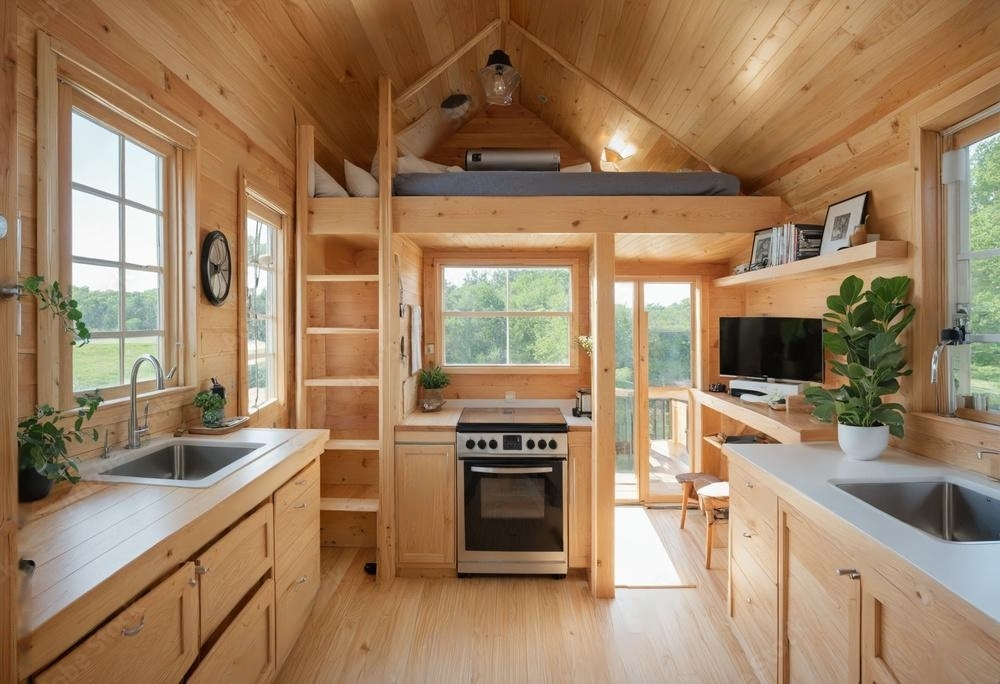
Modern furniture with clean shapes often creates a better balance.
Consider:
- simple upholstered sofas
- low-profile coffee tables
- clean-lined dining chairs
- metal or glass accents
- minimalist storage furniture
Furniture does not need to be ultra-modern. Scandinavian, contemporary, Japandi, and understated rustic pieces can all work well with exposed timber.
The main goal is to avoid making every object visually heavy.
For more ideas on simple interiors, see our guide to
minimalist interior design
.
Layer the Lighting
Log interiors can absorb more light visually than rooms with white walls, especially when the timber has a dark finish.
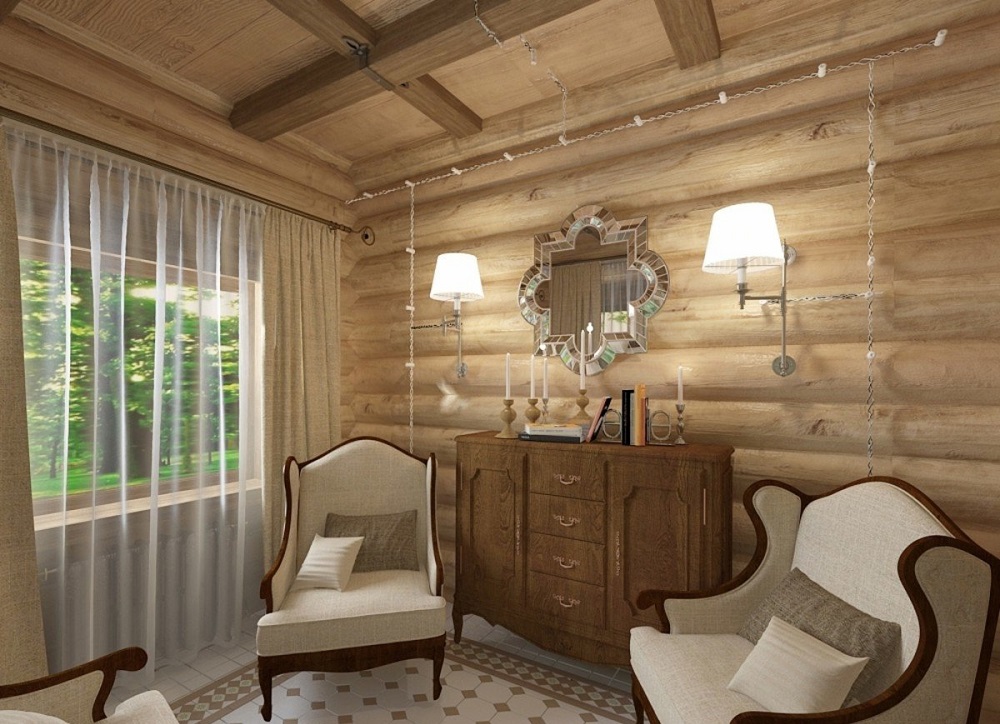
Instead of relying on a single ceiling fixture, combine several lighting layers.
Useful options include:
- pendant lights above dining areas
- recessed or track lighting
- wall sconces
- floor lamps
- table lamps
- under-cabinet lighting in the kitchen
Warm-white light generally complements natural wood well, while neutral task lighting can be useful in kitchens and work areas.
Use accent lighting to highlight beams, stone, artwork, or architectural details rather than trying to illuminate every surface equally.
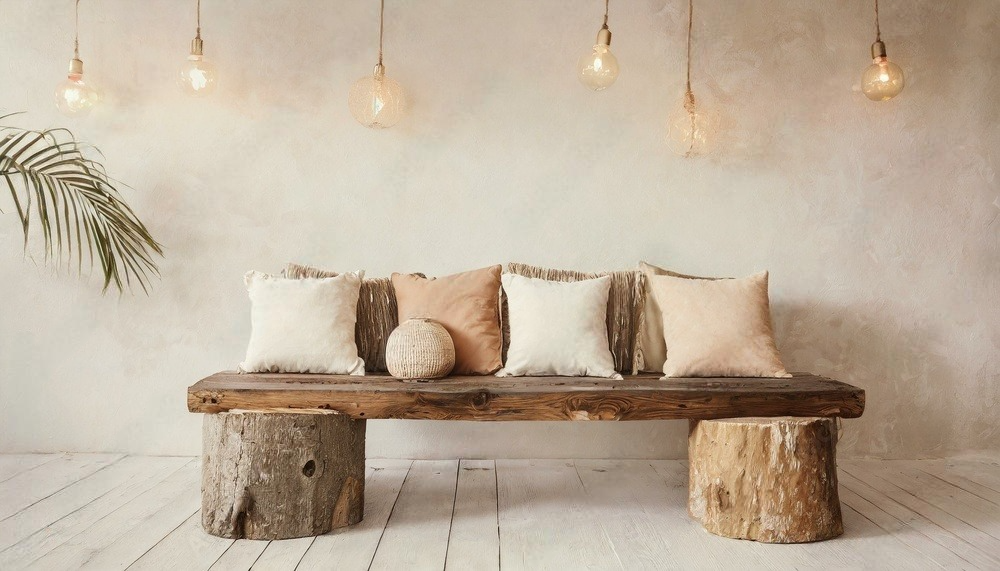
Mix Wood With Other Natural Materials
Too much of the same wood tone can make a log house feel visually monotonous. Introducing other natural materials creates contrast and gives the interior more depth.
Good combinations include:
- stone
- linen
- wool
- leather
- ceramic
- metal
- glass
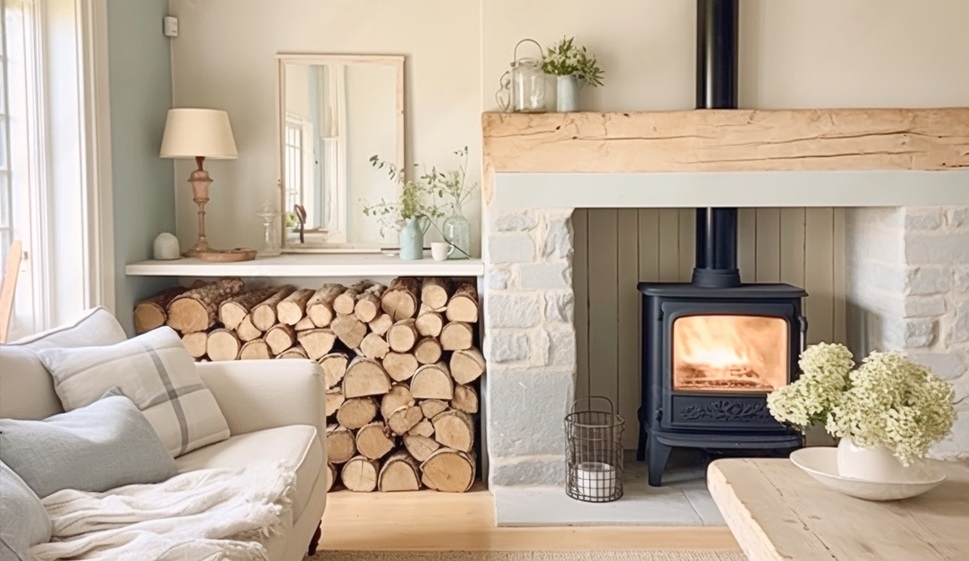
A stone fireplace can provide a strong focal point, while textiles soften the hard surfaces and improve comfort.
Indoor plants can also help connect the interior with the surrounding landscape.
Integrate Smart Home Technology Carefully
Modern technology can work very well in a log house when it is planned so that equipment does not dominate the interior.
Useful additions may include:
- smart lighting
- programmable heating controls
- smart thermostats
- security cameras and sensors
- multi-room audio
- automated blinds
Cable planning is particularly important in timber interiors because exposed wiring can be difficult to hide after construction is complete.
If the house is being built or extensively renovated, plan network cabling, power outlets, lighting controls, and entertainment wiring early.
For connected lighting ideas, see our
smart home lighting guide
.
Improve Energy Efficiency
A modern log house should be comfortable as well as attractive. Energy performance depends on the complete building envelope, not simply on the fact that the walls are made from timber.
Important considerations can include:
- roof and floor insulation
- window performance
- airtightness
- heating and cooling efficiency
- ventilation
- sun exposure and shading
When selecting paints, finishes, adhesives, or other interior products, check their suitability for timber construction and indoor use.
Reclaimed materials can add character, but sustainability is not determined by appearance alone. Durability, sourcing, energy efficiency, and long-term maintenance also matter.
Keep Decor Simple and Personal
A log house already has a strong decorative element: the timber itself.
This means you usually need fewer accessories than in a plain painted interior.
Consider using:
- large-scale artwork
- simple rugs
- ceramics
- plants
- textured cushions and throws
- a small number of meaningful objects
Rather than trying to create a stereotypical cabin interior with heavy rustic furniture and themed decorations, let the architecture provide the natural character.
Common Modern Log House Interior Mistakes
- Using too much wood in the same tone: introduce contrasting materials and lighter surfaces.
- Choosing oversized rustic furniture: heavy pieces can make the room feel smaller.
- Ignoring lighting: darker timber interiors often need several light sources.
- Mixing too many decorative styles: keep the overall palette and furniture language consistent.
- Hiding all of the timber: the natural structure should remain an important part of the design.
- Leaving technology until the end: wiring and smart-home infrastructure are easier to plan during construction or renovation.
- Assuming a log house is automatically energy efficient: insulation, windows, airtightness, and mechanical systems still matter.
Final Thoughts
A modern log house interior works best when contemporary design supports rather than competes with the natural timber architecture.
Use simple furniture, a restrained color palette, layered lighting, contrasting natural materials, and carefully integrated technology. This keeps the home warm and characterful while giving it a cleaner, more current appearance.
The result does not need to feel completely rustic or completely minimalist. The most successful interiors usually sit somewhere between the two, combining the comfort of a timber home with the clarity and functionality of modern design.