Do I Need an Amplifier? A Practical Home Audio Guide
Do you need an amplifier for your speakers, television, or home theater?
The answer depends mainly on the equipment you own.
Passive speakers need external amplification.
Active speakers and most soundbars already have amplifiers inside them.
An amplifier supplies the electrical power needed to drive speakers.
However, adding a separate amplifier does not automatically improve every audio system.
The speakers, room, placement, listening distance, and existing equipment also affect the result.
This guide explains when an amplifier is essential.
It also covers AV receivers, speaker impedance, power ratings, connections, and common buying mistakes.

What Does an Amplifier Do?
An audio amplifier receives a low-level signal from a source or preamplifier.
It increases that signal’s power so it can drive one or more speakers.
Passive speaker drivers need this electrical power to move and produce sound.
Without amplification, a line-level signal from a television, streamer, or music player cannot drive them correctly.
A suitable amplifier allows a speaker system to reproduce:
- quiet and loud passages with less audible strain
- short musical and cinematic peaks
- dialogue at a practical listening level
- bass within the capabilities of the speakers
- sound across the required listening distance
An amplifier is only one part of the system.
More power cannot correct poor speaker placement, excessive room reflections, or low-quality source material.
Do You Need an Amplifier?
You need an amplifier if you use passive speakers.
The amplifier may be a separate component, part of an integrated amplifier, or built into an AV receiver.
You usually do not need a separate amplifier if you use:
- active or powered speakers
- a powered soundbar
- Bluetooth speakers
- a television with its own speakers
- an AV receiver that already powers your passive speakers adequately
Check the rear panel or product manual if the speaker type is unclear.
Passive speakers normally have binding posts or spring terminals for speaker wire.
Active speakers usually have power inputs, volume controls, and line-level connections.
Active and Passive Speakers
Passive Speakers
Passive speakers do not contain their own power amplifiers.
They receive amplified signals through speaker cables.
Traditional bookshelf, floorstanding, center, and surround speakers are often passive.
They must connect to an integrated amplifier, power amplifier, or AV receiver.
A passive system provides flexibility.
You can replace the amplifier or speakers separately.
It may also be easier to expand a component-based system later.
Active and Powered Speakers
Active speakers contain amplification inside the cabinet.
Some models also include streaming, digital inputs, volume control, and signal processing.
Many powered stereo pairs contain the electronics in one speaker.
That speaker then powers or sends audio to the second unit.
Other designs place dedicated amplification inside each cabinet.
These speakers normally receive a line-level or digital signal.
Do not connect a conventional amplifier’s speaker outputs unless the manufacturer specifically permits it.
An already amplified signal could damage the equipment.
Powered Subwoofers
Most home theater subwoofers have an amplifier inside the enclosure.
They connect to an AV receiver through a line-level subwoofer output.
They also need power from an electrical outlet.
The “.1” in a 5.1 or 7.1 system describes the low-frequency effects channel.
It does not mean that the AV receiver uses another conventional speaker amplifier for the subwoofer.
Types of Audio Amplifiers
The word “amplifier” can describe several types of equipment.
Understanding the differences makes shopping easier.
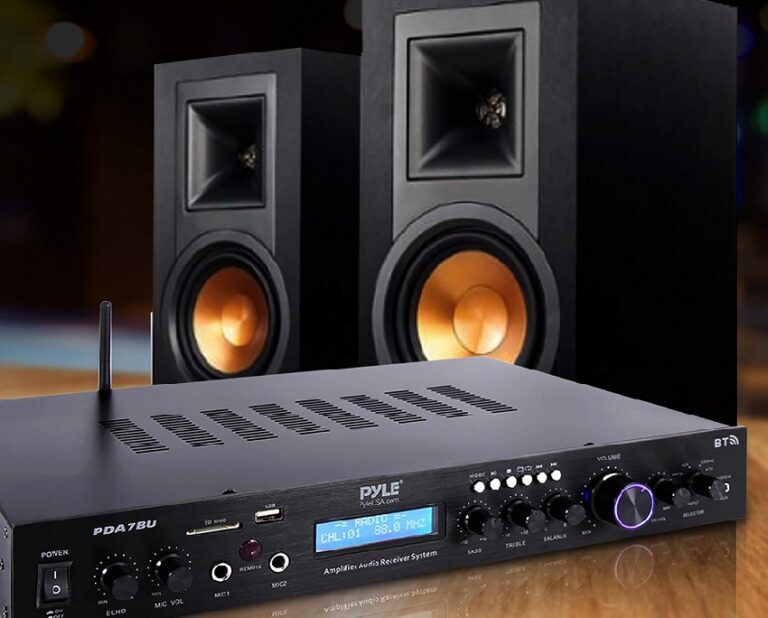
Power Amplifier
A power amplifier drives the speakers.
It normally relies on another device for source selection, volume control, and audio processing.
Preamplifier
A preamplifier manages source selection and volume.
It may also include tone controls, digital conversion, streaming, or phono inputs.
It sends a controlled signal to a power amplifier.
Integrated Amplifier
An integrated amplifier combines a preamplifier and power amplifier in one enclosure.
It is a common choice for a two-channel music system.
Stereo Receiver
A stereo receiver combines stereo amplification with radio reception.
Modern models may also include Bluetooth, Wi-Fi, or network streaming.
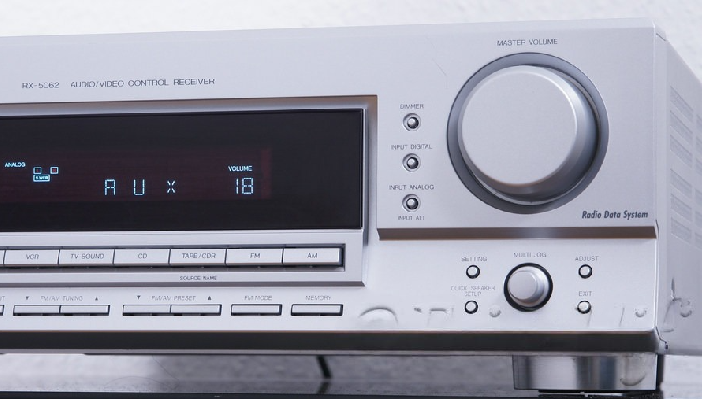
AV Receiver
An AV receiver combines multichannel amplification with home theater processing.
It usually handles HDMI sources, surround formats, video switching, and speaker calibration.
Amplifier vs AV Receiver: What Is the Difference?
An AV receiver contains amplifiers, but it performs several additional tasks.
A basic power amplifier mainly supplies power to speakers.
An AV receiver may include:
- five, seven, nine, or more amplifier channels
- HDMI inputs and outputs
- Dolby and DTS decoding
- speaker configuration and bass management
- subwoofer outputs
- automatic room calibration
- Bluetooth, Wi-Fi, or network streaming
- video switching and control features
An integrated stereo amplifier is often suitable for music played through two speakers.
An AV receiver is generally more practical for a multichannel movie system.
Do not choose only by channel count.
Check how many channels can operate in your intended speaker configuration.
Some terminals may be shared between surround, height, bi-amping, and additional-zone functions.
Do You Need an Amplifier for a TV?
A television does not need a separate amplifier to operate its built-in speakers.
However, those speakers often have limited size, separation, and bass extension.
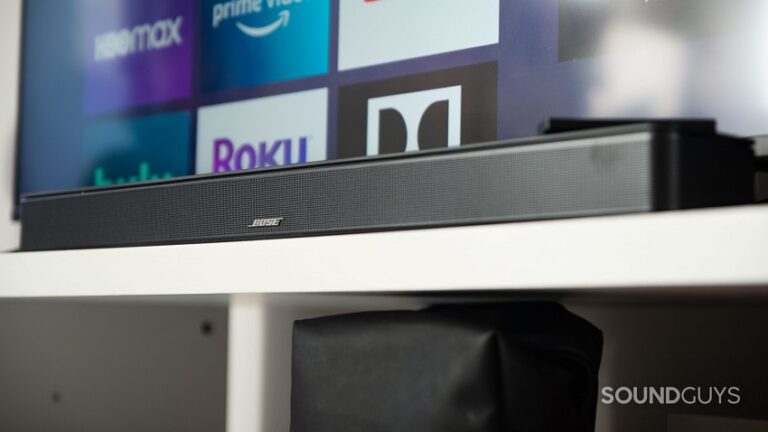
A powered soundbar connects directly to the television.
Its amplifiers are already built in.
Adding a conventional power amplifier between the TV and soundbar is unnecessary.
Passive stereo speakers cannot usually connect directly to a modern television.
They need an amplifier or receiver between the TV and speakers.
Before choosing an amplifier, check the television’s audio outputs.
Possible connections include HDMI ARC or eARC, optical audio, analog audio, and Bluetooth.
Not every amplifier accepts all these formats.
If you are deciding between a powered bar and separate speakers, read our
soundbar vs home theater system comparison.
Do You Need an Amplifier for Home Theater?
A home theater with passive speakers needs one amplifier channel for each passive speaker.
An AV receiver usually provides these channels in one unit.
A conventional 5.1 arrangement includes:
- front-left and front-right speakers
- one center speaker
- two surround speakers
- one powered subwoofer
The receiver powers the five passive speakers.
The subwoofer uses its own internal amplifier.
Larger systems may add surround-back or height speakers.
The receiver must support both the required processing and the number of amplified channels.
For example, a receiver may process more channels than it can power internally.
In that case, additional power amplifiers may be required.
Always check the manual and channel-assignment options.
Our
home theater setup guide
explains how the receiver, speakers, display, sources, and seating work together.
Amplifier Power, Impedance and Speaker Matching

Safe and effective speaker matching requires more than comparing two wattage figures.
Power, impedance, sensitivity, room size, and listening distance all matter.
Amplifier Power
Amplifier output is normally stated in watts per channel.
However, measurement conditions can vary substantially.
When comparing amplifiers, look for:
- the stated speaker impedance
- the measured frequency range
- the distortion level
- the number of channels operating
- whether the figure is continuous or peak power
A large advertised number may describe one channel at a single frequency.
It may not represent normal multichannel performance.
Compare ratings measured under similar conditions.
Speaker Impedance
Impedance describes the electrical load presented by a speaker.
It is expressed in ohms.
Common nominal ratings include 4, 6, and 8 ohms.
A speaker’s actual impedance changes with frequency.
The nominal figure is therefore a simplified rating rather than a constant value.
Check the amplifier manufacturer’s supported speaker range.
Some models require a menu setting when lower-impedance speakers are connected.
Adequate ventilation is also important because demanding loads can increase heat.
Speaker Sensitivity
Sensitivity indicates how much sound a speaker produces from a specified input at a stated distance.
A more sensitive speaker generally needs less power to reach a given listening level.
Sensitivity measurements are not always presented under identical conditions.
Use them as a comparison tool rather than a guarantee of performance in your room.
Room Size and Listening Distance
Large rooms and long listening distances can require more output.
Low-sensitivity speakers may also demand more amplifier power.
Small rooms do not automatically need powerful amplification.
Speaker placement and listening habits should influence the decision.
Can an Amplifier Be Too Powerful?
A powerful amplifier is not automatically dangerous when used responsibly.
The main risk comes from applying more power than a speaker can handle.
Excessive volume or strong bass can damage drivers.
An underpowered amplifier is not automatically safe either.
If it is pushed beyond its clean operating range, severe distortion may occur.
Listen for harshness, compression, or mechanical stress and reduce the volume.
Amplifier Connections and Features
Choose connections according to your current sources and likely future needs.
Do not pay for features that your system cannot use.
Common Audio Connections
- RCA: common analog connection for music sources and preamplifiers
- balanced XLR: available on some higher-end and professional equipment
- optical: digital connection used by televisions and media players
- coaxial digital: another digital audio connection
- USB: often used for computer audio
- HDMI ARC or eARC: useful for television sound and home theater
- Bluetooth: convenient wireless playback from mobile devices
- network audio: streaming through Ethernet or Wi-Fi
Phono Input
A turntable may need a phono preamplifier.
Some integrated amplifiers include one.
Others require a separate phono stage or a turntable with a built-in preamp.
Subwoofer Output
A dedicated subwoofer output simplifies connection to a powered subwoofer.
Some stereo amplifiers include bass management, while others send a full-range signal.
Check the product manual before planning the crossover.
Pre-Out Connections
Pre-out connections allow an amplifier or receiver to send a volume-controlled signal to an external power amplifier.
They are important if you may add separate amplification later.
Speaker terminals are not substitutes for pre-outs.
Never connect speaker-level outputs to a line-level power-amplifier input unless an appropriate converter is specifically designed for that purpose.
When Should You Add an External Power Amplifier?
A separate power amplifier may be useful when the existing receiver cannot meet the system’s requirements.
It should solve a specific limitation rather than serve as an automatic upgrade.
Consider external amplification when:
- the speakers present a difficult load approved for the chosen amplifier
- you listen at high levels in a large room
- the listening position is far from the speakers
- the receiver processes more channels than it can power internally
- you need additional channels for a larger home theater layout
- the receiver has suitable pre-out connections
You probably do not need another amplifier when:
- the system reaches your preferred volume without audible strain
- your receiver supports the speakers and remains adequately ventilated
- you use active speakers or a powered soundbar
- the receiver has no compatible pre-out connections
- speaker placement or room acoustics are the actual problem
Before buying more hardware, run the receiver’s calibration system.
Check crossover settings and speaker placement.
These changes may provide a greater improvement.
How to Choose the Right Amplifier
Begin with the speakers and the intended use.
A practical selection process includes the following steps.
- Identify the speaker type. Confirm whether the speakers are active or passive.
- Count the required channels. Include every passive speaker that needs power.
- Check impedance compatibility. Follow the specifications in both product manuals.
- Consider sensitivity and distance. Less efficient speakers or longer distances may require more output.
- List your sources. Check for HDMI, optical, analog, USB, phono, Bluetooth, or network needs.
- Check expansion options. Look for subwoofer outputs and pre-outs if future upgrades matter.
- Confirm physical fit. Leave space for cables and ventilation.
- Compare power fairly. Use specifications measured under similar conditions.
For home theater, also verify support for the required video formats.
An older receiver may pass audio correctly but limit resolution, refresh rate, HDR, or gaming features.

Frequently Asked Questions
Do all speakers need an amplifier?
All speakers need amplification, but it may already be built into the product.
Passive speakers require an external amplifier.
Active speakers contain their own amplification.
Can I connect passive speakers directly to a television?
Usually not.
A television normally provides line-level digital or analog audio rather than amplified speaker outputs.
Use a compatible amplifier or AV receiver between the TV and passive speakers.
Do active speakers need a separate amplifier?
No, not under normal circumstances.
Their amplification is built into one or both speaker cabinets.
Connect them to a supported line-level or digital source.
Does a soundbar need an amplifier?
Most consumer soundbars contain their own amplifiers.
They connect directly to a television or source device.
Passive soundbar-style speakers exist, but they are less common.
Is an AV receiver an amplifier?
An AV receiver contains several amplifier channels.
It also provides surround processing, source selection, HDMI switching, bass management, and other home theater functions.
Will a more powerful amplifier always sound better?
No.
More available power may help in a demanding system, but wattage alone does not determine sound quality.
Speaker performance, room acoustics, setup, and measurement conditions also matter.
How many amplifier channels do I need?
You need one suitable amplifier channel for each passive speaker.
A stereo pair requires two channels.
A conventional 5.1 system normally needs five amplified channels because the subwoofer is usually self-powered.
Can I add a power amplifier to any AV receiver?
No.
The receiver needs suitable pre-out connections for the channels you want to amplify.
Check the manual before purchasing an external power amplifier.
Can I use a home theater receiver for stereo music?
Yes.
An AV receiver can power a two-channel speaker system and play stereo sources.
A dedicated stereo amplifier may offer a simpler interface, but it is not required.
Do headphones need an amplifier?
Headphones require amplification, but phones, computers, receivers, and audio interfaces often provide it internally.
A separate headphone amplifier is useful only when the existing output is unsuitable for the headphones or required listening level.
Final Thoughts
You need external amplification when your system uses passive speakers.
An integrated amplifier is often suitable for stereo music.
An AV receiver is usually the most practical option for multichannel home theater.
Active speakers and powered soundbars already contain amplifiers.
Adding another power amplifier to these products is normally unnecessary and may be incompatible.
Choose equipment by considering speaker type, impedance, sensitivity, listening distance, channels, and connections.
Do not rely on the largest advertised wattage number.
A correctly matched and properly configured system is more important than power alone.