Movable Kitchen Island Ideas for Small and Flexible Kitchens
Unlike a fixed island, a movable kitchen island can be repositioned to suit different activities. You might use it for meal preparation, move it aside when guests arrive, or place it near the dining area when serving food.
From compact kitchen carts to larger islands with lockable wheels, this guide explores practical designs, storage features, dimensions, materials, and safety considerations to help you choose the right solution.
What Is a Movable Kitchen Island?
A movable kitchen island is a freestanding piece of kitchen furniture designed to provide additional workspace or storage without being permanently attached to the floor.
Some movable islands have wheels or casters, while others are lightweight enough to reposition manually.
They may include shelves, drawers, cabinets, towel bars, drop-leaf countertops, and occasionally seating areas.
The most important difference between a movable and fixed island is flexibility. A movable design allows you to change the position of the workspace as your needs change.
However, not every freestanding island is easy to move. Larger or heavier units may be intended to stay in one location most of the time.
Benefits and Drawbacks of Movable Kitchen Islands
Before choosing a portable kitchen island, consider both its advantages and limitations.
Advantages
- Flexible layout: move the island when you need additional floor space.
- Extra workspace: create another area for preparing meals.
- Additional storage: use shelves, drawers, or cabinets for kitchen essentials.
- Less permanent installation: many models require little or no remodeling.
- Useful for renters: a portable island can often move with you to another home.
- Multiple functions: some models serve as preparation tables, serving stations, or casual dining spaces.
Possible drawbacks
- Some units provide less stability than permanently installed islands.
- Wheels require proper locking or securing.
- A movable island can obstruct traffic if positioned poorly.
- Large models may be difficult to maneuver.
- Seating and countertop overhangs can increase tipping risks if the unit is not designed for them.
The best movable kitchen island should improve everyday convenience without creating new obstacles or safety problems.
Best Movable Kitchen Island Ideas
Movable kitchen islands come in many forms. The most useful design depends on how much space you have and what you want the island to do.
1. Compact Kitchen Island on Wheels
A small island on wheels is a practical option for kitchens where every inch matters.
It can provide an additional surface for chopping vegetables, preparing ingredients, or placing dishes while cooking.
Choose a model with durable lockable casters and enough space underneath for commonly used utensils or cookware.
When not needed, the island may be moved against a wall or into another suitable area of the kitchen.
2. Movable Kitchen Island With Drawers
Drawers are useful for storing smaller items that can quickly clutter countertops.
Depending on the design, they can hold cooking utensils, kitchen towels, measuring tools, and other lightweight accessories.
Look for drawers with smooth runners and a structure that remains stable when a drawer is fully extended.
For larger islands, distributing stored weight evenly helps maintain balance during movement.
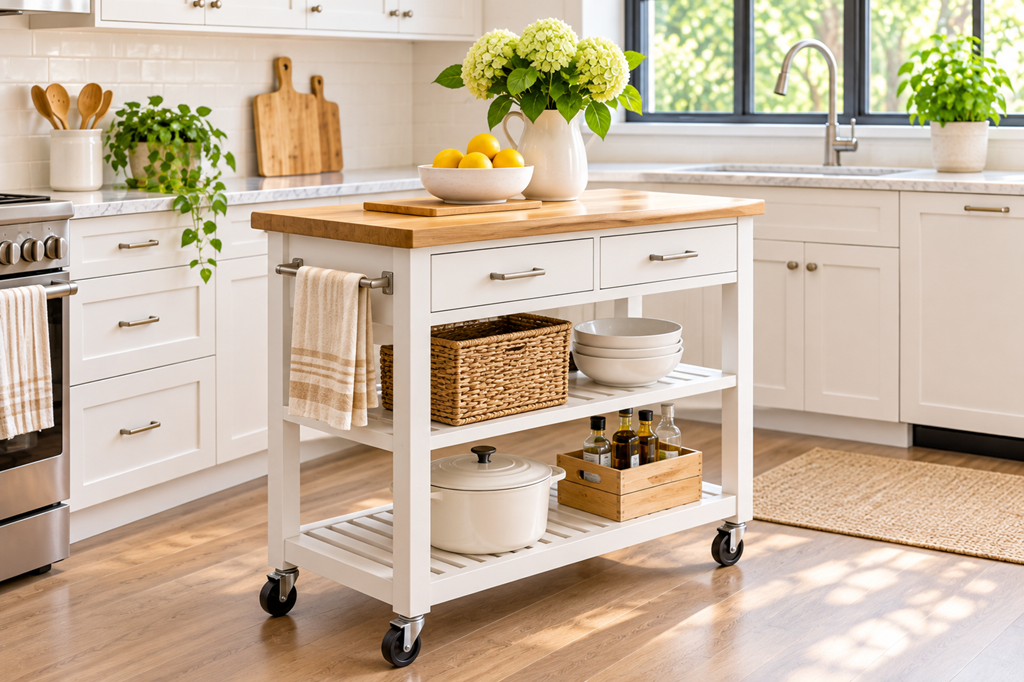
3. Rolling Kitchen Cart With Open Shelves
Open shelving gives a movable island a lighter appearance and makes frequently used items easy to reach.
It works particularly well for mixing bowls, cookware, baskets, or small food containers.
A rolling kitchen cart is often less expensive and more compact than a full cabinet-style island.
However, open shelves require more regular cleaning because stored items remain exposed to dust and kitchen splashes.
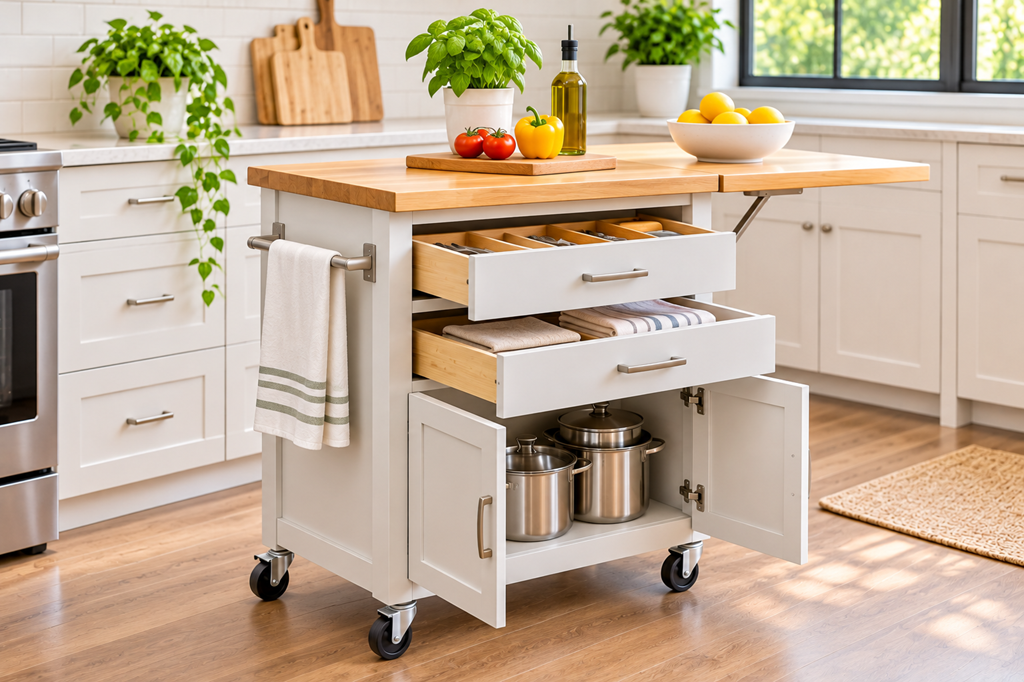
4. Drop-Leaf Movable Kitchen Island
A drop-leaf island includes a hinged section of countertop that can be raised when additional workspace is needed.
When the extra surface is not required, the leaf folds down to reduce the unit’s footprint.
This can be especially useful in an apartment or narrow kitchen.
Check the manufacturer’s instructions for supporting the extended leaf and any limitations on weight or seating.
5. Butcher Block Kitchen Island
A wood-topped portable island can add warmth to kitchens with white, gray, or neutral cabinetry.
Butcher block is particularly popular in farmhouse, Scandinavian, and transitional kitchen designs.
Wood countertops require appropriate cleaning and maintenance. Moisture should not be allowed to accumulate around joints or unfinished edges.
If you intend to use the surface for direct food preparation, verify that the finish is suitable for that purpose.
6. Modern Kitchen Island With Hidden Storage
A movable island does not have to look like a traditional utility cart.
Modern designs can include flat cabinet fronts, concealed drawers, and simple handles that coordinate with the surrounding kitchen.
A white or light-wood finish can create a clean appearance while providing hidden storage for items that would otherwise remain visible.
For a cohesive look, repeat an existing cabinet color or countertop material.
7. Narrow Movable Kitchen Island
In a galley kitchen or another narrow layout, a slim island may provide useful workspace without taking over the entire room.
A narrow model can function as a preparation station or temporary serving surface.
Measure the available circulation space carefully. A slim island is only helpful if cabinet doors, drawers, and appliances can still open safely.
8. Industrial-Style Kitchen Island
A metal frame with wood or stainless steel shelves can create an industrial-inspired look.
Industrial-style rolling islands often use visible wheels, open shelving, and simple structural details.
They can complement kitchens with dark hardware, metal lighting fixtures, and natural wood accents.
Choose finishes that can tolerate normal kitchen cleaning and exposure to moisture.
Movable Kitchen Island Ideas for Small Kitchens
Small kitchens often benefit the most from flexible furniture, but choosing the wrong island can make a compact space feel even more crowded.
Measure before buying
Start by measuring the open floor area and identifying all cabinet doors, drawers, appliances, and walkways.
Remember that the island needs room for people to move around it, not just enough space to fit physically.
Choose a multifunctional design
A small island that combines preparation space, drawers, and shelving can be more useful than a larger table with no storage.
Consider a foldable or drop-leaf top
A folding surface can provide additional room for occasional tasks while reducing the size of the island during normal daily use.
Avoid oversized seating areas
Bar stools require space for people to sit down, stand up, and move comfortably.
In a very small kitchen, an island designed only for preparation and storage may be more practical.
Keep the design visually light
Open shelves, slim legs, and light finishes can help a portable island feel less visually bulky.
For more ideas, read our guide on how to organize a small kitchen for maximum storage.
Kitchen Islands With Practical Storage
One major advantage of a movable island is that it can add storage in a kitchen that lacks sufficient cabinets.
The best storage features depend on the items you use regularly.
Drawers for small accessories
Use drawers for cooking utensils, cloths, measuring tools, and other compact items.
Open shelves for cookware
Lower shelves can accommodate mixing bowls, pans, and storage baskets, provided they do not exceed the manufacturer’s weight limits.
Cabinets for hidden storage
Closed compartments can keep less attractive items out of sight and create a cleaner appearance.
Towel bars and hooks
Some islands include side rails or hooks for towels and lightweight accessories.
Avoid hanging heavy objects where they could affect stability or catch on nearby furniture.
Storage baskets
Removable baskets can organize small items without requiring additional permanent drawers.
If you need more ways to organize existing storage, see our kitchen cabinet organization ideas.
Can a Movable Kitchen Island Include Seating?
Some movable islands are specifically designed to include seating for one or two people.
These models may feature an extended countertop, a drop-leaf section, or a designated overhang for stools.
However, adding stools to a basic rolling cart is not automatically safe.
The island must be designed to withstand the loads and forces associated with seating, including pressure on the countertop edge.
Check the manufacturer’s weight limits, stability requirements, and instructions before using a movable island as a breakfast bar.
A compact island with seating can be useful in an apartment kitchen, but it should never compromise circulation or block essential appliances.
Best Countertop Materials for a Movable Kitchen Island
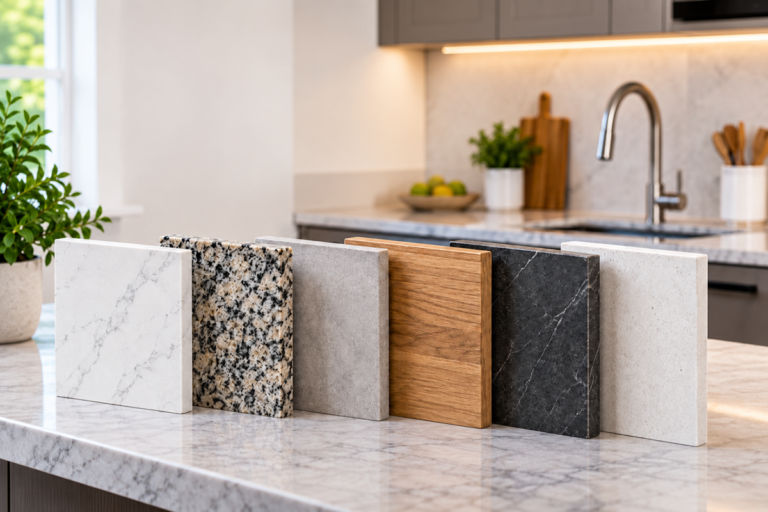
The countertop affects the island’s weight, appearance, durability, maintenance, and ease of movement.
Butcher block and solid wood
Wood provides a warm, natural appearance and is commonly used on portable kitchen carts.
It may require periodic maintenance depending on the finish and exposure to moisture.
Stainless steel
Stainless steel provides a practical, easy-to-clean surface and works well in contemporary or industrial kitchens.
Scratches and fingerprints may be visible depending on the finish.
Laminate
Laminate countertops are available in many styles and can provide a relatively lightweight, budget-friendly surface.
They should be protected from excessive heat and prolonged moisture, especially around joints.
Stone and stone-look materials
Stone surfaces can look attractive, but their weight may make a movable island less practical.
If considering a heavy countertop, make sure the frame, casters, and entire unit are engineered to support it safely.
For a more detailed material comparison, see our article on kitchen countertop materials.
Movable Kitchen Island Dimensions and Clearance
There is no single ideal size for every movable kitchen island. The right dimensions depend on the kitchen layout, intended use, and the amount of space needed for circulation.
Common planning sizes
Compact rolling carts may be approximately 18 to 30 inches wide, while larger portable islands can be 36 to 48 inches wide or more.
These are illustrative product size ranges rather than standard requirements. Always measure the actual model before purchasing.
Kitchen island height
Many preparation-height islands are approximately 36 inches tall, similar to conventional kitchen countertops.
Other designs may be lower or use bar-height proportions.
Choose a comfortable height for the tasks you plan to perform most often.
How much clearance do you need?
Kitchen design guidance commonly uses approximately 42 inches for a one-cook work aisle and 48 inches for a multi-cook work aisle.
Walkways that are not work aisles may require less space, but circulation should never be so narrow that it prevents safe movement or appliance access.
These are design guidelines, not universal legal requirements. Actual needs may vary with accessibility, cabinet layout, appliance doors, and local building regulations.
Check the island in its extended position
If the island has drop leaves, drawers, or seating, measure the space required when those features are in use.
Marking the proposed footprint on the floor with removable tape can help you understand how the island will affect circulation before purchasing it.
How to Choose Wheels and Casters
Casters are one of the most important components of a movable kitchen island.
Good wheels should make the unit easy to reposition while allowing it to remain stable during normal use.
Choose lockable casters
Lockable wheels help prevent unwanted movement while preparing meals.
For a kitchen island, choose a system that provides sufficient stability when the unit is stationary.
Check weight capacity
The wheels must support the combined weight of the island, its countertop, stored items, and any permitted working loads.
Do not assume a caster is suitable merely because it fits the mounting bracket.
Consider the floor surface
Some wheels are more suitable for tile, hardwood, or vinyl than others.
Choose wheels recommended for the flooring material to reduce the risk of damage.
Use the island on a suitable surface
Uneven flooring, thresholds, and thick rugs can interfere with movement and stability.
Never move the island while it is supporting hot liquids, unstable objects, or equipment that could fall.
How Much Does a Movable Kitchen Island Cost?
Movable kitchen island prices vary according to size, construction, materials, storage features, hardware, and brand.
A simple utility cart is generally less expensive than a large cabinet-style island with drawers, a solid wood countertop, and specialized casters.
Custom-built designs may cost considerably more, especially when they include premium finishes or unusual dimensions.
What affects the price?
- Island size and construction quality
- Countertop material
- Drawers and cabinet hardware
- Number and type of shelves
- Casters and locking mechanisms
- Assembly requirements
- Custom finishes or measurements
Instead of focusing only on the initial purchase price, compare durability, storage capacity, stability, and expected maintenance.
A slightly more expensive island may offer better long-term value if its structure and hardware are significantly more durable.
DIY Movable Kitchen Island Ideas
A DIY movable island can be an option for homeowners who enjoy practical furniture projects.
Convert a sturdy utility cart
A heavy-duty utility cart with a suitable worktop can provide additional preparation and storage space.
Make sure the structure and wheels are rated for the intended loads.
Repurpose a small cabinet
A suitable freestanding cabinet may be adapted into a kitchen island, but it must remain stable after modifications.
Adding a heavy countertop or wheels can change the unit’s center of gravity and increase tipping risks.
Add removable baskets
Storage baskets can make open shelves more practical without complicated construction.
Install appropriate locking casters
Choose casters that match the unit’s load requirements, floor type, and mounting structure.
For heavier or tall furniture, professional advice may be necessary to ensure the finished unit remains stable.
Finish the worktop correctly
Use a surface and finish appropriate for kitchen use. If food will directly contact the surface, follow the finish manufacturer’s food-contact and curing instructions.
Important: A DIY island should not incorporate plumbing, gas, or permanently wired appliances without suitable professional design and installation.
Common Movable Kitchen Island Mistakes to Avoid
Choosing an island that is too large
An oversized island can make the kitchen difficult to navigate, even if it looks attractive in a showroom.
Ignoring drawer and appliance clearance
Leave enough room to open cabinet doors, refrigerator doors, dishwasher doors, and drawers fully.
Buying weak or unsuitable casters
Wheels must support the intended load and provide adequate stability.
Using an unstable unit for seating
Do not lean heavily on an island or use it as a breakfast bar unless it is designed for those loads.
Overloading the shelves
Heavy cookware, appliances, and stacked dishes can exceed the island’s weight limits.
Choosing appearance over daily convenience
A beautiful island is not very useful if it blocks circulation, is difficult to clean, or cannot be moved comfortably.
Forgetting that wheels add height
If you are building or modifying an island, include caster height when calculating the final work surface height.
Frequently Asked Questions About Movable Kitchen Islands
Are movable kitchen islands a good idea?
Yes, they can be useful when you need additional preparation space or storage without installing a permanent island. The best design depends on the available floor space and the tasks you want to perform.
Can a movable kitchen island have seating?
Some models are designed for seating, but not all rolling islands can safely support people leaning or sitting at an extended countertop. Follow the manufacturer’s specifications.
What is the best movable kitchen island for a small kitchen?
A compact rolling cart or narrow island with useful storage is often a practical choice. A drop-leaf model can provide extra workspace when necessary without permanently occupying the same amount of floor space.
Do movable kitchen islands need locking wheels?
Lockable casters are strongly recommended for wheeled islands. They help reduce unwanted movement during normal use, although overall stability also depends on the island’s design and construction.
How much space should be left around a movable island?
The required clearance depends on the kitchen layout. Common kitchen planning guidelines suggest approximately 42 inches for a one-cook work aisle and 48 inches for multiple cooks, with additional considerations for appliance doors, seating, and accessibility.
Can you use a movable island as a cutting surface?
Yes, if the countertop and finish are suitable for food preparation and the island is stable. Use an appropriate cutting board where needed to protect the surface and maintain hygiene.
Can you add wheels to an existing kitchen cabinet?
It may be possible, but the cabinet must be structurally suitable for movement. The added height, load capacity, wheel attachment, and tipping resistance should all be evaluated before modification.
Is a movable kitchen island better than a fixed island?
A movable island offers flexibility and is often easier to introduce into an existing kitchen. A fixed island may provide greater stability and more opportunities for integrated plumbing, electrical features, or seating. The better choice depends on your layout and requirements.
Choose a Movable Kitchen Island That Fits Your Space
The best movable kitchen island ideas combine flexibility, useful storage, safe construction, and a design that complements the surrounding kitchen.
Before making a decision, measure the available floor space, identify the tasks the island should support, and compare storage options and countertop materials.
Pay particular attention to stability, caster quality, and clearance around cabinets and appliances.
A well-chosen movable island can make a kitchen more convenient without committing you to a permanent change in layout. For smaller homes especially, the ability to adapt the workspace can be just as valuable as the additional countertop itself.