Modern Bathroom Tile Design Trends and Ideas
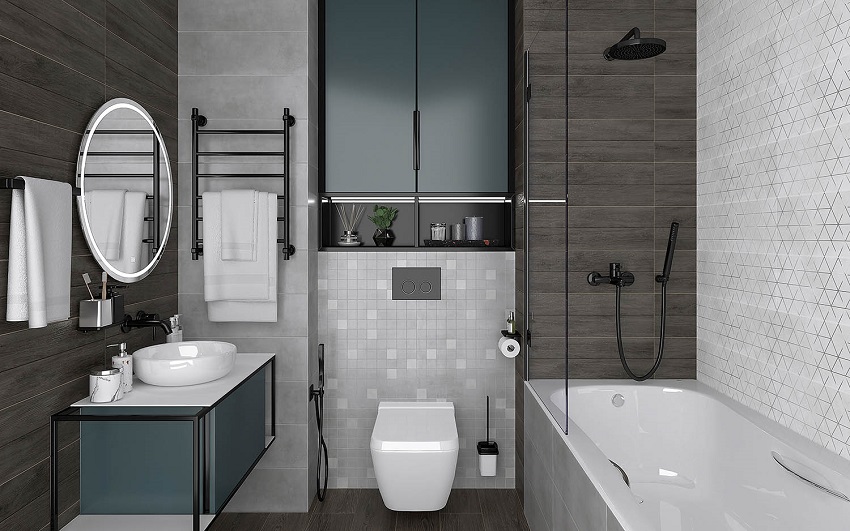
Modern bathroom tile design combines attractive surfaces with durability, safety, and easy maintenance. Bathroom tiles must withstand moisture, regular cleaning, temperature changes, and everyday use, so choosing the right material involves more than selecting a fashionable color or pattern.
Tile size, finish, texture, grout, and layout can all influence how bright, spacious, and comfortable a bathroom feels. Current bathroom tile ideas favor natural-looking materials, warm neutral colors, larger formats, carefully placed accents, and surfaces that remain practical over time.
This guide covers the principal tile materials, their advantages and disadvantages, modern design ideas, options for small bathrooms, and essential points to check before choosing tiles for walls, floors, and shower areas.
Explore related guides:
Bathroom Design Ideas •
Minimalist Interior Design
What to Know Before Choosing Bathroom Tiles
Bathroom tiles are available in an enormous range of materials, colors, dimensions, textures, and surface finishes. Before comparing individual designs, consider how the room will be used and which surfaces will regularly come into contact with water.
The most important factors include:
- Room size: tile proportions and grout lines can make a bathroom appear calmer, busier, wider, or taller.
- Natural light: dark surfaces can create depth in a bright bathroom but may make a poorly lit room feel smaller.
- Water exposure: shower walls, shower floors, and areas around a bathtub need products suitable for wet conditions.
- Maintenance: textured surfaces and numerous grout lines generally require more cleaning than smooth, larger tiles.
- Slip resistance: floor tiles need different performance characteristics from decorative wall tiles.
- Installation: large formats, complex patterns, niches, and sloped shower floors may require more preparation and labor.
- Overall design: tiles should coordinate with the sanitaryware, vanity, lighting, hardware, and other finishes.
Tiles Can Reproduce Natural Materials
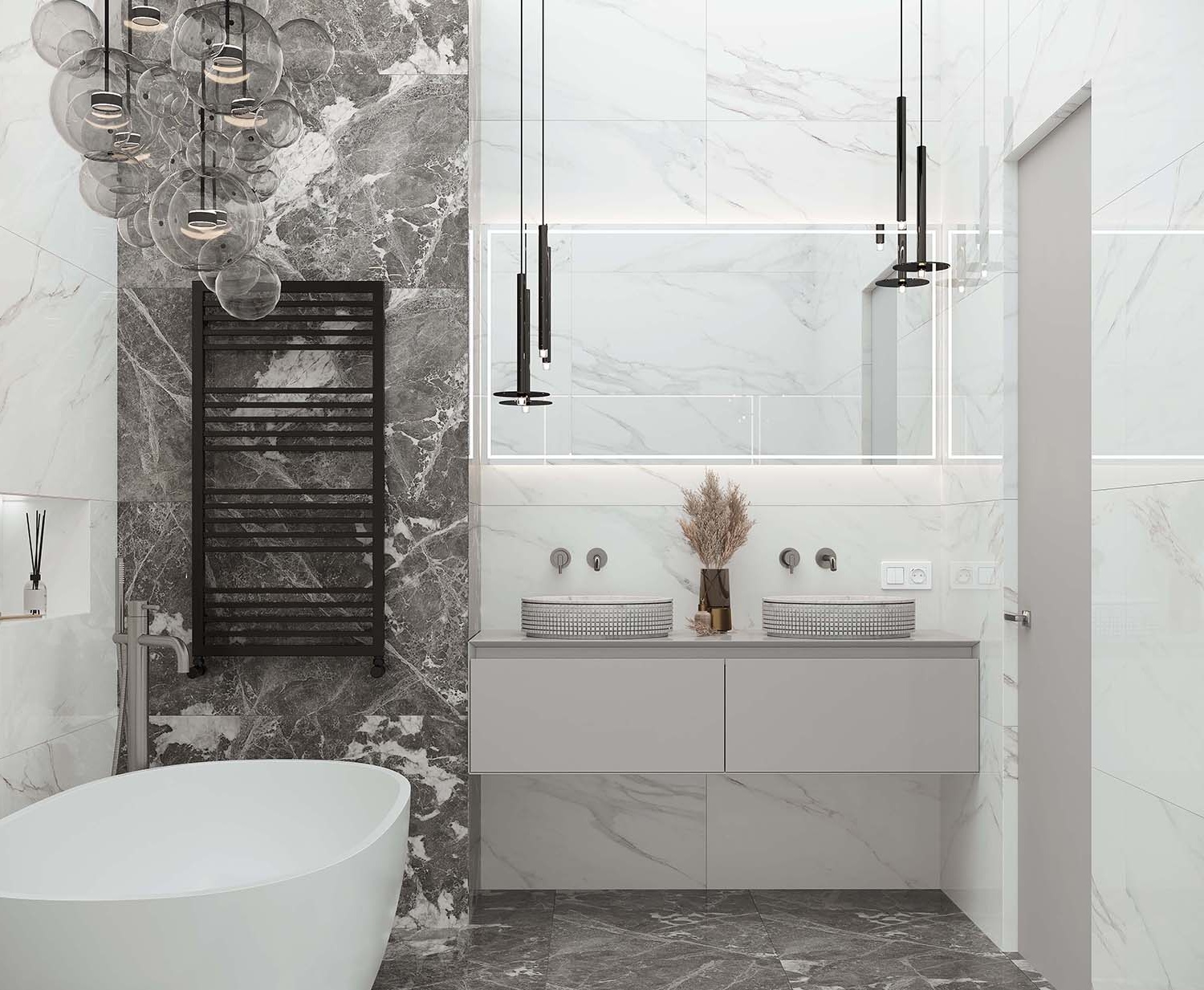
Modern ceramic and porcelain tiles can reproduce the appearance of marble, limestone, travertine, wood, concrete, terrazzo, metal, and even textiles. These effects make it possible to introduce the character of natural materials while using a surface designed for bathroom conditions.
When considering stone- or wood-effect tiles, inspect several pieces from the same collection. Printed patterns often vary between tiles, and a collection with sufficient variation generally produces a more natural-looking finished surface.
Samples should also be viewed in the bathroom itself whenever possible. Artificial showroom lighting can make color, gloss, and texture look different from how they will appear at home.
Advantages and Disadvantages of Bathroom Tiles
Advantages
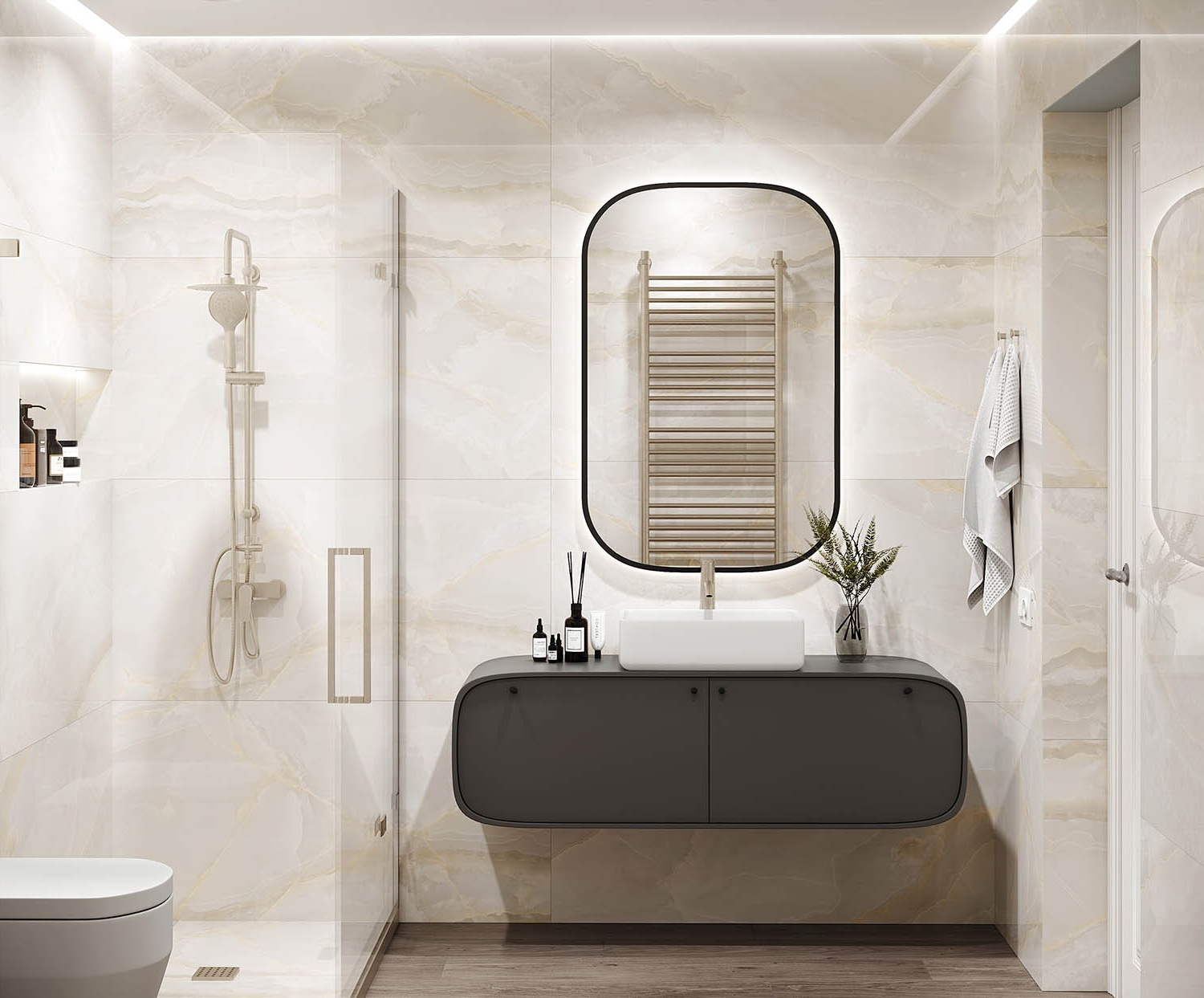
Ceramic and porcelain tiles remain popular because they combine practical performance with extensive design flexibility.
- Moisture resistance: properly selected and installed tiles perform well in humid rooms and wet areas.
- Durability: quality tile can retain its appearance for many years.
- Easy surface cleaning: most glazed surfaces are straightforward to wipe and maintain.
- Wide design selection: tiles are available in colors, patterns, formats, and textures for almost every interior style.
- Compatibility with heating: many products can be used with an appropriate underfloor heating system.
- Design flexibility: large tiles, mosaics, and decorative pieces can be combined within one coordinated collection.
Disadvantages
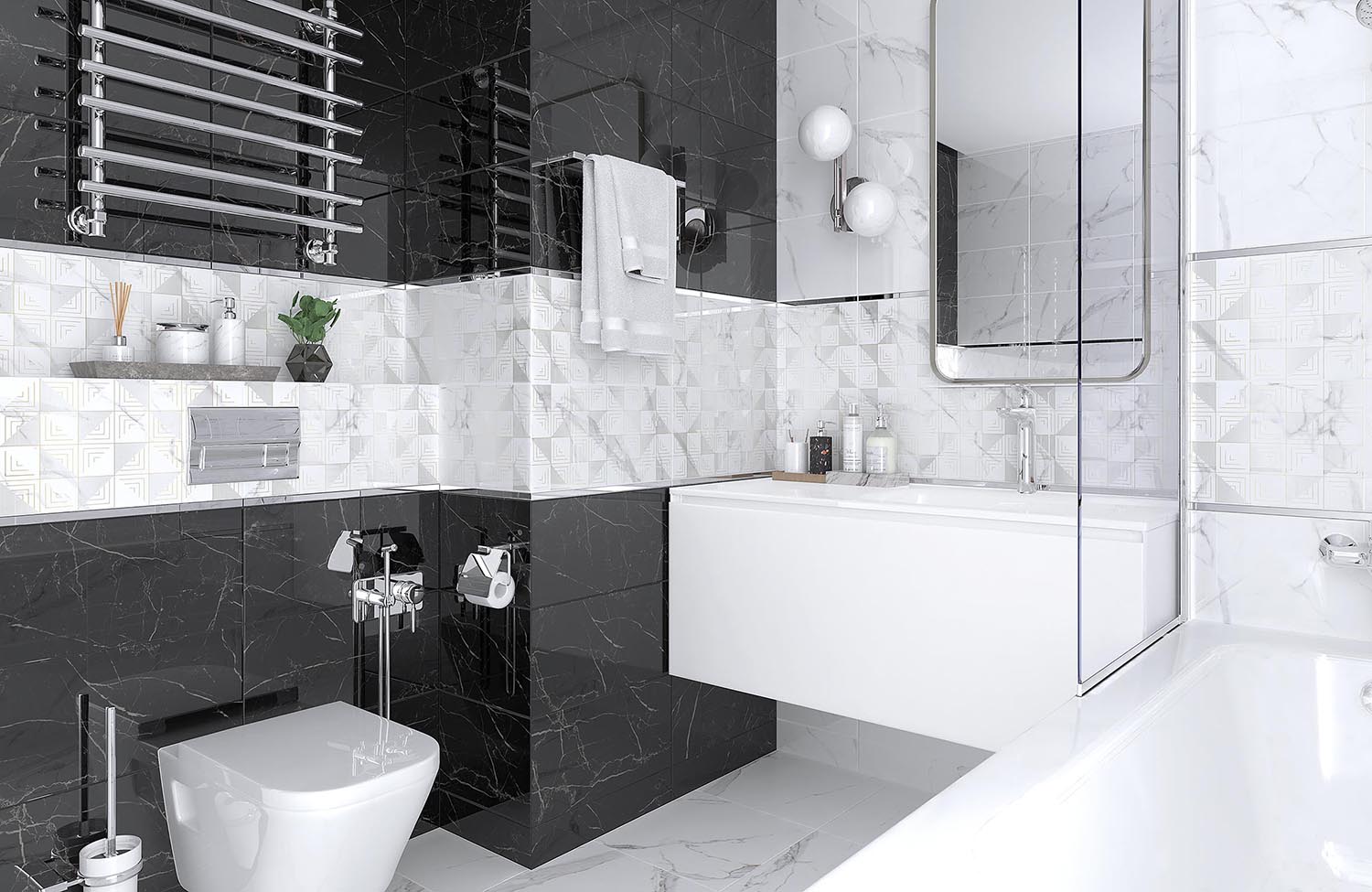
- Demanding installation: poor preparation and uneven surfaces become especially noticeable with large-format tile.
- Hard surface: tile is less forgiving than resilient flooring when an object is dropped.
- Cool feeling: a tiled floor may feel cold underfoot without floor heating.
- Grout maintenance: joints can collect dirt or discolor more quickly than the tile itself.
- Difficult replacement: changing installed tiles normally requires more work than repainting a wall.
Although the tiled surface may be easy to clean, grout, silicone seals, corners, and poorly ventilated wet areas still need regular inspection and maintenance.
Main Types of Bathroom Tiles
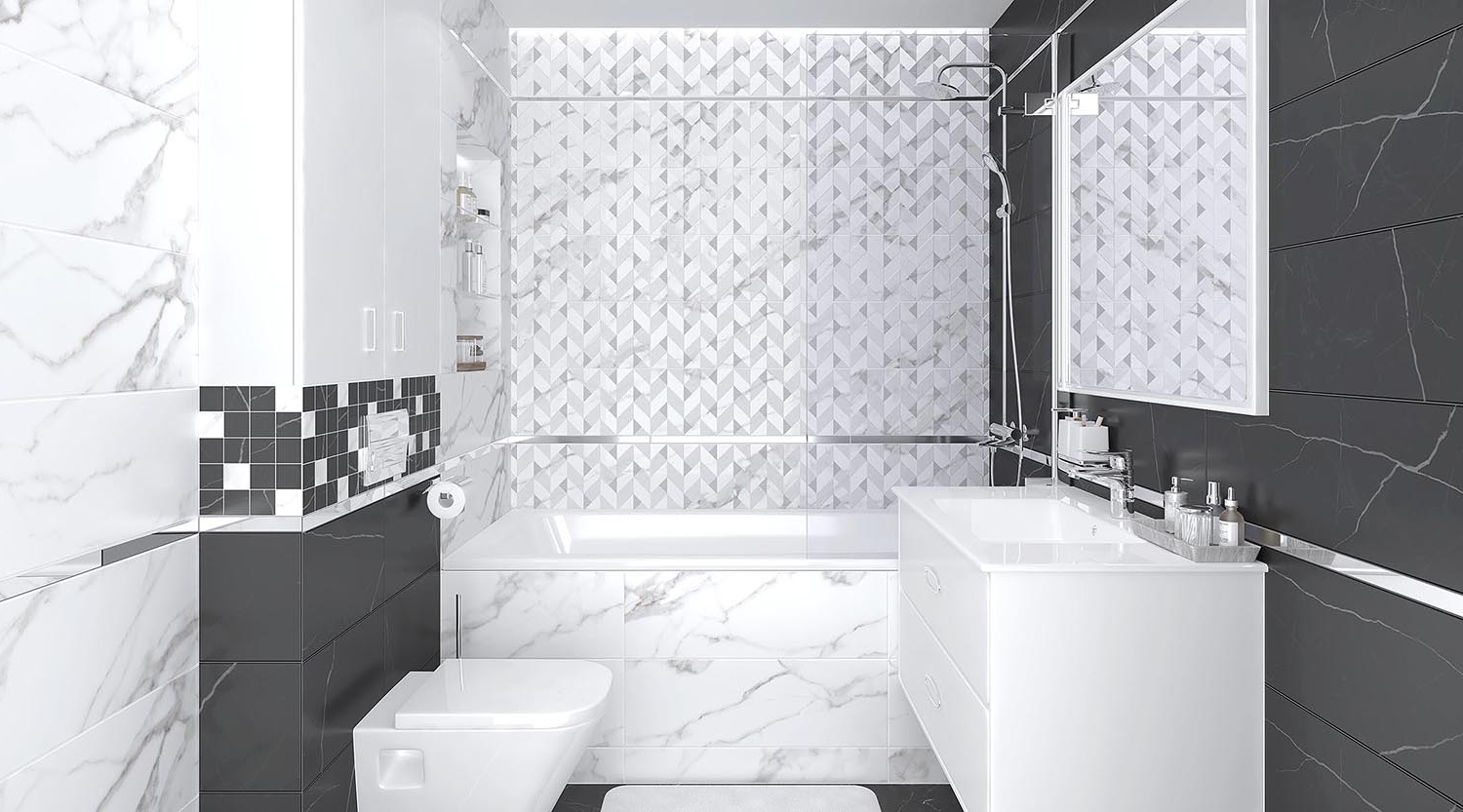
Ceramic Tile
Ceramic tile is frequently used on bathroom walls and other interior surfaces. It is available in a wide range of colors, glazes, patterns, sizes, and decorative finishes and is often an accessible option for updating a bathroom.
Not every ceramic wall tile is suitable for flooring. Always verify the manufacturer’s intended application before using a product on a floor or in a shower.
Porcelain Tile
Porcelain tile is dense, durable, and widely used on both bathroom walls and floors. It is especially popular for large formats, stone effects, wood-look flooring, walk-in showers, and frequently used family bathrooms.
Its density does not remove the need for correct installation, waterproofing, grout, and movement joints. The entire system must be appropriate for the location.
Mosaic Tile
Mosaics consist of small tile pieces that are usually supplied on sheets. They are useful for shower floors, niches, curved surfaces, backsplashes, and decorative accents.
Small pieces can adapt to slopes and complex shapes, but they also create more grout lines. Consider cleaning requirements before using mosaics across a large area.
Terrazzo-Effect Tile
Terrazzo-inspired tiles use scattered chips or colored fragments to create visual movement. Restrained versions can serve as a neutral background, while more colorful designs can become a focal point.
Stone-Effect Tile
Marble-, limestone-, travertine-, and onyx-effect tiles bring natural character to a bathroom without requiring every surface to be finished in genuine stone.
Large-format stone-effect porcelain is particularly effective when the goal is a more continuous surface with fewer visible grout joints.
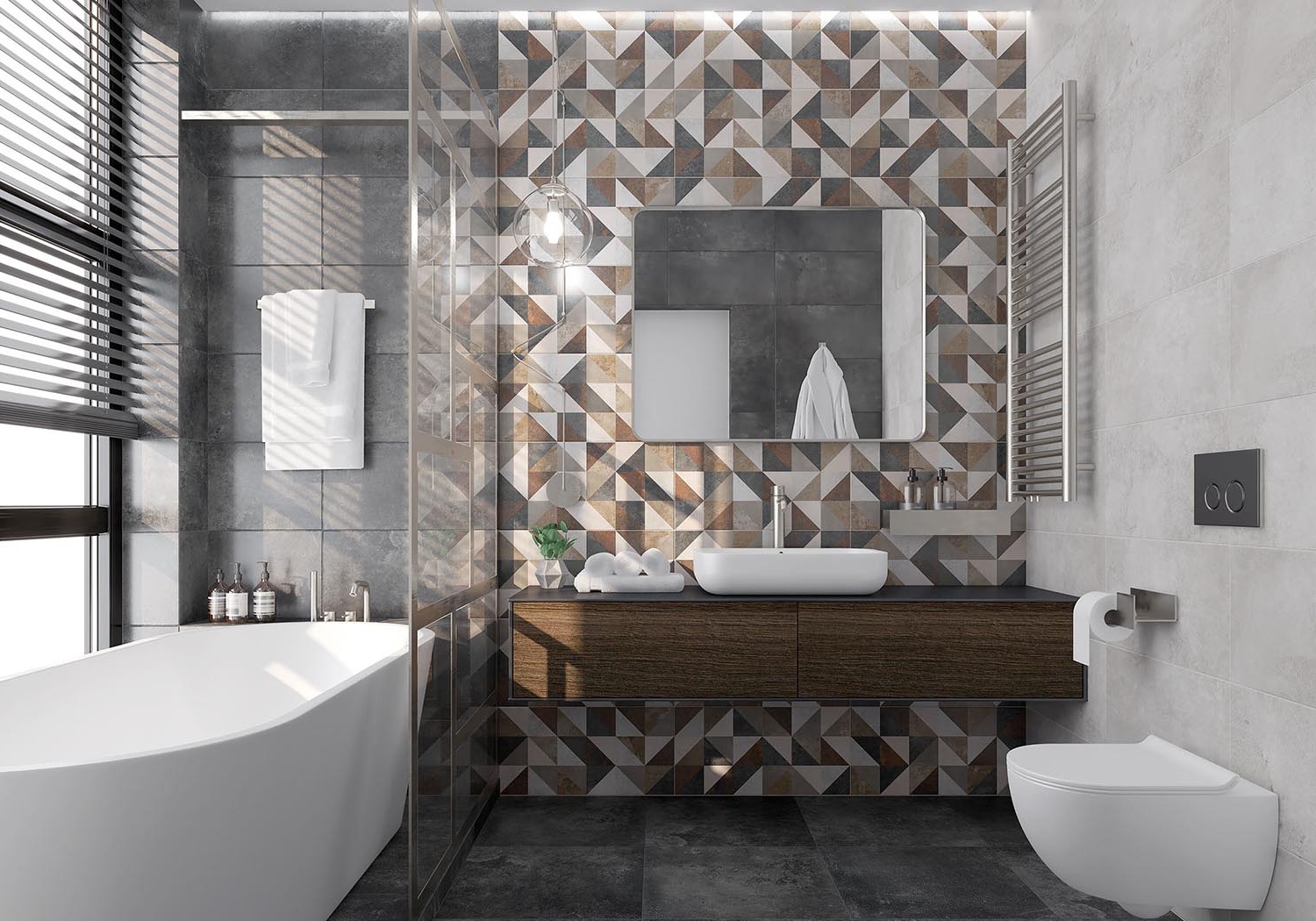
How to Choose Bathroom Tile Size and Format
There is no single tile size that works for every bathroom. The right format depends on the dimensions of the room, the shape of each surface, the location of fixtures, and the number of cuts the installation will require.
Large-Format Tiles
Large tiles can create a calm, continuous appearance because they reduce the number of visible grout lines. They work especially well in modern bathrooms, stone-effect designs, walk-in showers, and minimalist interiors.
However, large formats require a properly prepared substrate. Uneven walls or floors can make alignment difficult and may lead to an unsatisfactory finish.
Small Tiles and Mosaics
Small-format tiles provide more visual detail and can adapt well to curved surfaces, niches, and drainage slopes. They can be useful on some shower floors when the selected product and installation system are approved for that purpose.
Because smaller formats create more joints, grout color and maintenance become more prominent parts of the design.
Rectangular Tiles
Rectangular tiles can be installed horizontally, vertically, in a stacked arrangement, in an offset pattern, or in a herringbone layout.
Horizontal placement can visually emphasize width, while vertically stacked tiles can draw attention upward. The final result also depends on tile proportions, grout contrast, and the surrounding architecture.
Matte vs Glossy Bathroom Tiles
Glossy Tiles
Glossy tile reflects light and can make a wall feel brighter. It is often effective on bathroom walls, behind a vanity, or as a decorative surface in a room with limited natural light.
Gloss can also emphasize fingerprints, water marks, limescale, and imperfections. Highly polished products should not be assumed to be suitable for wet flooring simply because they are sold as bathroom tiles.
Matte Tiles
Matte finishes create a softer, more natural appearance and work particularly well with stone, concrete, terrazzo, and wood effects. They can also make water marks less conspicuous than highly reflective surfaces.
A matte appearance does not automatically guarantee slip resistance. For floors and showers, check the manufacturer’s technical information and intended-use guidance.
Can Matte and Glossy Tiles Be Combined?
Yes. Mixing finishes can introduce depth without adding another color or pattern. For example, matte stone-effect flooring can be paired with a subtle glossy tile around the vanity or bathtub.
Keeping the colors closely related usually produces a calmer and more cohesive result.
Modern Bathroom Tile Design Ideas
Natural Stone Looks
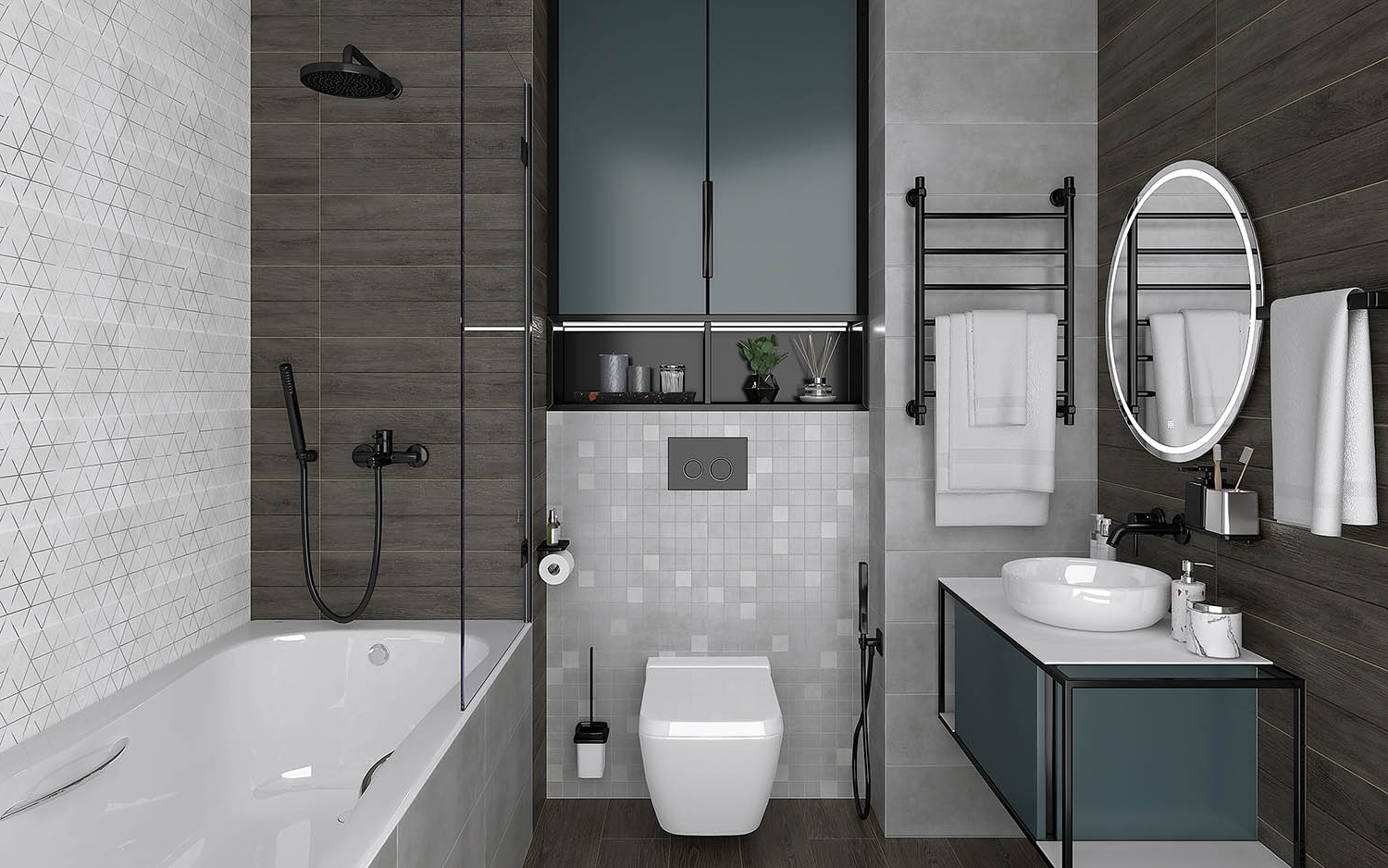
Marble, travertine, limestone, and other natural-looking surfaces remain versatile because they complement contemporary, minimalist, and more traditional interiors.
Warm stone colors can create a softer atmosphere than a sharp black-and-white scheme. For a balanced result, coordinate the veining and undertones with the vanity, flooring, hardware, and lighting.
Warm Neutral Colors
Modern neutral bathrooms are moving beyond cold gray. Sand, warm beige, taupe, cream, soft brown, and muted clay tones can make a tiled room feel more comfortable.
A neutral palette still needs variation. Combine related colors with wood, metal, textiles, changes in scale, or subtle surface texture so the design does not feel flat.
Large-Format Surfaces
Large tiles and slab-style porcelain create an uninterrupted appearance with fewer visible joints. They can be particularly effective around a walk-in shower, freestanding bathtub, or vanity wall.
The dimensions should be planned around the room rather than selected in isolation. Thoughtful positioning can reduce narrow cuts around corners, fixtures, and niches.
Wood-Effect Tile
Wood-effect porcelain introduces visual warmth while retaining the practical qualities of tile. It can work on the floor, on a selected wall, or as a contrast to stone-effect porcelain.
For a convincing result, avoid repeating identical printed pieces next to one another and choose a grout color that relates closely to the tile.
Terrazzo-Inspired Patterns
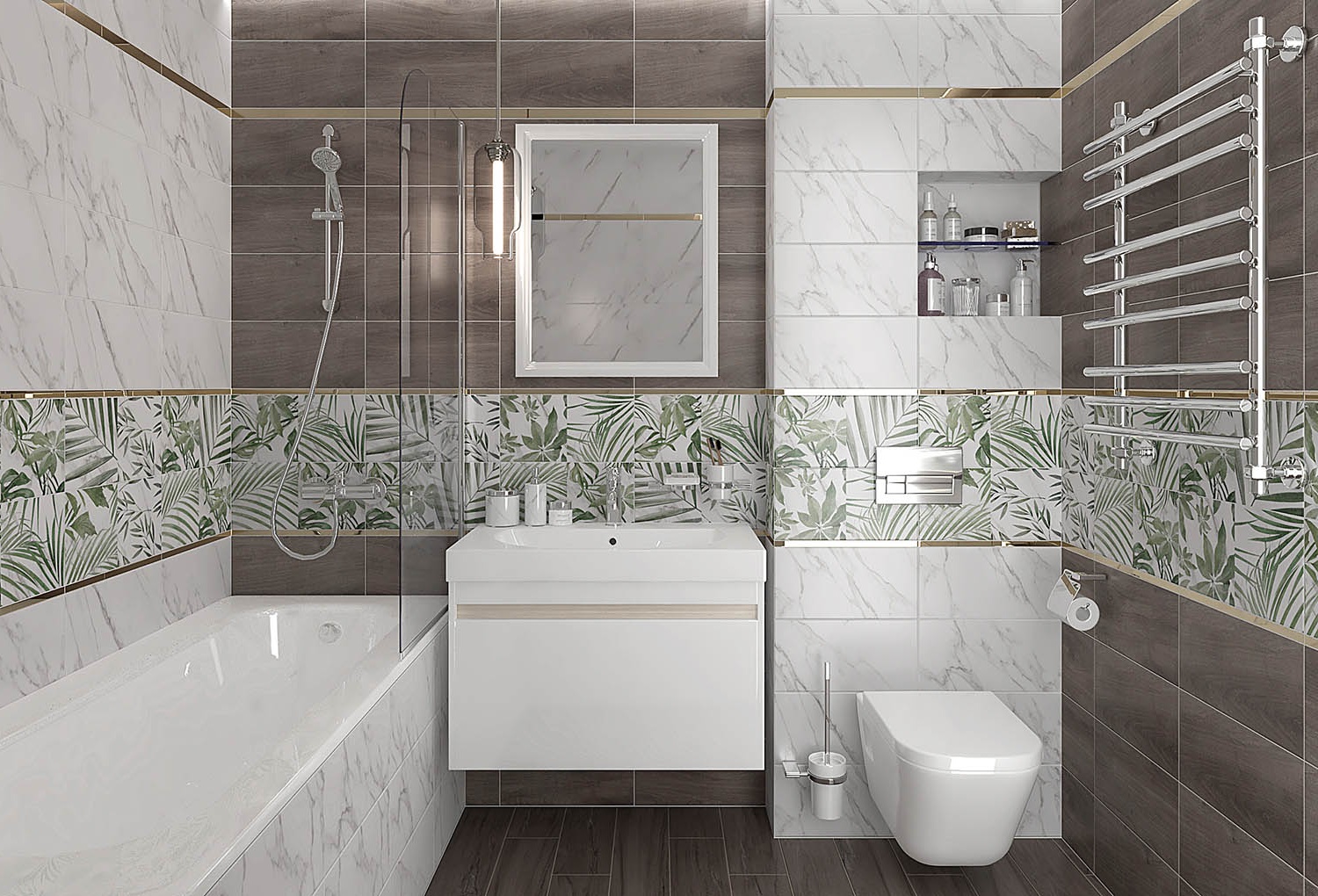
Terrazzo effects add gentle movement to a simple bathroom and can connect several colors used elsewhere in the room.
For a quieter result, choose a limited palette and balance the pattern with plain surfaces. A visually active terrazzo design does not need to cover every wall.
Textured Feature Walls
Three-dimensional or lightly textured tiles can create an accent behind a vanity, bathtub, or shower. Directional lighting can emphasize the relief and make a single-color surface more interesting.
Deep textures may collect more dust, soap residue, or limescale, so consider where the material will be installed and how easily it can be cleaned.
Vertical Tile Layouts
Vertically stacked rectangular tiles can give a familiar format a cleaner contemporary character. The arrangement works particularly well inside a shower or behind a bathroom vanity.
The effect is strongest when the layout is planned around niches, taps, mirrors, and other architectural details.
Geometric Tiles
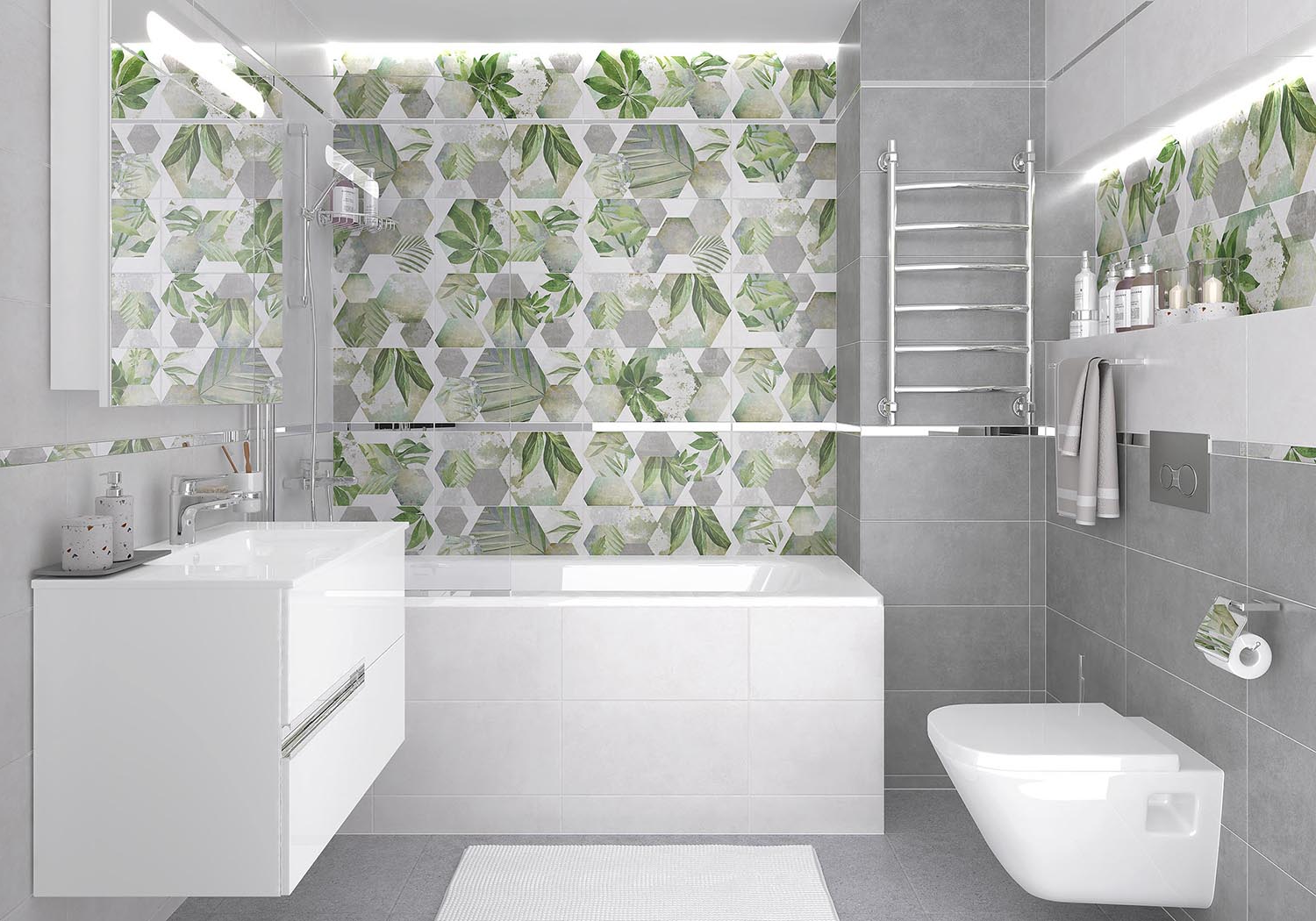
Hexagons and other geometric shapes can add structure and personality when they support the architecture and overall color palette.
They do not need to cover the entire bathroom. A shower floor, niche, backsplash, or selected feature wall can provide enough visual impact.
Color Used as an Accent
A modern bathroom does not have to be entirely white, beige, or gray. Muted green, blue, terracotta, and earthy red tiles can add personality without making the room difficult to coordinate.
Color works particularly well on a vanity wall, inside a shower, in a niche, or on the lower portion of a wall. Simpler surrounding finishes allow the colored surface to remain the clear focal point.
Bathroom Tile Ideas for Small Spaces
Small bathrooms do not automatically require tiny tiles or white walls. A compact space often benefits more from visual continuity, a limited material palette, and carefully planned lighting.
Use Fewer Abrupt Changes
Using the same tile or closely related finishes across several surfaces can make a small bathroom feel calmer. Too many unrelated colors and patterns divide the room visually.
Consider Larger Tiles
Large-format tiles can work surprisingly well in a small bathroom. Fewer grout joints reduce visual fragmentation and can make walls appear more continuous.
Before selecting an oversized format, check how it will fit around corners, sanitaryware, doors, and niches. Numerous narrow cuts can undermine the intended clean appearance.
Control Grout Contrast
Grout close to the tile color creates a more unified surface. Contrasting grout emphasizes every tile and pattern, which can make a compact room appear busier.
Coordinate Mirrors, Tiles, and Lighting
Tile alone cannot compensate for poor lighting. A well-lit mirror, suitable ceiling lighting, and carefully positioned accent lights can make colors more accurate and help a small bathroom feel more open.
Limit Decorative Features
One well-positioned accent generally has more impact than several competing patterns. Select the most important wall or functional area and allow the remaining surfaces to support it.
How to Choose Bathroom Floor Tiles
Bathroom flooring requires particular attention because people may walk on it when the surface is wet. Appearance matters, but technical suitability and safe use are more important.
Before buying floor tiles, check:
- whether the product is approved for floor installation;
- the manufacturer’s slip-resistance and intended-use information;
- whether it is suitable for showers or other wet areas;
- its cleaning and maintenance requirements;
- compatibility with underfloor heating, if required;
- whether its dimensions will accommodate any necessary drainage slope.
Do Not Choose Floor Tile by Appearance Alone
A highly polished tile may look attractive in a showroom but may not be suitable for every bathroom floor. Use the manufacturer’s technical and safety guidance when choosing surfaces for showers and other areas exposed to water.
Plan the Grout Color
Very light grout on a frequently used floor can require more maintenance. A medium neutral color may be easier to live with while still coordinating with the tile.
The installer should use grout, sealant, adhesives, waterproofing, and movement joints appropriate for the chosen material and location.
Common Bathroom Tile Mistakes
Using Too Many Different Tiles
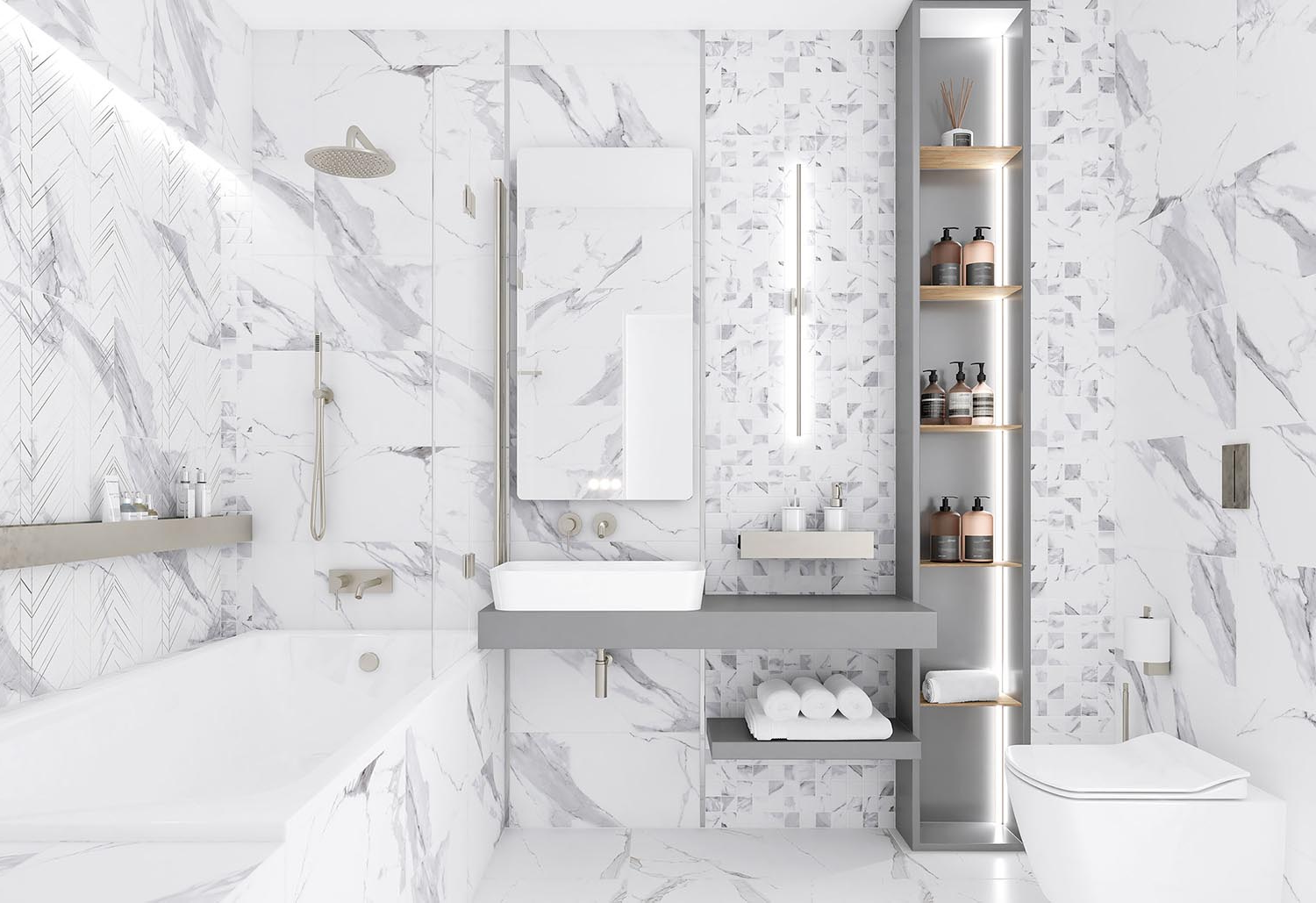
A bathroom can become visually disjointed when the floor, shower, vanity, and remaining walls all use unrelated finishes. A smaller, coordinated material palette normally creates a more cohesive result.
Choosing Tiles From a Single Sample
Stone- and wood-effect products can vary significantly from one tile to another. Inspect several pieces together and review a larger display before making the final decision.
Ignoring the Tile Layout
The position of grout lines, cuts, niches, corners, taps, and sanitaryware can influence the finished room as much as the tile itself. Plan the layout before installation begins.
Treating Grout as an Afterthought
Grout can blend into a surface or turn each tile into a strong graphic element. Choose its color at the same time as the tile and consider how it will look after regular use.
Using Wall Tile on the Floor
Not every wall tile can withstand foot traffic or provide appropriate performance in wet-floor conditions. Always follow the manufacturer’s stated application.
Forgetting About Maintenance
Deep relief, polished dark surfaces, numerous joints, and complex niches may need more frequent cleaning. Choose a design that matches the level of maintenance you are prepared to perform.
Following Trends Too Literally
Bathroom finishes can be expensive and inconvenient to replace. Use current ideas as inspiration, but prioritize materials, colors, and layouts that suit the room and will remain comfortable to live with.
Final Thoughts
Modern bathroom tile design is less about following one dominant trend and more about balancing durability, safety, maintenance, color, scale, and texture.
Natural stone effects, warm neutrals, large formats, wood-look porcelain, restrained geometric patterns, and selective use of color can all work beautifully when they fit the architecture and purpose of the room.
Before purchasing, compare real samples, check the technical suitability of floor and wet-area products, plan the tile and grout layout, and view the materials alongside the bathroom lighting, cabinetry, sanitaryware, and metal finishes.
The best bathroom tile is not simply the most fashionable option. It is a material that looks appropriate in the space, performs correctly in its intended location, and remains practical for years of everyday use.