Canvas Painting in Bathroom Should You Hang Them?
That does not mean you must avoid artwork completely. The key is choosing the right piece, placing it away from direct moisture, and making sure the room is well ventilated.

Can You Hang Canvas Art in a Bathroom?
Yes, you can hang canvas art in some bathrooms, but the level of risk depends heavily on the room.
A large, well-ventilated bathroom that dries quickly after use is a very different environment from a small bathroom where steam remains on the walls and mirrors for a long time.
Canvas art is generally better suited to areas with moderate humidity than to locations that receive frequent condensation or direct splashes.
For that reason, artwork should not normally be placed:
- inside a shower area
- directly beside a bathtub
- where water regularly splashes from a sink
- on a wall that remains damp after bathing
If the artwork is valuable, sentimental, or difficult to replace, another room is usually the safer choice.
How Bathroom Humidity Affects Canvas Art
Bathroom moisture can affect more than just the visible surface of a painting.
Canvas
Canvas is a flexible material that can respond to changes in temperature and relative humidity.
Repeated fluctuations may contribute to expansion, contraction, sagging, or changes in tension over time.
Wooden Stretcher Bars
Many stretched canvases are mounted on wooden stretcher bars. Wood naturally reacts to moisture and can expand, contract, or distort as environmental conditions change.
Paint and Protective Layers
Different paints, primers, varnishes, and coatings behave differently in humid conditions.
A fully dry painted surface should still not be treated as waterproof unless the artist or manufacturer specifically designed it for wet environments.
Mold and Mildew
Persistent moisture and poor airflow can encourage mold growth on organic materials, dust, backing boards, wooden components, and surrounding surfaces.

Best Places to Hang Canvas Art in a Bathroom
Placement is one of the most important decisions when displaying artwork in a bathroom.
Better locations may include:
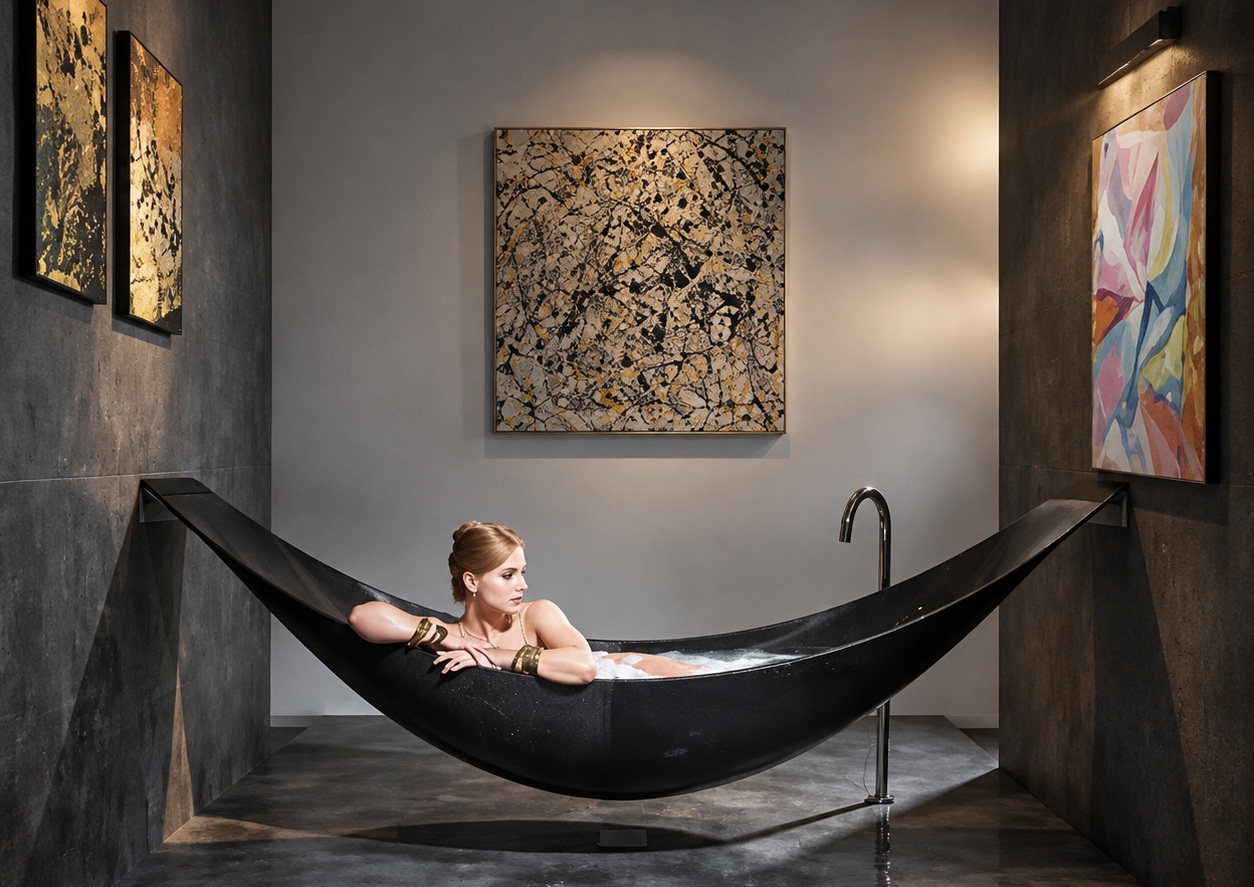
- a wall opposite the bathtub or shower
- above a toilet, provided the area stays dry
- near the bathroom entrance
- on a wall away from the sink
- in a separate dressing or vanity area
The farther the artwork is from direct steam and water, the lower the risk.
Do not judge placement only by distance. Watch what actually happens when the bathroom is used. If condensation regularly forms on a particular wall, that is not an ideal location for canvas.
Why Ventilation Matters
Good ventilation benefits both the artwork and the bathroom itself.
After showers and baths, excess moisture should be removed efficiently rather than remaining trapped in the room.
Helpful measures can include:
- using an appropriately sized extractor fan
- keeping the fan running long enough after bathing
- opening a window when conditions allow
- leaving the bathroom door open after use when appropriate
- addressing persistent condensation problems
If walls, mirrors, and windows remain wet for extended periods after normal bathroom use, improving moisture control is more important than trying to protect the artwork with a coating.
Avoid Valuable or Irreplaceable Artwork
A bathroom is not the best location for original artwork with high financial, historical, or sentimental value.
Even with good ventilation, bathrooms experience more environmental variation than most living spaces.
For bathroom decoration, consider using:
- an inexpensive canvas print
- a reproduction
- art specifically produced for humid environments
- a replaceable decorative piece
This allows you to enjoy artwork in the bathroom without taking unnecessary risks with something irreplaceable.
How to Reduce the Risk of Damage
There is no universal treatment that makes every canvas painting suitable for a bathroom.
The safest approach is to combine sensible placement with moisture control.
Keep the Artwork Away From Direct Water
No coating should be relied upon to protect ordinary indoor artwork from repeated splashing.
Leave Some Airflow Behind the Artwork
Mounting the artwork so that it is not pressed tightly against a damp wall can help air circulate behind it.
Small wall bumpers or suitable hanging hardware may help maintain a slight gap.
Inspect the Artwork Periodically
Check the back, edges, stretcher bars, and wall behind the artwork for:
- mold
- warping
- staining
- sagging canvas
- peeling or cracking
- persistent dampness
If you see any of these signs, move the artwork to a drier location.
Do Not Apply Random Sealers to Original Artwork
Sprays, varnishes, and polyurethane products can alter the appearance of a painting and may not be compatible with the materials used by the artist.
For an original or valuable work, ask the artist, manufacturer, or a qualified conservator before applying any coating.
Bathroom-Friendly Art Alternatives
If your bathroom remains humid for long periods, other decorative formats may be easier to maintain than traditional stretched canvas.
Possible alternatives include:
- properly framed prints
- acrylic prints designed for suitable interior environments
- metal prints
- ceramic wall decoration
- decorative tiles
- mirrors with artistic frames
- wall sculptures made from moisture-tolerant materials
No decorative object is completely immune to bathroom conditions, so the manufacturer’s care recommendations still matter.

For more general decorating inspiration, see our guide to
home decorating ideas
.
How High Should Bathroom Art Be Hung?
There is no single correct height for every piece of bathroom artwork.
A commonly used starting point is to position the center of artwork near average eye level, but the surrounding fixtures matter more than following a fixed measurement.
When hanging artwork above a toilet, vanity, bench, or other feature, consider:
- the height and width of the object below it
- the size of the artwork
- ceiling height
- sight lines when entering the room
- distance from wet areas
The artwork should feel visually connected to nearby fixtures rather than floating too high on the wall.
Common Mistakes When Hanging Art in a Bathroom
Placing Artwork Too Close to the Shower
Direct steam, condensation, and splashes significantly increase the risk of damage.
Assuming Varnish Makes Canvas Waterproof
A protective coating may change how a surface reacts to moisture, but it does not automatically turn an indoor painting into waterproof bathroom art.
Ignoring the Back of the Canvas
Moisture can affect stretcher bars, backing materials, and the wall behind the artwork even when the front still looks fine.
Using Valuable Original Art
A bathroom is an unnecessary environmental risk for an irreplaceable painting.
Ignoring Persistent Condensation
If the bathroom remains damp long after use, solve the ventilation or moisture problem first.
Hanging Art Directly Against a Damp Wall
Some airflow behind the piece is preferable to trapping moisture between the artwork and wall.
Frequently Asked Questions About Canvas Art in Bathrooms
Can canvas paintings be hung in a bathroom?
Yes, particularly in a well-ventilated bathroom and in a location away from direct splashes and heavy condensation. Less valuable or replaceable artwork is a safer choice.
Can humidity damage canvas?
Repeated changes in humidity can affect canvas tension, wooden stretcher bars, paint layers, and other materials. Persistent dampness can also increase the risk of mold.
Are acrylic paintings safe in bathrooms?
The use of acrylic paint alone does not make a painting suitable for a humid bathroom. The canvas, primer, stretcher bars, coatings, and overall construction also matter.
Are oil paintings suitable for bathrooms?
A valuable oil painting should generally be kept in a more stable environment. Even a fully cured painting can be affected by repeated humidity fluctuations and condensation.
Can I waterproof a canvas painting?
There is no single coating that safely turns every canvas painting into waterproof artwork. Do not apply sealers or varnishes to valuable artwork unless they are known to be compatible with the materials.
Where is the safest place for artwork in a bathroom?
Choose a dry wall away from the shower, bathtub, and sink, preferably in a bathroom with effective ventilation.
Should bathroom art be framed?
Framing can provide physical protection, but the frame and backing materials can also react to moisture. The complete framing system should be appropriate for the environment.
Final Thoughts

Canvas art can work beautifully in a bathroom, but placement and moisture control matter more than simply choosing an attractive picture.
Keep artwork away from direct water, make sure the bathroom dries effectively after use, and avoid placing valuable originals in an environment where humidity changes regularly.
For most bathrooms, a replaceable canvas print or another moisture-tolerant decorative format offers a good balance between appearance and practicality.