Modern Kitchen Island with a Vibrant Color
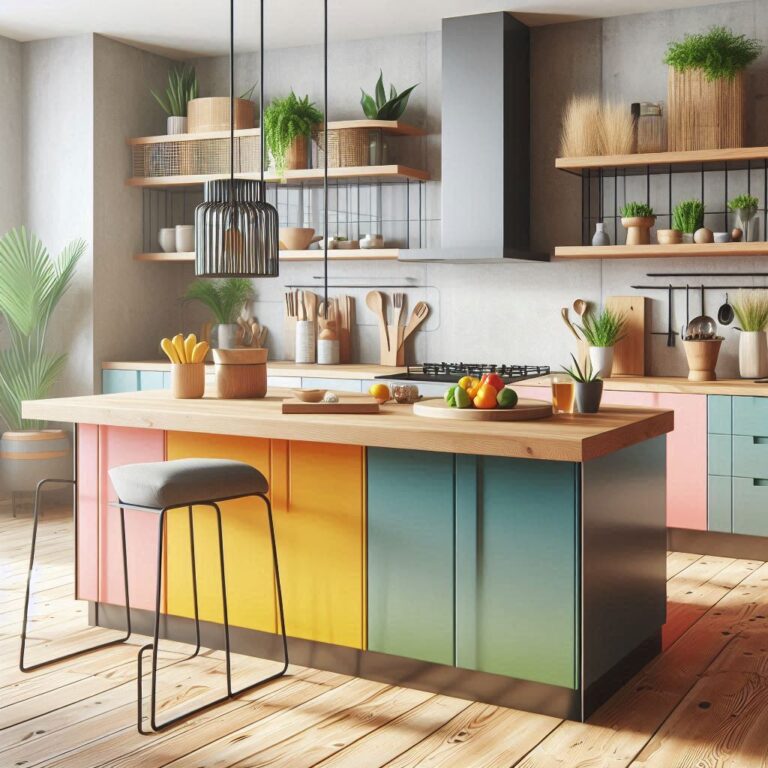
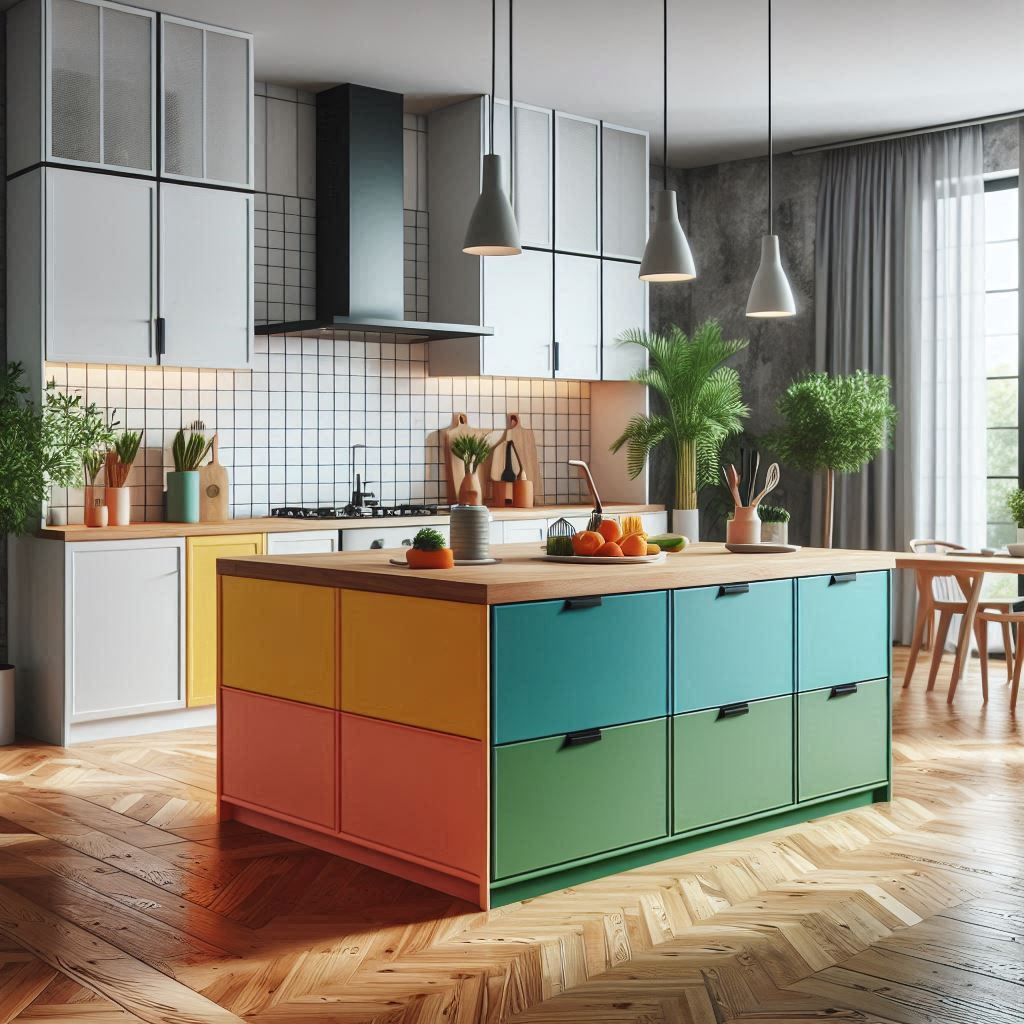
A colorful kitchen island with a wood countertop can become the visual center of a modern kitchen while also adding warmth, contrast, and personality.
Instead of matching every cabinet in the room, the island can use a stronger color to create a clear focal point. Red, yellow, blue, green, turquoise, and other saturated shades can all work when they are balanced with natural wood, neutral cabinetry, practical lighting, and a well-planned surrounding palette.
The most successful combinations are not simply bold. They also consider room size, natural light, flooring, cabinet finishes, hardware, and how the kitchen is used every day.
Why Choose a Colorful Kitchen Island?
A kitchen island is naturally positioned to attract attention, especially in open-plan kitchens. Giving it a different color from the surrounding cabinets can define the island as a separate design element without requiring the entire kitchen to use a strong palette.
A colorful island can help:
- create a visual focal point
- break up a neutral kitchen
- introduce personality without repainting every cabinet
- connect colors used elsewhere in the room
- make the island feel more like a piece of furniture
The key is balance. If the island uses a strong color, the rest of the kitchen often benefits from simpler finishes.
Why Wood Countertops Work With Bold Colors
Wood can soften the visual intensity of a brightly painted island.
Its natural grain and warm tones create contrast with painted cabinetry while helping the kitchen feel less rigid or overly polished.
Wood can work particularly well with:
- red
- mustard or warm yellow
- navy and deep blue
- forest and emerald green
- turquoise
- terracotta and orange
The exact wood tone matters. Lighter woods tend to create a more relaxed contemporary look, while darker woods can make the island feel richer and more traditional.
Red Kitchen Island with a Wood Countertop
Red creates strong visual energy, making it a good choice when the island is intended to be the main accent in the room.
Because red is visually powerful, it usually works best with a restrained surrounding palette such as warm white, cream, gray, or natural wood.

Black or dark metal hardware can create contrast, while brass or warm metallic details can make the combination feel softer.
If a bright red feels too intense, deeper brick, wine, or muted red tones can provide a similar focal point with less visual dominance.
Yellow Kitchen Island with a Wood Countertop
Yellow can make a kitchen feel warmer and more cheerful, particularly in rooms that receive plenty of natural light.
A wood countertop supports this warmth and prevents the island from feeling too stark.

Soft mustard, ochre, and muted golden shades can be easier to integrate than very bright yellow.
Yellow works well with:
- warm white cabinets
- natural wood flooring
- matte black hardware
- brass details
- soft gray walls
Blue Kitchen Island with a Wood Countertop
Blue is one of the most versatile choices for a contrasting kitchen island.
Deep blue and navy can create a more sophisticated appearance, while softer blue tones can make the room feel lighter and more relaxed.

Wood helps balance cooler blue tones by introducing warmth and natural texture.
This combination can work especially well with white cabinetry, stone-look flooring, brass hardware, or simple black lighting fixtures.
Green Kitchen Island with a Wood Countertop
Green works naturally with wood because both colors are strongly associated with natural materials.
Deep forest, olive, sage, and emerald tones can all create different moods.

Dark green can feel rich and dramatic, while muted green tends to blend more easily with neutral kitchens.
Green islands pair especially well with:
- cream or off-white cabinets
- wood flooring
- brass hardware
- black accents
- stone or ceramic surfaces
Turquoise, Orange and Other Bold Kitchen Island Colors
Red, yellow, blue, and green are not the only options. A kitchen island can also be used to introduce a less conventional accent color.
Turquoise Kitchen Island
Turquoise can create a fresh, relaxed atmosphere and works particularly well with light wood, white cabinetry, and simple natural textures.

Orange and Terracotta
Orange can be energetic, while terracotta and burnt orange provide a warmer, earthier interpretation.
These colors pair naturally with wood and can work well in kitchens that use cream, beige, gray, or warm stone surfaces.
Magenta and Berry Tones
Magenta is a much stronger choice and works best when the surrounding kitchen is relatively simple.

If a vivid magenta feels too intense, muted berry, plum, or burgundy can create a similar sense of personality while being easier to coordinate.
How to Coordinate a Colorful Island With the Rest of the Kitchen
A bold island works best when it feels connected to the rest of the room rather than appearing as an unrelated block of color.
Keep the Main Cabinets Simpler
White, cream, light gray, greige, and natural wood cabinetry can provide a calm backdrop for a strong island color.
Repeat the Accent Color Carefully
You do not need to repeat the island color everywhere.
Small references in artwork, textiles, ceramics, or accessories may be enough to make the palette feel intentional.
Coordinate With the Flooring
The undertones of the island color, wood countertop, and floor should work together.
For more guidance on flooring materials, see our
kitchen flooring ideas
.
Consider the Backsplash
If the island is already a strong focal point, a very busy backsplash can make the kitchen feel visually overloaded.
A simpler backsplash often allows the island and wood surface to stand out more clearly.
Lighting a Colorful Kitchen Island
Lighting affects how both paint colors and wood tones appear.
Natural daylight may make a color look quite different from artificial lighting in the evening, so it is useful to view paint samples at different times of day before making a final choice.
Pendant lights above the island can provide both practical task lighting and decorative emphasis.
Choose fixtures that complement the design rather than competing with the island.
Possible finishes include:
- matte black
- brass
- glass
- white or cream
- simple metallic finishes
For additional ideas, see our guide to
kitchen lighting options
.
Practical Considerations for a Wood Kitchen Island Countertop
Wood countertops provide warmth and character, but they require different care from stone, quartz, stainless steel, or many composite surfaces.
Protect the Surface From Standing Water
Wipe up spills promptly, especially around sinks, seams, and edges.
Use an Appropriate Finish
The correct finish depends on the type of wood, how the countertop is used, and the manufacturer’s recommendations.
A food-preparation surface may have different requirements from a decorative breakfast bar.
Use Cutting Boards
Cutting directly on a finished wood countertop can leave scratches and knife marks.
Protect Against Heat
Use trivets or heat-resistant pads under hot cookware rather than placing very hot items directly on the wood.
Expect Maintenance
Depending on the finish and use, a wood countertop may need periodic cleaning, refinishing, or reapplication of an appropriate protective treatment.
Always follow the care instructions for the specific countertop material and finish.
Common Mistakes With Colorful Kitchen Islands
Choosing the Color From a Small Sample Alone
A color covering an entire island can appear much stronger than it does on a small paint card.
Test a larger sample and observe it in the actual kitchen lighting.
Using Too Many Competing Colors
If the island is bright, several additional strong cabinet, wall, backsplash, and flooring colors can make the room feel chaotic.
Ignoring Wood Undertones
Wood can have warm, cool, red, yellow, or neutral undertones. Consider how these interact with the painted island color.
Choosing Color Before Considering the Whole Room
Flooring, countertops, appliances, cabinet colors, wall finishes, and lighting all affect how the island will look.
Prioritizing Appearance Over Function
A beautiful island still needs adequate circulation space, practical storage, appropriate seating, and a durable work surface.
Using a High-Maintenance Countertop Without Planning for It
Wood can be an excellent countertop material, but it should be chosen with realistic expectations about moisture, scratches, heat, and maintenance.
Frequently Asked Questions
Should a kitchen island be a different color from the cabinets?
It does not have to be, but using a different color can turn the island into a focal point and add contrast to a neutral kitchen.
What color is best for a kitchen island?
There is no single best color. Blue and green are versatile choices, while red, yellow, turquoise, and berry tones create a stronger statement. The right option depends on the surrounding cabinets, flooring, lighting, and wood tones.
Do wood countertops work on kitchen islands?
Yes. Wood can add warmth and natural texture to an island, but it requires appropriate finishing and maintenance, especially where the surface is exposed to water, heat, or frequent food preparation.
Does a colorful island make a small kitchen look smaller?
Not necessarily. A darker or very saturated island can appear visually heavier, but the overall effect depends on room size, natural light, surrounding cabinet colors, and the dimensions of the island.
Can you mix a wood countertop with painted cabinets?
Yes. Painted cabinetry and wood countertops can create useful contrast. Pay attention to the undertones of both the paint color and the wood species or finish.
Should the island match the kitchen floor?
An exact match is not necessary. The colors and undertones should coordinate, but some contrast can help separate the island visually from the flooring.
What hardware works with a colorful kitchen island?
Black, brass, chrome, nickel, bronze, and other finishes can all work. Choose a finish that relates to other elements in the kitchen rather than selecting hardware solely because it is currently fashionable.
Final Thoughts
A colorful kitchen island with a wood countertop can introduce personality without requiring an entire kitchen to use bold colors.
Red and yellow create energetic focal points, blue and green offer versatile alternatives, while turquoise, terracotta, magenta, and other less conventional shades can make the design more individual.
The strongest results come from balancing color with the rest of the room. Consider the wood tone, cabinet finish, flooring, backsplash, hardware, natural light, and artificial lighting together rather than choosing each element separately.
Just as importantly, remember that a kitchen island is a working surface. Good circulation, useful storage, comfortable seating, durable finishes, and appropriate countertop care matter as much as the color itself.