Bathroom Ideas to Inspire a Refresh
Bathroom design ideas do not have to involve a complete renovation.
Thoughtful changes to lighting, color, storage, fixtures, mirrors, textiles, and accessories can make a bathroom feel more comfortable, functional, and visually balanced.
Before choosing decorative details, consider how the room is used every day. Good bathroom design should provide safe movement, practical storage, effective ventilation, suitable lighting, durable materials, and surfaces that are easy to maintain.
This guide explains how to refresh a bathroom while balancing appearance, comfort, moisture resistance, storage, lighting, water efficiency, and long-term practicality.
Start With a Practical Bathroom Design Plan
A successful bathroom refresh begins with the room’s practical requirements rather than its decorative style.
First, identify what works well and what causes frustration. For example, you may need better lighting around the mirror, additional storage, easier-to-clean surfaces, improved ventilation, or a safer shower entrance.
Before purchasing products, record:
- room dimensions
- door and window positions
- ceiling height
- plumbing locations
- electrical outlets and lighting points
- radiators or heating equipment
- ventilation openings
- available storage space
If the existing layout functions well, keeping the toilet, sink, shower, and bath in their current positions can simplify the project. Moving plumbing may significantly increase cost and complexity.
Define the Main Priorities
A family bathroom, guest bathroom, and small en suite have different requirements.
For example, a family bathroom may need durable finishes and generous storage. By contrast, a guest bathroom may prioritize simple maintenance and a welcoming appearance.
Create a short list of essential improvements before considering optional decorative features. This helps protect the budget and prevents the design from becoming unnecessarily complicated.
Choose Bathroom Materials That Handle Moisture
Bathrooms contain water, steam, cleaning products, and frequent temperature changes. Therefore, materials should be selected for durability as well as appearance.
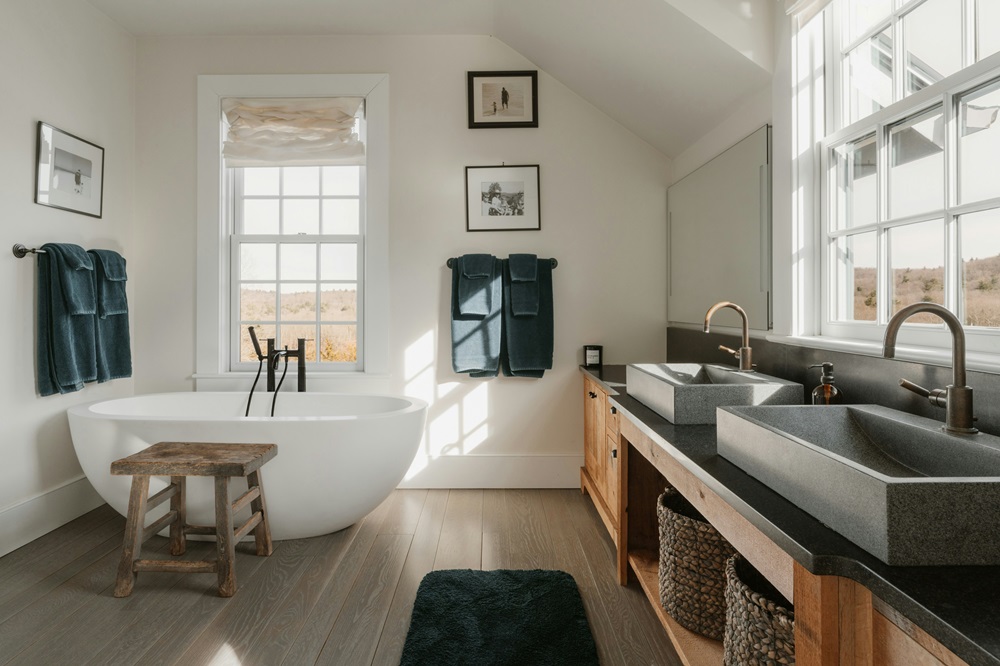
Wood and Wood-Look Surfaces
Wood tones can soften hard bathroom surfaces and create a warmer atmosphere.
Possible applications include:
- properly finished vanity units
- moisture-resistant shelves
- wood-look porcelain tiles
- teak or other suitable shower accessories
However, untreated or unsuitable wood can swell, stain, or deteriorate in damp conditions. Confirm that the product and finish are appropriate for bathroom use.
Stone and Stone-Look Materials
Natural stone can add texture and character, but some stone requires sealing and specialist maintenance.
Porcelain and ceramic products can provide a similar visual effect with different maintenance requirements. Nevertheless, always check slip resistance, cleaning instructions, and suitability for wet areas.
Bathroom Flooring
Bathroom flooring should be water-resistant, stable, and comfortable to walk on.
Suitable options may include:
- porcelain tile
- ceramic tile rated for floors
- properly installed luxury vinyl
- sealed natural stone
- other products approved for bathroom use
Highly polished surfaces may become slippery when wet. Consequently, appearance should not be the only selection criterion.
Bathroom Design Ideas for Better Lighting
Lighting affects both the atmosphere and everyday usability of a bathroom.
A single ceiling fixture may illuminate the room, but it can produce unhelpful shadows around the face. Therefore, a layered lighting plan is usually more effective.
General Lighting
Ceiling fixtures or recessed lights provide overall illumination and help users move safely around the room.
Mirror and Vanity Lighting
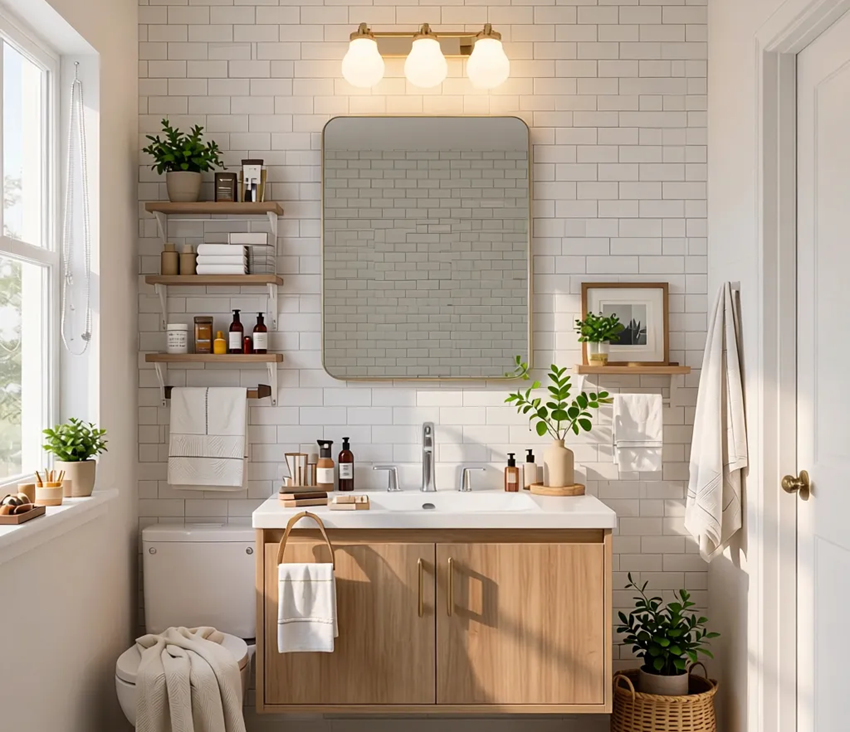
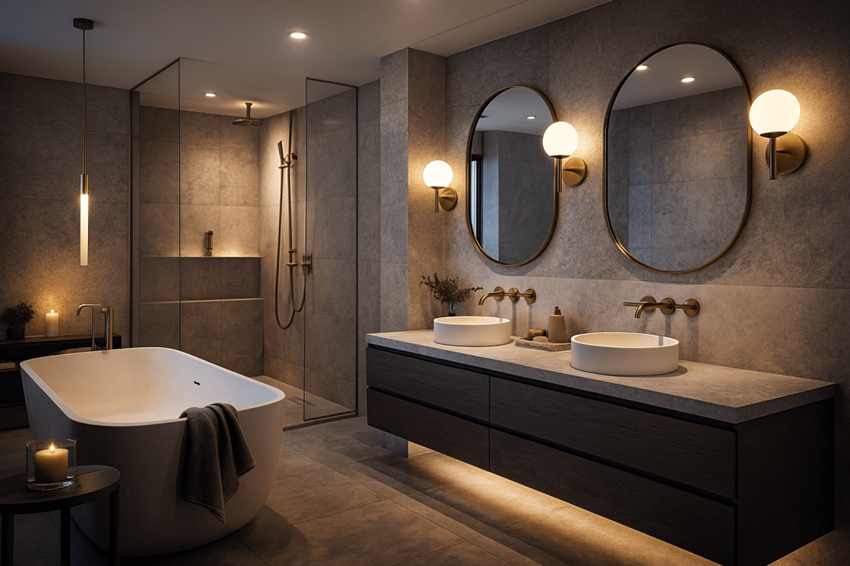
Lighting placed beside the mirror can illuminate the face more evenly than a single light directly above it.
Possible options include:
- vertical wall lights on both sides of the mirror
- an illuminated mirror
- a wide vanity light
- integrated cabinet lighting
Accent Lighting
Subtle lighting beneath a floating vanity, inside a niche, or around selected architectural details can add visual depth.
However, accent lighting should support rather than replace practical illumination.
Color Temperature
Warm white light can create a relaxing atmosphere, while neutral white light may be useful for grooming and cleaning.
Whichever range you choose, use compatible lamps with consistent color rendering so that skin tones, paint, tile, and finishes look natural.
Electrical Safety
Bathroom electrical work must comply with local building and electrical requirements.
Use fixtures approved for the intended damp or wet location. In addition, keep electrical equipment outside prohibited zones around baths and showers, and use a qualified electrician where required.
For more lighting-planning ideas, see our guide to
smart lighting for small spaces.
Choose a Balanced Bathroom Color Palette
Color can make a bathroom feel calmer, brighter, warmer, or more dramatic.
Instead of choosing each surface separately, create a simple palette that connects the walls, floor, vanity, fixtures, towels, and accessories.
Light and Neutral Colors
White, warm gray, beige, sand, and other light tones can make a compact bathroom feel open and calm.
However, an entirely pale room may look flat without changes in texture, material, or lighting.
Nature-Inspired Colors
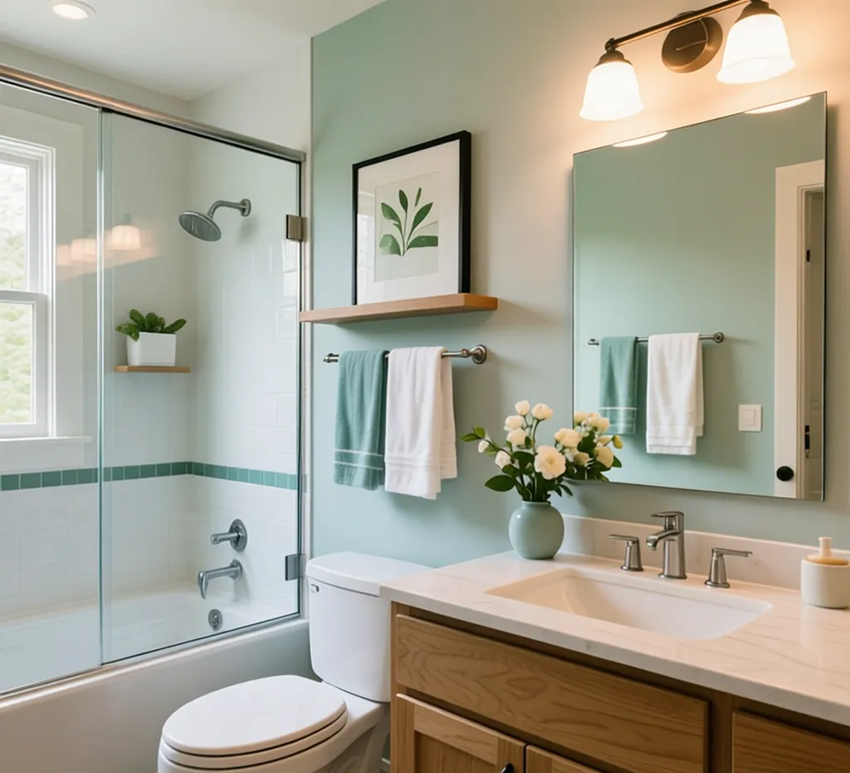
Muted green, clay, stone, warm brown, and soft blue can work well with wood, ceramic, and natural textures.
Dark Colors
Navy, charcoal, deep green, and black can add depth and character.
Nevertheless, dark finishes show water marks, dust, and soap residue differently from light ones. They may also require stronger lighting in a small or windowless room.
Add Color Without Permanent Work
If you are not ready to repaint or retile the room, introduce color through:
- towels
- a bath mat
- a shower curtain
- artwork suitable for a humid space
- storage baskets
- small accessories
These elements are easier and less expensive to change later.
Update Bathroom Fixtures and Hardware
Replacing worn or outdated hardware can refresh a bathroom without changing the complete layout.
Possible upgrades include:
- sink faucets
- shower controls
- showerheads
- cabinet handles
- towel rails
- robe hooks
- toilet paper holders
Choose Finishes Carefully
Common finishes include polished chrome, brushed nickel, matte black, warm metallic tones, and oil-rubbed bronze.
Using one finish throughout the room creates a consistent appearance. Alternatively, two finishes can work together when they are repeated intentionally rather than introduced randomly.
Check Compatibility Before Buying
A new fixture must work with the existing plumbing dimensions, water pressure, mounting holes, and valve system.
In addition, replacement parts and cartridges should be reasonably available. A visually attractive faucet is less practical if it is difficult to repair.
Consider Water Efficiency
When replacing faucets, showerheads, or toilets, look for recognized water-efficiency certification available in your country.
In the United States, the
EPA WaterSense label
identifies independently certified products that meet water-efficiency and performance criteria.
Other countries use different labels and plumbing standards. Therefore, check the requirements that apply in your location.
Use Mirrors to Improve Light and Space
A bathroom mirror is both a practical feature and an important visual element.
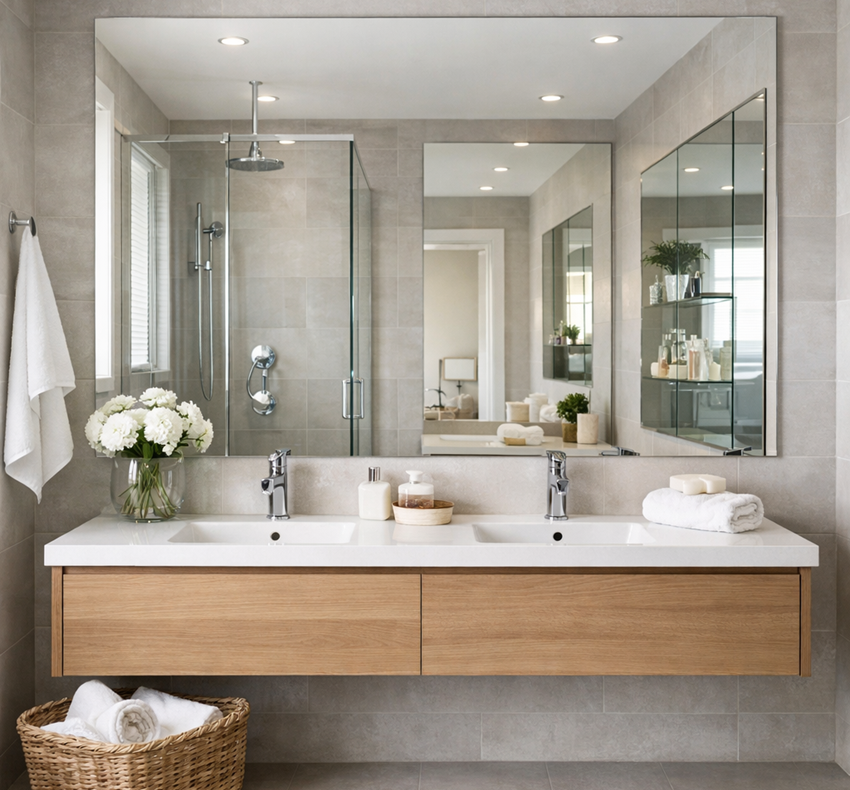
A larger mirror can reflect more light and make a compact room feel more open. However, its dimensions should remain proportionate to the vanity and available wall space.
Bathroom Mirror Options
- large rectangular mirrors for generous visual coverage
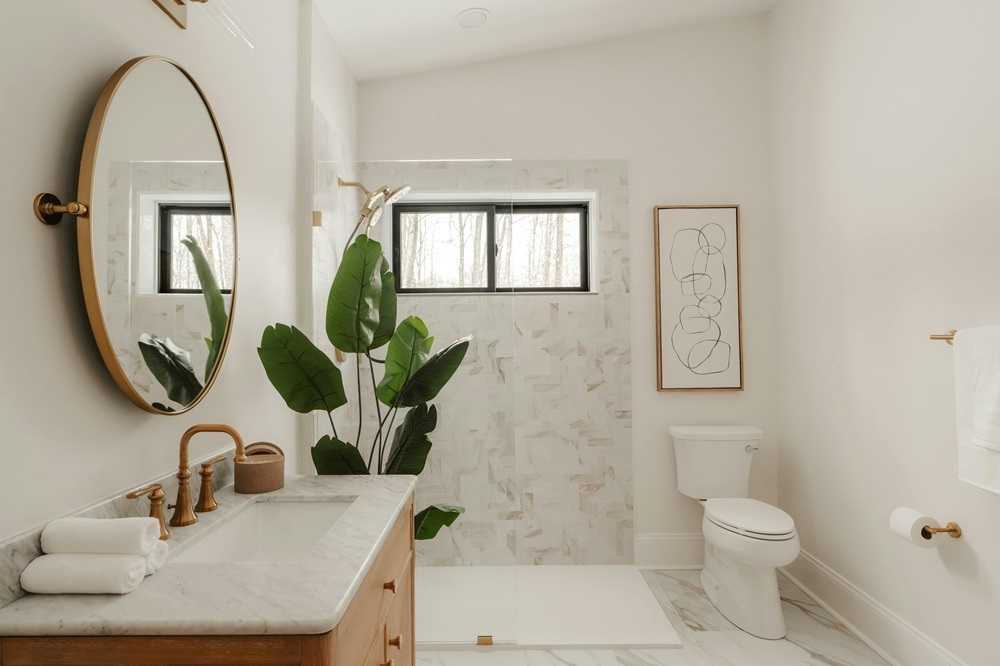
- round mirrors to soften straight architectural lines
- two mirrors above a shared vanity
- mirrored cabinets that combine reflection and storage
- illuminated mirrors for integrated task lighting
Plan the Mirror With the Lighting
Consider the mirror, wall lights, faucet, backsplash, and ceiling height together.
For example, an oversized mirror may leave insufficient space for side lighting. By contrast, a smaller decorative mirror may not provide enough practical viewing area.
Improve Bathroom Storage Without Adding Clutter
A bathroom feels calmer when frequently used items have practical and accessible storage.
Before adding shelves or cabinets, remove expired products, empty containers, and items that belong elsewhere.
Closed Storage
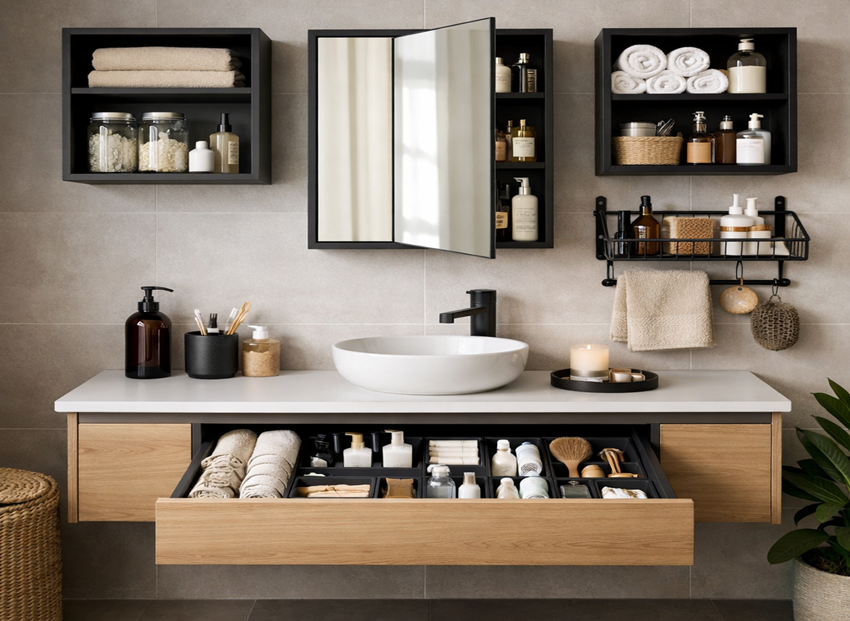
Drawers, vanity cabinets, and mirrored medicine cabinets hide visual clutter and protect some items from dust and splashes.
Drawer organizers are particularly useful for small products that would otherwise become difficult to find.
Open Storage
Open shelves can hold towels, baskets, and decorative objects. However, too many visible products can make a small bathroom feel crowded.
Use open storage selectively and reserve it for items that are attractive or used frequently.
Vertical Storage
When floor space is limited, consider:
- a tall narrow cabinet
- shelves above the toilet where appropriate
- wall-mounted baskets
- hooks behind the door
- a recessed medicine cabinet
Shower Storage
A built-in niche can provide convenient bottle storage, but it needs correct waterproofing, drainage, and positioning.
For a simpler refresh, use a corrosion-resistant shower caddy designed for wet conditions.
Upgrade the Shower or Bathing Area
The shower or bath is often the visual and functional center of a bathroom.
Possible improvements range from replacing a showerhead to renovating the entire enclosure.
Simple Shower Improvements
- replace a worn showerhead
- add practical bottle storage
- install new seals where needed
- replace damaged or mold-affected sealant correctly
- add a washable bath mat outside the wet area
Glass Shower Screens
A clear glass screen can make a small bathroom feel more open because it does not visually divide the room.
However, glass requires regular cleaning, and the door needs enough clearance to open safely.
Walk-In Showers
A low-threshold or level-entry shower can create a clean appearance and improve accessibility.
Nevertheless, correct waterproofing, drainage falls, splash control, and floor slip resistance are essential. This work should follow local construction requirements.
Freestanding Baths
A freestanding bath can become a focal point, but it requires sufficient space for movement, cleaning, plumbing, and safe access.
Before choosing one, check the filled weight and confirm that the floor structure is suitable where necessary.
Control Bathroom Moisture and Ventilation
Even an attractive bathroom can develop condensation, mold, peeling paint, and damaged finishes when ventilation is inadequate.
Good ventilation helps remove humid air after showers and baths.
Use an Appropriate Extractor Fan
The fan should be correctly sized, ducted, installed, and exhausted according to local requirements.
A fan that only moves humid air into a roof void or another enclosed area can transfer the moisture problem elsewhere.
Run Ventilation Long Enough
An automatic timer or humidity control can help the fan continue operating after the room is used.
In addition, leave internal airflow paths open where required so that replacement air can enter the room.
Choose Moisture-Resistant Finishes
Use paint, wall coverings, cabinetry, and sealants intended for bathroom conditions.
However, moisture-resistant materials do not replace proper ventilation or waterproofing.
Add Bathroom Plants Carefully
Plants can introduce color, texture, and softness to a room dominated by tile, glass, and metal.
However, humidity alone is not enough to keep a plant healthy. The plant still needs suitable light, temperature, drainage, and care.
Match Plants to the Available Light
A bathroom with a bright window provides more options than a windowless room.
In a dark bathroom, artificial lighting designed only for people may not provide enough light for healthy plant growth.
Consider Children and Pets
Some popular houseplants can be harmful if chewed or swallowed.
Therefore, check plant toxicity and place unsuitable plants beyond the reach of children and animals.
Avoid Water Damage
Use saucers or waterproof outer pots to protect shelves, windowsills, and vanity surfaces. Also make sure that containers can drain correctly.
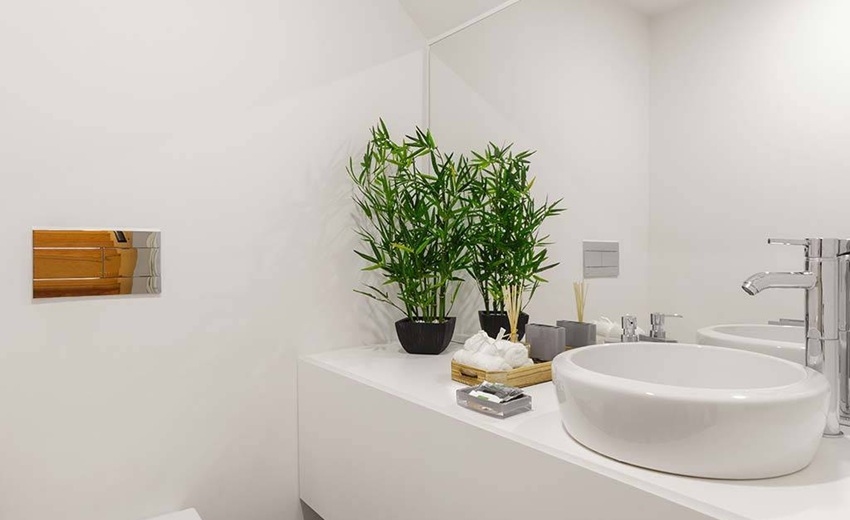
Choose Practical Bathroom Accessories
Accessories help connect the colors and materials in the room. Nevertheless, too many decorative objects can create clutter and make cleaning more difficult.
Useful additions include:
- coordinated towels
- a washable bath mat
- refillable soap dispensers
- a tray for frequently used products
- closed containers for small essentials
- hooks positioned where towels are actually used
Use Textiles to Add Color and Texture
Towels, shower curtains, and mats provide an easy way to change the room’s appearance without permanent work.
Choose materials that dry efficiently and can be cleaned according to the manufacturer’s instructions.
Be Careful With Candles and Diffusers
Open flames should never be left unattended or positioned near towels, curtains, paper products, children, or pets.
Additionally, fragrances and essential oils may not be suitable for every household. Use them only when appropriate for the occupants and the room.
Bathroom Design Ideas for Small Spaces
A small bathroom benefits from a clear layout and carefully controlled visual clutter.
Useful strategies include:
- use wall-mounted storage to preserve floor area
- choose a vanity that does not obstruct movement
- use a mirrored cabinet for two functions in one location
- keep frequently used items accessible but organized
- use clear shower glass where practical
- provide bright and even lighting
- repeat a limited number of finishes
Do Not Make Every Feature Smaller
A compact room does not necessarily need a tiny mirror, miniature tiles, and undersized fixtures.
In fact, a generous mirror or larger-format surface can reduce visual fragmentation. However, sanitary fixtures must still fit the room and provide suitable clearance.
Keep the Floor Visually Open
A wall-mounted vanity or toilet can reveal more floor and make cleaning easier.
Nevertheless, installation requirements, wall structure, plumbing access, and maintenance should be considered before selecting concealed systems.
How to Refresh a Bathroom on a Budget
A bathroom can feel significantly different without replacing every surface and fixture.
Begin with maintenance and cleaning before buying decorative items.
Low-Cost Improvements
- remove unused products and reorganize storage
- deep-clean tile, grout, glass, and fixtures
- repair leaks and loose hardware
- replace worn towels and bath mats
- add matching dispensers or storage containers
- change cabinet handles
- repaint suitable surfaces with appropriate products
- upgrade the mirror or lighting where safely possible
Spend Money Where It Matters Most
Waterproofing, plumbing, ventilation, and electrical work are not good places for unsafe shortcuts.
By contrast, decorative accessories can often be purchased gradually or changed later.
Prepare a budget that includes materials, labor, delivery, disposal, and unexpected repairs. Bathrooms can conceal water damage, so a contingency allowance is sensible for larger projects.
Common Bathroom Design Mistakes
Choosing Appearance Over Practicality
A product may look attractive in a photograph but be difficult to clean, unsuitable for wet areas, or uncomfortable to use.
Using Only One Ceiling Light
A single overhead fixture can create shadows around the mirror. Instead, combine general lighting with suitable task lighting.
Ignoring Ventilation
Decorative improvements will not last well if condensation and humidity remain uncontrolled.
Insufficient Storage
A minimalist room still needs storage for toiletries, cleaning products, towels, and daily essentials.
Choosing Slippery Flooring
Highly polished surfaces may be hazardous when wet. Check whether the product is appropriate for the intended floor area.
Following Short-Lived Trends Everywhere
Trends can provide inspiration, but permanent surfaces and expensive fixtures should also suit the room and household over the long term.
Mixing Too Many Finishes
An excessive number of metals, tile patterns, colors, and wood tones can make a small bathroom feel disorganized.
Forgetting Cleaning Access
Leave enough space to clean around the toilet, bath, vanity, taps, and storage units.
Attempting Unsafe DIY Work
Electrical, plumbing, waterproofing, ventilation, and structural work may require qualified professionals and regulatory approval.
Frequently Asked Questions About Bathroom Design
How can I refresh a bathroom without remodeling it?
Start with cleaning, decluttering, repainting suitable surfaces, improving storage, replacing textiles, updating hardware, and adding better lighting where safely possible.
What colors make a small bathroom look larger?
Light colors can reflect more light and create an open appearance. However, good lighting, a clear layout, a large mirror, and reduced clutter may matter just as much as wall color.
Should all bathroom fixtures use the same finish?
They do not have to, but repeating one or two finishes creates a more intentional design. Avoid introducing a different metal on every fixture.
What type of lighting is best for a bathroom?
A layered plan normally works well: general ceiling lighting, task lighting around the mirror, and optional accent lighting.
All fixtures must be suitable for their location and installed according to local electrical requirements.
Are plants suitable for every bathroom?
No. Plants need suitable light, temperature, drainage, and care. Also check whether a plant is safe around children and pets.
How can I add more bathroom storage?
Consider vanity drawers, mirrored cabinets, tall narrow units, wall shelves, hooks, drawer organizers, and suitable shower storage.
Before adding storage, remove unused and expired products.
Is a walk-in shower suitable for a small bathroom?
It can be, especially when a clear screen keeps the room visually open. However, the design must provide correct drainage, waterproofing, splash control, and safe access.
How can I make a bathroom feel more luxurious?
Focus on practical details such as even lighting, organized storage, clean surfaces, coordinated textiles, comfortable temperature, good ventilation, and fixtures that operate smoothly.
Luxury does not require filling the room with expensive decorative objects.
Final Thoughts
Useful bathroom design ideas balance appearance with everyday function.
Start by correcting practical problems such as poor lighting, inadequate storage, leaks, difficult cleaning, or insufficient ventilation. Next, choose a simple color and material palette. Finally, add fixtures, mirrors, textiles, plants, and accessories that support the overall design.
A successful bathroom does not need to follow every current trend. Instead, it should be safe, durable, easy to maintain, comfortable to use, and appropriate for the people who live in the home.