Black and White Bedroom Interior Design: Practical Ideas
It can feel bright and minimal, dark and dramatic, or warm and comfortable.
The final result depends on the balance of color, texture, lighting, furniture, and personal details.
A successful monochrome bedroom should not feel cold or unfinished.
Natural materials, layered textiles, practical storage, and carefully positioned lighting can soften the contrast.
They also make the room more comfortable for everyday use.
Plan the Black and White Bedroom Interior Design
Begin by deciding which color will dominate the room.
An equal amount of pure black and bright white can create a sharp result.
A more controlled balance is often easier to live with.
Three common approaches are:
- Mostly white: creates a brighter and more open appearance.
- Mostly black: produces a darker and more intimate atmosphere.
- Balanced contrast: uses both colors in clearly defined areas.
The size of the bedroom, available daylight, ceiling height, and existing flooring should influence the decision.
A small room with limited daylight may benefit from a lighter foundation.
A larger, brighter room can usually support more dark surfaces.
Black and white do not have to be completely pure.
Warm white, ivory, charcoal, graphite, and soft gray can produce a gentler transition.
These variations can also help connect the color scheme to wood flooring or existing furniture.
Use White as the Main Color
White walls and ceilings can help distribute available light.
They also provide a clean background for darker furniture, lighting fixtures, frames, and textiles.
A predominantly white bedroom does not need to look plain.
Subtle differences in finish and texture create depth.
For example, combine matte painted walls with woven curtains, linen bedding, painted furniture, and a soft rug.
Avoid using several whites with conflicting undertones.
A cool white wall may look disconnected from cream-colored bedding.
Compare samples in the actual room before purchasing paint or large textiles.
Introduce Black Carefully
Black can anchor the room and create clear visual structure.
However, it does not need to cover an entire wall.
Black can be introduced through:
- A headboard or bed frame
- Bedside tables
- Lighting fixtures
- Curtain rods
- Picture frames
- Door or wardrobe hardware
- A patterned rug
- Selected bedding layers
Repeat black in several parts of the room so that it looks intentional.
One isolated black object may feel disconnected from the rest of the design.
Large black surfaces absorb more visible light than white ones.
Plan additional lighting if you use dark walls, wardrobes, or curtains.

Add Warmth With Texture
Texture prevents a monochrome bedroom from feeling flat.
It creates variation even when the room uses only a few colors.
Suitable materials may include:
- Linen bedding
- A wool or woven rug
- An upholstered headboard
- Velvet cushions
- Wooden furniture
- Woven baskets
- Textured wallpaper
- Quilted or knitted throws
Combine smooth and textured surfaces.
For example, a simple black bed frame can be softened with white linen, a quilted bedspread, and a woven rug.
Matte finishes tend to create a softer appearance.
Glossy surfaces reflect more light and can look sharper.
Use reflective finishes selectively because too many can create glare and visual distraction.
Make the Bed the Focal Point
The bed is usually the largest element in the bedroom.
It provides an obvious place to establish the black and white palette.
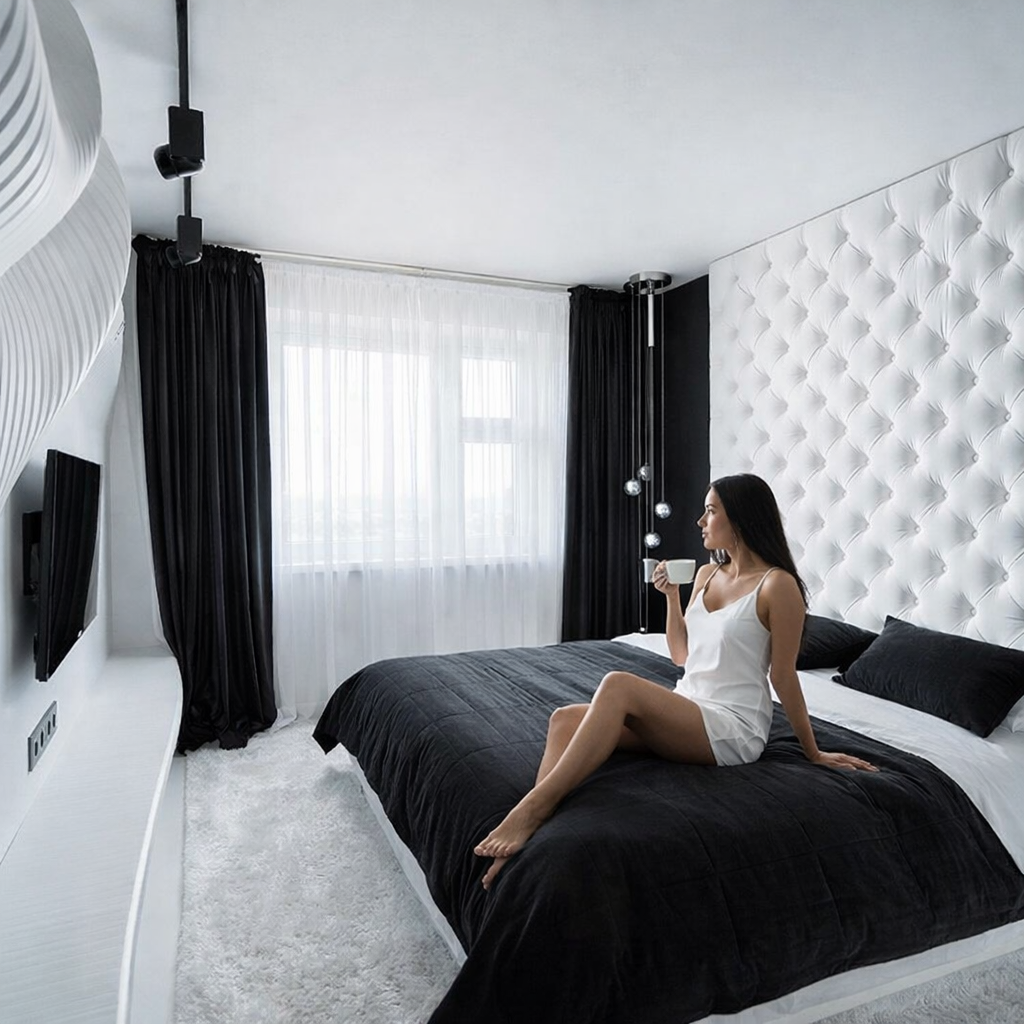
A white bed against a dark wall creates strong contrast.
A black bed against a white wall creates a clear graphic outline.
Both options can work if the remaining furniture supports the composition.
Layer the bedding instead of relying on one large area of solid color.
Possible combinations include:
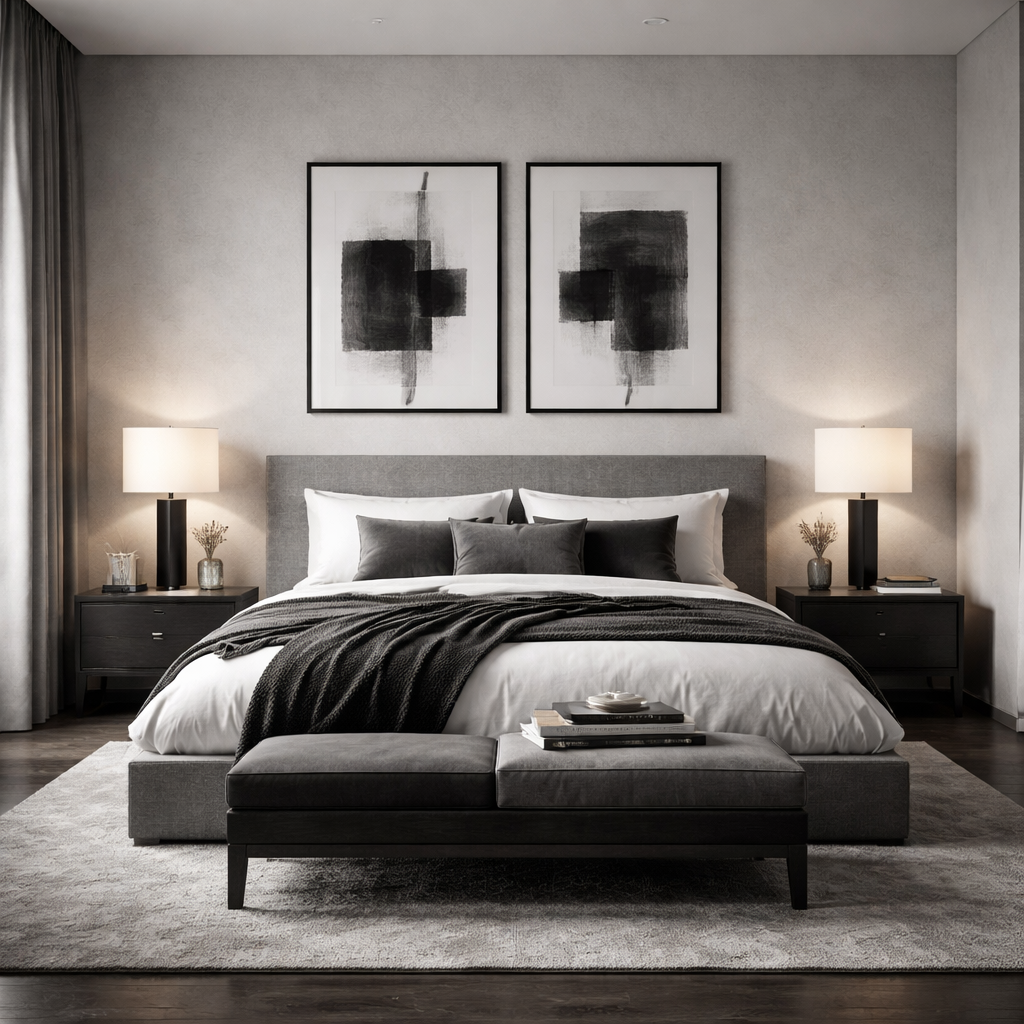
- White bedding with a charcoal throw
- Gray bedding with black and white cushions
- White sheets with a patterned duvet
- Black bedding balanced by a light headboard
Keep decorative cushions manageable.
The bed should remain comfortable and easy to prepare each day.
Choose Suitable Black and White Bedroom Furniture
Furniture does not need to come from one matching collection.
Different pieces can work together when their proportions, colors, or materials have a clear connection.
A black bed can be combined with white nightstands.
A white wardrobe can work with a black dresser.
Natural wood can be added to soften both colors.
Consider the visual weight of each piece.
A large black wardrobe may dominate a compact bedroom.
White or light wood can make the same volume appear less imposing.
Before purchasing anything, measure the room and allow space for doors and drawers to open.
For more guidance, see our article about
choosing bedroom furniture.

Layer the Bedroom Lighting
Lighting has a major influence on black and white bedroom interior design.
White surfaces reflect more light, while dark surfaces can create deeper shadows.
A combination of light sources gives you better control.
General Lighting
A ceiling fixture provides broad illumination for dressing, cleaning, and other everyday activities.
Choose a design that relates to the room’s furniture and hardware.
Bedside Lighting
Bedside lamps or wall-mounted reading lights create softer illumination.
Wall-mounted fixtures can save space on small nightstands.
Task Lighting
A wardrobe, dressing table, or desk may need focused lighting.
Position the fixture so that your body does not create an unwanted shadow.
Accent Lighting
Accent lighting can highlight artwork, wall panels, or architectural details.
Use it selectively rather than illuminating every decorative feature.
Black fixtures create clear contrast against white walls.
White shades or diffusers can soften the light in a darker bedroom.
Dimmers provide additional flexibility when used with compatible lamps and controls.
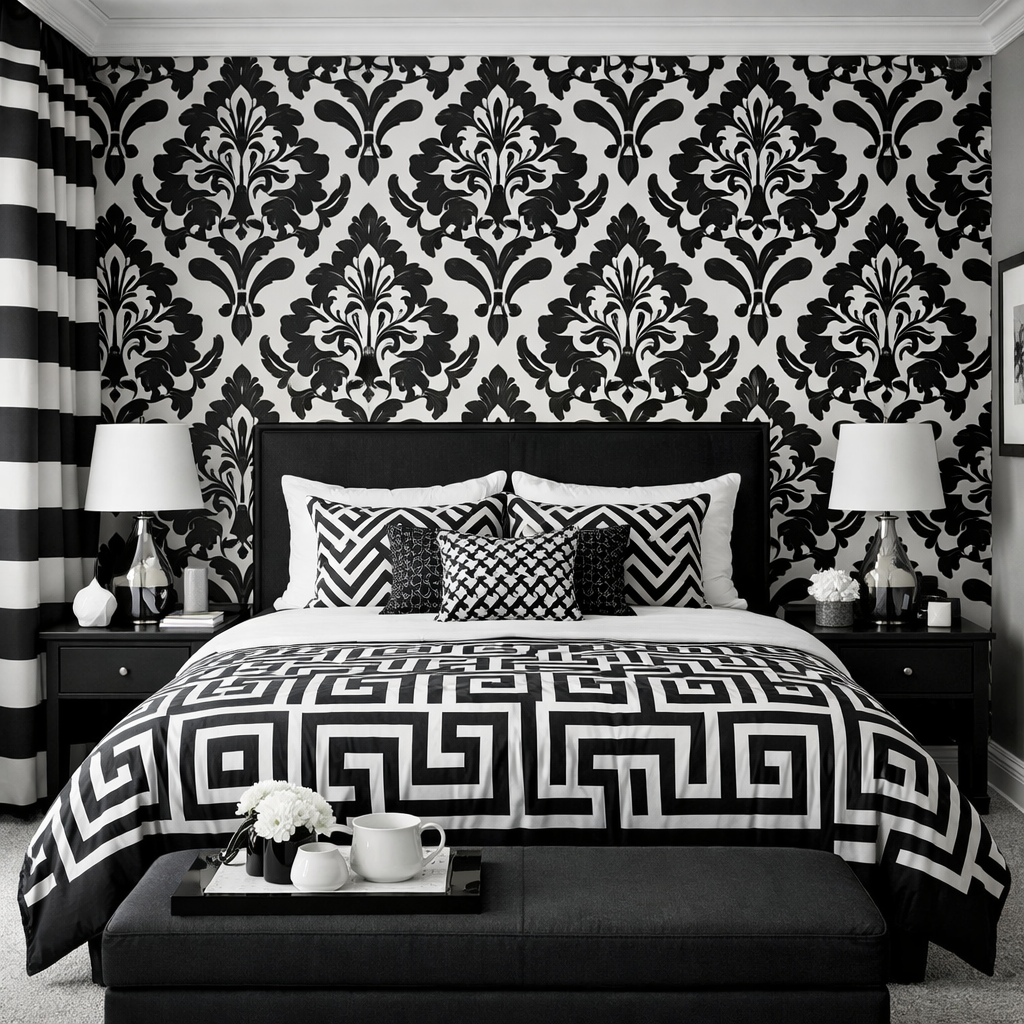
Use Patterns Without Overloading the Room
Patterns add movement and prevent a monochrome interior from looking too rigid.
They are especially effective when most walls and furniture use solid colors.
Suitable options include:
- Stripes
- Checks
- Geometric designs
- Abstract prints
- Botanical patterns
- Traditional damask designs
Choose one main patterned element.
It might be a rug, duvet cover, wallpapered wall, or pair of curtains.
Use smaller patterns elsewhere only when they complement the main design.
Vary the scale if you combine patterns.
A large geometric rug can work with smaller cushions because the two designs do not compete in the same way.
Add Accent Colors and Materials
Black and white can remain the dominant palette even when other colors are introduced.
Small accents often make the room feel warmer and more personal.
Possible additions include:
- Natural wood for warmth
- Brass or gold for a warmer metallic accent
- Chrome or brushed steel for a cooler contemporary look
- Green plants for natural color
- Muted blue or green textiles
- Terracotta or brown accessories
Repeat the accent in two or three locations.
For example, a brass lamp can relate to picture frames or wardrobe handles.
This creates continuity without changing the main color scheme.
Choose Artwork and Wall Decor
Artwork can become an important focal point in a monochrome room.
It may continue the black and white palette or introduce a controlled accent color.
Consider the available wall area before choosing a frame.
One appropriately sized piece often works better than several small pictures that do not relate to the furniture below them.
Black frames provide a clear outline on white walls.
White frames can feel quieter.
Natural wood frames add warmth and connect easily with wooden furniture or flooring.
Our guide to
choosing artwork for a bedroom
explains placement, scale, color, and subject in more detail.
Plan the Window Treatments
Curtains and blinds affect privacy, daylight, darkness, and the visual height of the room.
They should be chosen for function as well as color.
White curtains can soften a darker wall.
Black curtains create stronger contrast but may appear visually heavy in a small room.
Gray, striped, or subtly patterned fabric can provide a transition between the two colors.
Mounting curtains above and beyond the window frame can make the opening appear larger.
Make sure the fabric does not interfere with radiators, heaters, or ventilation.
If darkness is important, examine the lining, construction, and fit rather than judging performance by color alone.
See our guide to
off-white blackout curtains
for more information.
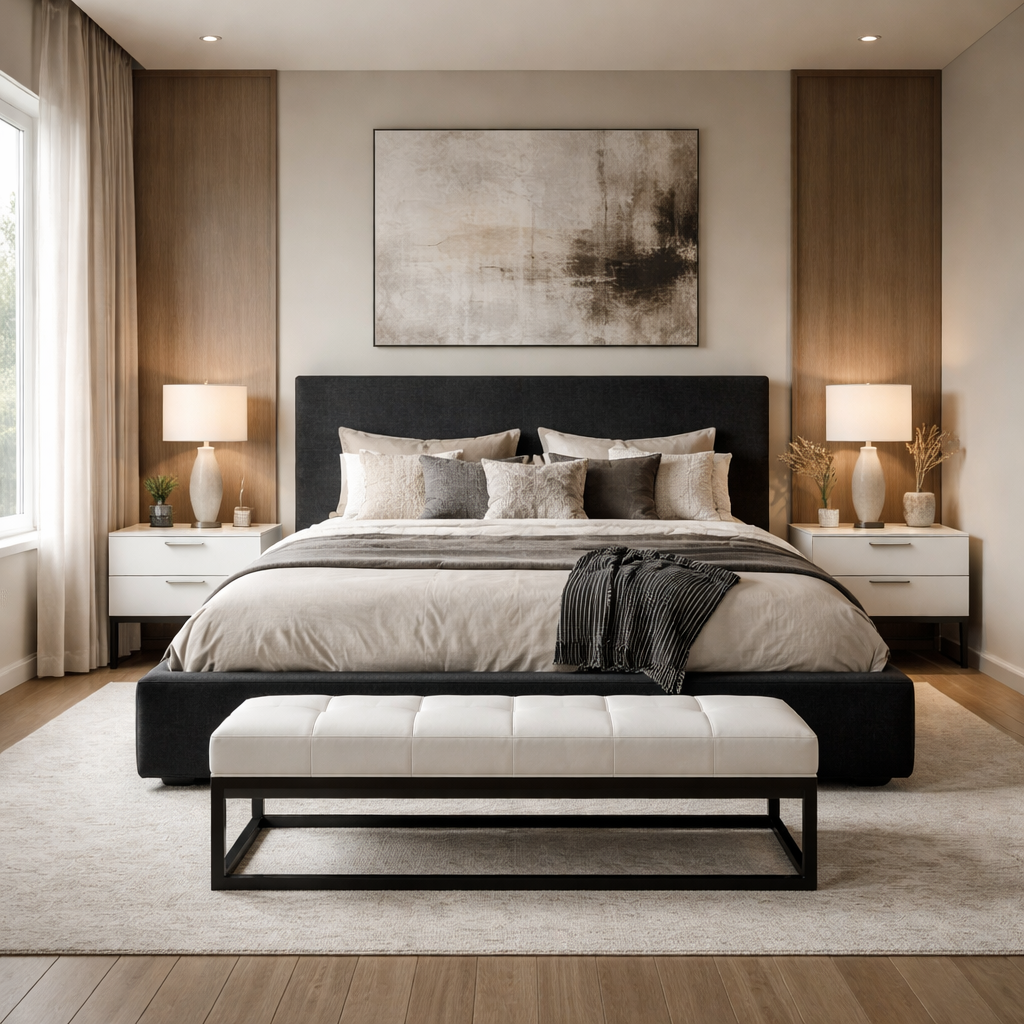
Design a Small Black and White Bedroom
A black and white palette can work in a small bedroom.
The key is controlling visual weight and preserving clear circulation.
Consider the following ideas:
- Use white or soft gray on most large surfaces.
- Introduce black through smaller repeated details.
- Choose furniture with built-in storage.
- Use wall-mounted bedside lights.
- Keep the area around the window open.
- Select one main pattern instead of several competing designs.
- Use a mirror to reflect light from a useful position.
A small room does not need to be entirely white.
A black headboard, dark wall section, or charcoal bedspread can create depth without overwhelming the space.
Explore Different Black and White Bedroom Styles
Modern
Use clean lines, simple furniture, limited decoration, and geometric accents.
Matte black hardware works well with plain white walls.
Minimalist
Reduce visible clutter and choose a small number of functional pieces.
Texture becomes especially important when decoration is limited.
Scandinavian-Inspired
Combine white walls with black details, pale wood, simple textiles, and practical furniture.
Use warm materials to prevent the room from feeling severe.
Art Deco-Inspired
Introduce geometric patterns, curved furniture, mirrors, and metallic accents.
Use decorative elements carefully so that they remain connected.
Classic
Use wall molding, upholstered furniture, framed artwork, and symmetrical bedside arrangements.
Charcoal and warm white can create a softer classic appearance than pure black and white.
Avoid Common Design Mistakes
Using Equal Amounts of Strong Black and White
A perfectly equal division can feel harsh.
Choose one color as the main foundation and use the other to create contrast.
Forgetting Texture
Flat surfaces in only two colors may look unfinished.
Add woven, upholstered, natural, or softly reflective materials.
Using Too Many Patterns
Several strong patterns can compete for attention.
Choose one dominant pattern and keep the others quieter.
Ignoring the Available Light
Large dark surfaces need adequate lighting.
Observe the room at different times before choosing dark paint or furniture.
Buying Oversized Furniture
Dark furniture can appear visually heavier than lighter furniture.
Measure carefully and preserve comfortable walking space.
Making the Room Too Formal
A bedroom should remain comfortable.
Bedding, storage, and practical lighting are more important than maintaining a perfect display.
Frequently Asked Questions
Is a black and white bedroom still in style?
Black and white is a flexible color combination rather than one specific trend.
Furniture, materials, patterns, and lighting determine whether the finished room looks classic, modern, or minimalist.
How can I make a black and white bedroom feel warm?
Add wood, woven materials, layered bedding, rugs, warm lighting, and soft neutral shades.
These elements reduce the severity of the contrast.
What color can be added to a black and white bedroom?
Muted green, blue, brown, terracotta, brass, and natural wood can all work.
Choose an accent that relates to the mood and existing materials.
Should a small bedroom have a black wall?
It can.
Consider the amount of daylight and the position of the wall.
A dark headboard wall can add depth, but adequate lighting and lighter surrounding surfaces are important.
Does black bedroom furniture make a room look smaller?
Large black furniture can appear visually heavy.
The effect depends on its size, shape, position, and the surrounding colors.
Use lighter walls and adequate spacing to create balance.
Do all black finishes need to match?
No.
Matte, satin, and textured black finishes can work together.
Repeat each finish where possible so that the variation looks intentional.
Can gray be used in a black and white bedroom?
Yes.
Gray creates a useful transition between the two colors.
It can be introduced through bedding, rugs, curtains, walls, or upholstered furniture.
Final Thoughts
Black and white bedroom interior design works best when one color creates the foundation and the other provides controlled contrast.
Texture, layered lighting, practical furniture, and personal details keep the room comfortable.
Plan the bed and furniture layout first.
Then add textiles, patterns, artwork, and accent materials gradually.
This approach creates a monochrome bedroom that feels coordinated without looking cold or overly staged.