Aquarium Design: A Practical Guide to Layout, Equipment and Aquascaping
Good aquarium design combines an attractive underwater layout with the practical needs of fish, plants, and aquarium equipment.
The tank should look balanced, but it must also provide suitable water conditions, swimming space, shelter, filtration, and access for regular maintenance.
Planning these details before buying fish can prevent many common problems.
It also makes the finished aquarium easier to manage and more comfortable for its inhabitants.
What Is Aquarium Design?
Aquarium design is the process of planning both the appearance and operation of an aquarium.
It includes the tank, equipment, substrate, rocks, wood, plants, open water, and livestock.
A successful design addresses two connected goals.
The aquarium should create an appealing focal point in the room.
It must also support stable water conditions and species-appropriate care.
This means that filtration, temperature, lighting, water movement, and maintenance access are part of the design.
They should not be treated as afterthoughts.
Choose the Aquarium Type
Begin by deciding what type of aquarium you want.
This choice affects the equipment, materials, plants, and animals you can use.
Common options include:
- Freshwater community aquarium: designed for compatible freshwater species.
- Planted aquarium: places greater emphasis on aquatic plants and suitable lighting.
- Species aquarium: planned around the requirements of one particular species.
- Biotope aquarium: inspired by a specific natural habitat.
- Marine aquarium: designed for saltwater species and specialized equipment.
Do not choose the visual style first and then search for animals that fit it.
Research the intended livestock before finalizing the tank and layout.
Select the Right Tank Size and Shape
The correct aquarium size depends on the adult size, activity, social behavior, and number of fish.
Available floor space and maintenance costs also matter.
Very small aquariums are not always easier for beginners.
Their water temperature and chemistry can change more quickly.
A larger volume usually provides more stability, although it still requires regular care.
Tank shape matters too.
A long aquarium can provide more horizontal swimming space than a tall tank of similar volume.
However, the best proportions depend on the species being kept.
Avoid using a simple rule based only on fish length per gallon or liter.
Such formulas do not account for body shape, activity, territorial behavior, waste production, or adult size.
Choose a Safe Location
An aquarium becomes extremely heavy after it is filled.
Water, glass, substrate, rocks, wood, and equipment all contribute to its total weight.
Use a level stand that is designed for the aquarium and its filled load.
The location should provide:
- A stable and suitable supporting surface
- Access to electrical power
- Space above and around the tank for maintenance
- A practical route for carrying water
- Protection from accidental impacts
- A clear viewing position
Keep the aquarium away from strong direct sunlight, radiators, fireplaces, and cold drafts.
These conditions can make temperature and algae control more difficult.
Leave enough space to open the lid, remove equipment, and service the filter.
An aquarium fitted too tightly into furniture can become difficult to maintain.
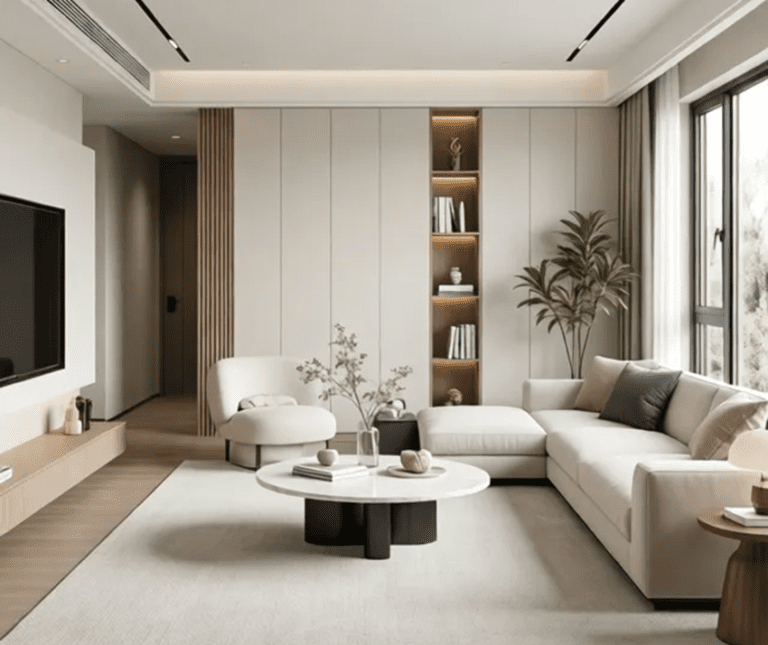
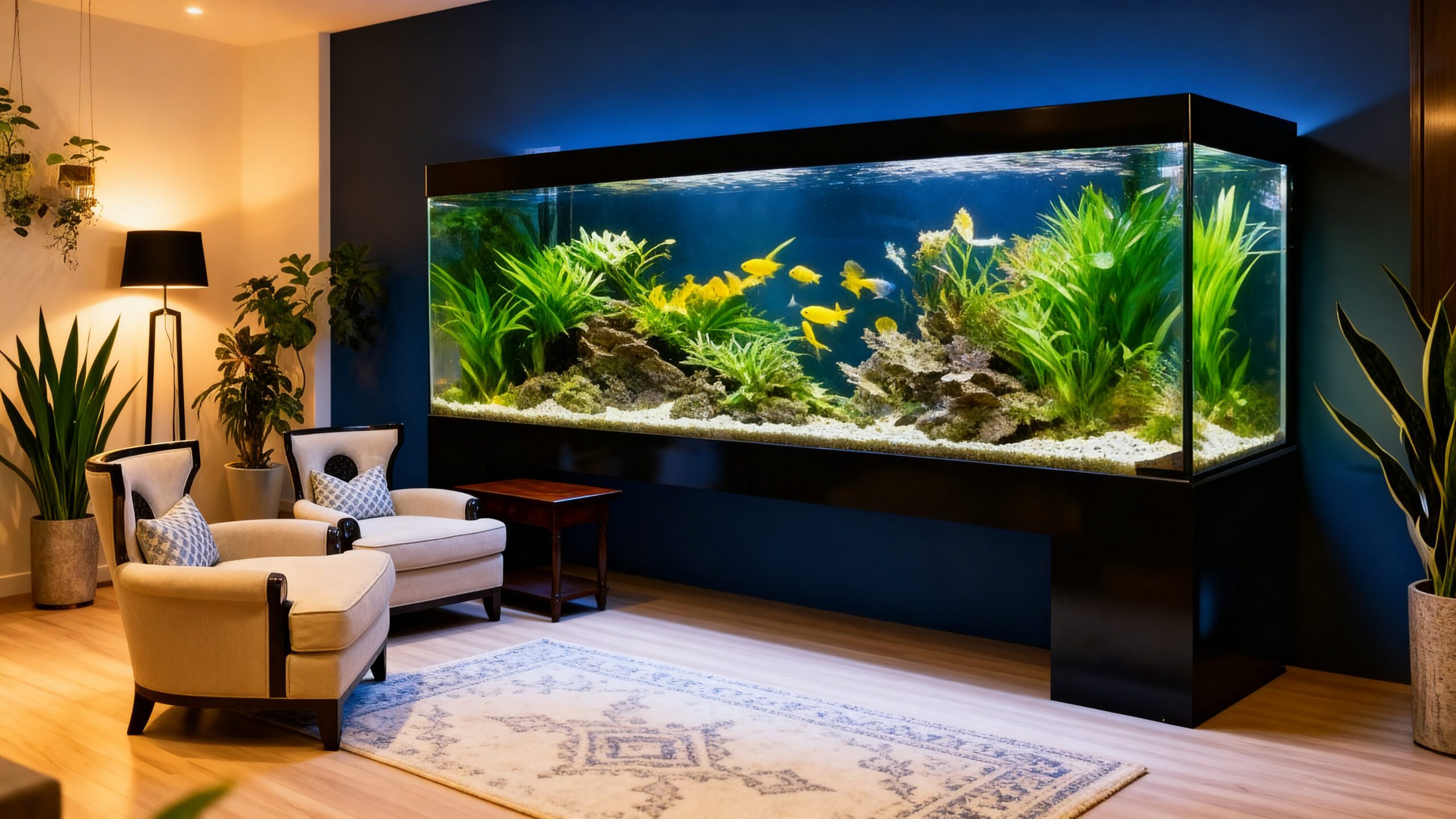
If the tank will become part of a seating area, consider its position alongside the ideas in our
living room design guide.
The aquarium should complement the room without blocking walkways or creating glare.
Plan the Essential Equipment
Equipment should be selected for the aquarium volume, livestock, and intended layout.
The manufacturer’s tank-size rating can be a starting point, but it is not the only consideration.
Filtration
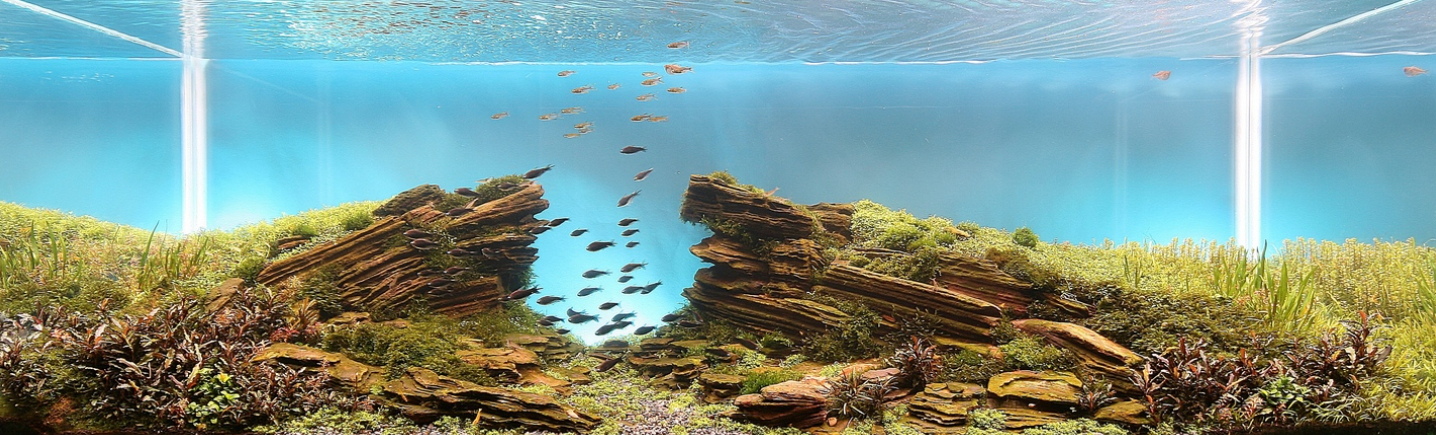
A filter removes suspended debris and provides space for beneficial microorganisms.
These microorganisms help process waste produced by fish and other organisms.
Filtration may include:
- Mechanical filtration: captures particles from the water.
- Biological filtration: supports microorganisms involved in the nitrogen cycle.
- Chemical filtration: uses specialized media when a particular need exists.
Choose a filter that provides suitable water movement without creating excessive flow for the intended species.
Make sure it can be cleaned without dismantling the whole aquarium.
Heating and Temperature Monitoring
Some species need heated water, while others do not.
Research the correct temperature range before selecting livestock.
When heating is required, use aquarium equipment suited to the tank.
A separate thermometer helps you monitor the actual water temperature.
Lighting
Aquarium lighting affects visibility, plant growth, animal behavior, and algae.
The required intensity depends on the tank depth and plant species.
More light is not automatically better.
Excessive intensity or duration can contribute to algae when other parts of the aquarium are unbalanced.
A timer helps maintain a consistent daily schedule and a regular dark period.
Electrical Safety
Keep plugs, power strips, and connections protected from splashes.
Arrange cables with drip loops so water cannot run directly toward an electrical connection.
Follow local electrical-safety requirements, especially when outlets are located near water.
Do not switch off filtration or other essential equipment through decorative room-lighting scenes.
Critical aquarium systems should operate according to the needs of the livestock.
Choose Substrate and Hardscape
The substrate forms the visual base of the aquarium.
Sand, gravel, and planted-tank substrates create different appearances and support different uses.
Choose the material according to the fish and plants.
Some bottom-dwelling species interact closely with the substrate and may need a particular texture.
Plant roots may also need suitable depth and composition.
Using Rocks and Wood
Rocks and aquarium-safe wood can create height, shelter, boundaries, and focal points.
Arrange these materials before filling the tank.
Make sure heavy pieces are stable.
A fish that digs beneath an unsupported rock could cause it to shift.
Avoid sharp edges where fish might be injured.
Only use materials known to be safe for aquarium use.
Some rocks, metals, coatings, shells, and untreated decorative objects can alter water chemistry or release unsuitable substances.
Add Aquarium Plants
Live plants can provide shelter and make the layout feel more natural.
However, they must be chosen for the available light, substrate, temperature, and water conditions.
A simple planting arrangement can use:
- Lower plants near the front
- Medium-height plants in the middle
- Taller plants near the back or sides
- Open areas for swimming and feeding
This arrangement is not a strict rule.
It is simply one way to create depth while keeping the aquarium easy to view.
Artificial plants can also be used.
Choose products intended for aquariums and check them for rough or sharp surfaces.
Create a Balanced Aquarium Layout
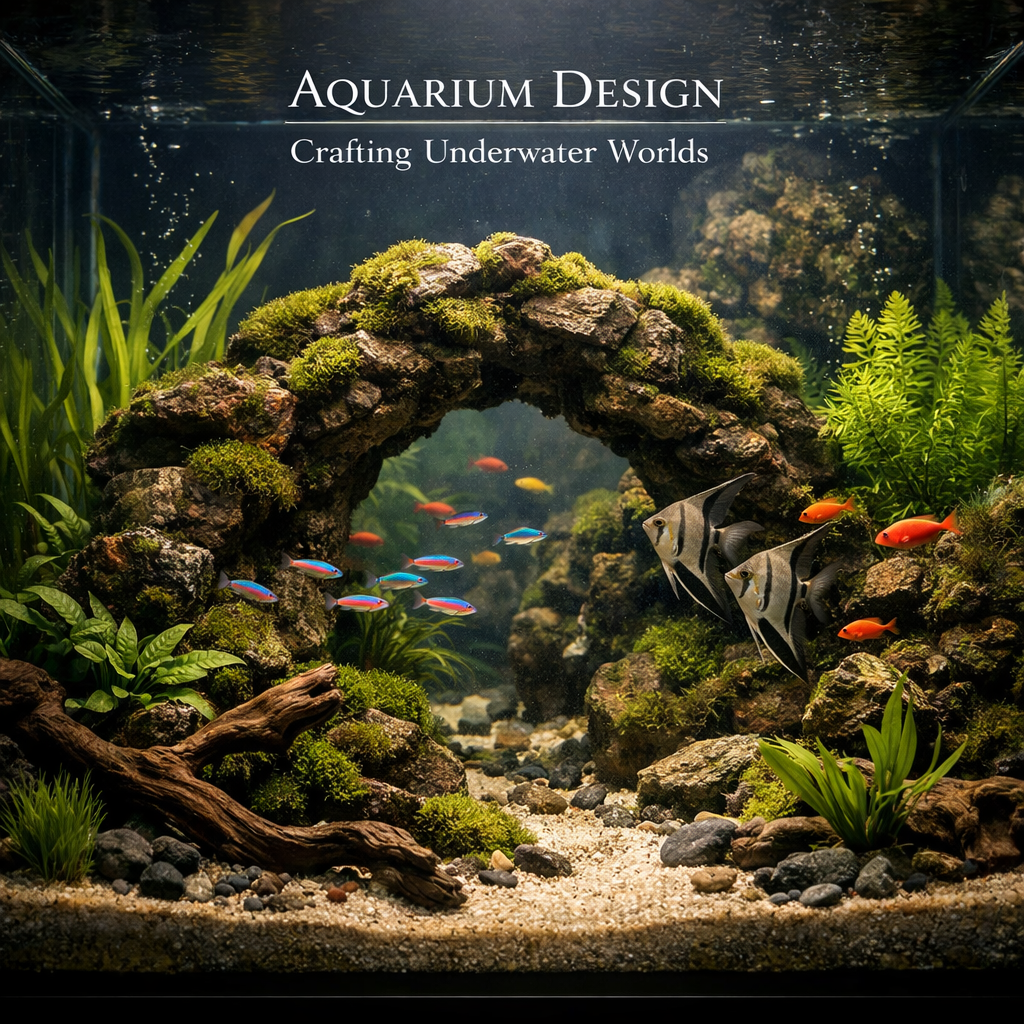
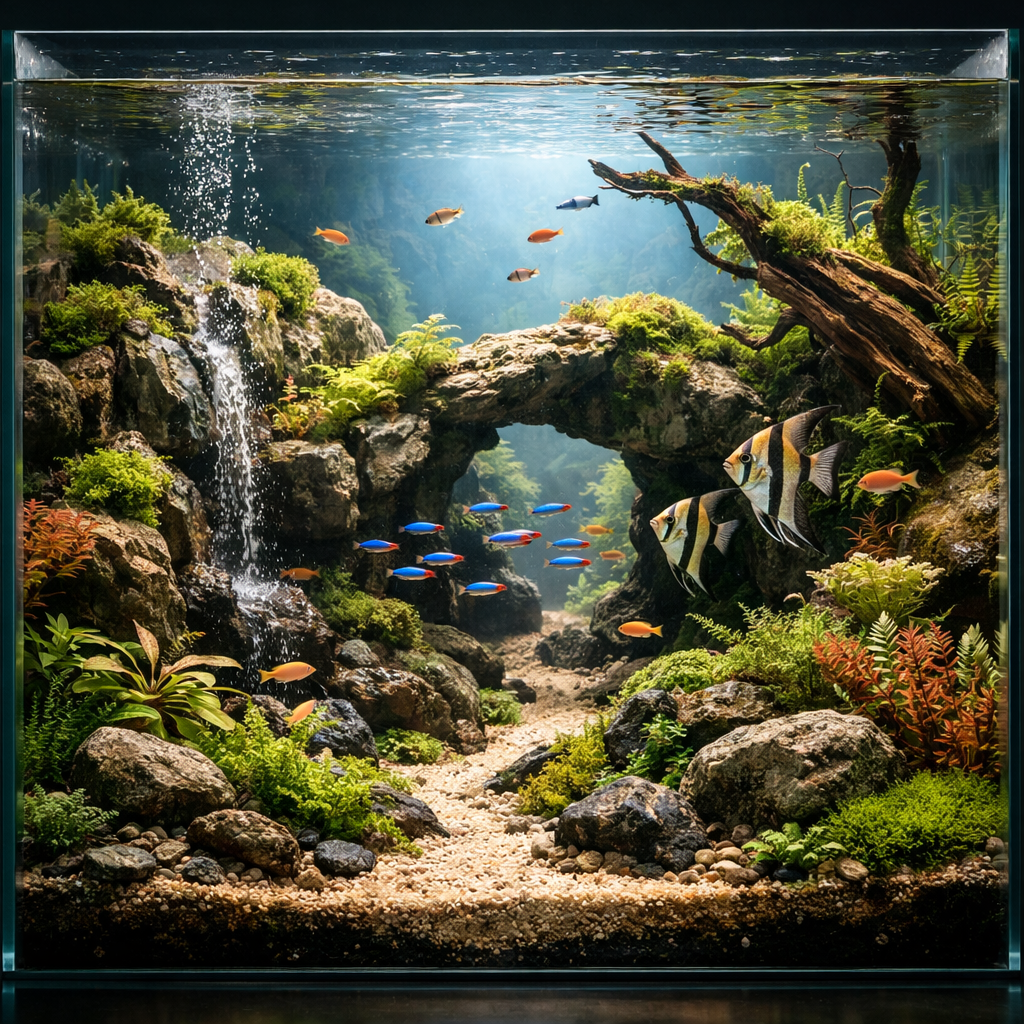
Aquarium aquascaping is the arrangement of substrate, plants, rocks, wood, and open space.
The best layout is not necessarily the one with the most decoration.
Create a Focal Point
Use one prominent rock group, piece of wood, or plant arrangement as the main visual focus.
Placing it slightly away from the exact center can make the composition feel more natural.
Build Visual Depth
Use overlapping elements and varied plant heights.
A substrate that rises gently toward the rear can also create a stronger sense of depth.
Leave Open Space
Do not fill every part of the tank.
Open space creates contrast and gives fish room to swim.
It also makes waste easier to see and remove.
This approach works especially well when the surrounding room uses
minimalist interior design.
A controlled selection of materials usually looks more cohesive than many unrelated decorations.
Repeat Materials
Using several rocks of a similar type can make the aquarium look more unified.
The same principle applies to wood, substrate, and plant groups.
Cycle the Aquarium Before Adding Fish
A newly filled aquarium is not automatically ready for fish.
It needs an established biological filter that can process waste.
This process is commonly called aquarium cycling.
A fishless cycle allows beneficial microorganisms to develop before livestock is introduced.
Use reliable test kits to monitor ammonia, nitrite, nitrate, and other relevant water parameters.
Ammonia and nitrite should be at safe levels before fish are added.
There is no universal number of days that guarantees completion.
The process depends on temperature, water chemistry, filter media, and other conditions.
Test results are more useful than relying on the calendar alone.
The
RSPCA aquarium environment guide
explains why filtration, water testing, suitable tank size, and fishless cycling are important.
Choose Compatible Fish
Select fish only after researching their adult requirements.
Species sold at a small size may grow far larger than expected.
Check the following before buying any livestock:
- Adult body size
- Required tank dimensions
- Temperature and water chemistry
- Activity level
- Territorial behavior
- Preferred group size
- Compatibility with plants and other species
- Feeding requirements
- Expected lifespan
Some fish should live in groups.
Others may defend territories or prey on smaller tank mates.
Two species that tolerate similar temperatures are not necessarily compatible.
Add livestock gradually rather than fully stocking the aquarium at once.
Continue testing the water as the biological load changes.
Plan for Easy Maintenance
An aquarium stays attractive only when routine care is practical.
The design should allow you to reach the glass, substrate, plants, filter, and equipment.
A maintenance plan may include:
- Regular water testing
- Partial water changes when required
- Removal of debris from accessible areas
- Cleaning the viewing glass
- Plant trimming
- Inspection of heaters, filters, and other equipment
- Cleaning filter media according to the manufacturer’s guidance
Do not replace all biological filter media at the same time unless the equipment instructions specifically require it.
Avoid cleaning established biological media with untreated chlorinated tap water, as this may harm useful microorganisms.
The correct maintenance frequency depends on stocking, feeding, filtration, plants, and test results.
A lightly stocked planted aquarium may require a different routine from a heavily stocked community tank.
For additional setup and maintenance guidance, consult the
OATA freshwater aquarium care guide.
Common Aquarium Design Mistakes
Choosing Appearance Before Livestock
A layout may look impressive but still be unsuitable for the intended animals.
Tank size, water conditions, hiding places, and swimming space must come first.
Using a Tank That Is Too Small
Choose the tank for the full-grown fish rather than their size in the store.
Remember that very small volumes can experience rapid changes.
Adding Fish Before the Aquarium Is Ready
Filling the tank and switching on the filter does not complete the nitrogen cycle.
Cycle and test the aquarium before adding livestock.
Overstocking
Too many fish can place excessive pressure on filtration and water quality.
Stocking must account for adult size, behavior, and biological load.
Using Too Much Light
Long or intense lighting does not guarantee healthier plants.
Match the lighting to the aquarium and use a consistent schedule.
Installing Unstable Decorations
Secure rocks and wood before filling the aquarium.
Do not balance heavy materials where they could fall or press dangerously against the glass.
Blocking Maintenance Access
Do not position permanent decorations where they prevent basic cleaning.
Leave enough room to service equipment and reach important areas.
Aquarium Design Checklist
- Research the intended fish, plants, or other livestock.
- Choose a tank sized for their adult requirements.
- Select a stable stand and suitable location.
- Plan access to electricity and maintenance space.
- Choose suitable filtration, heating, lighting, and monitoring equipment.
- Wash appropriate substrate and aquarium-safe materials as directed.
- Arrange stable rocks and wood before filling the tank.
- Add plants and leave enough open swimming space.
- Fill and condition the water correctly.
- Start the equipment and complete a fishless cycle.
- Test the water before adding livestock.
- Add compatible animals gradually.
- Monitor water conditions and establish a maintenance routine.
Frequently Asked Questions
What is the best aquarium size for a beginner?
There is no single best size.
The tank must suit the available space, budget, and intended species.
Very small aquariums can be less stable, so they are not automatically easier.
Should aquarium design begin with the fish or the decoration?
Begin with the intended livestock.
Their adult size and care requirements determine the tank, substrate, equipment, shelter, and open space.
Do I need live plants?
No.
A suitable aquarium can use live plants, aquarium-safe artificial plants, hardscape, or a combination.
Live plants need appropriate lighting and care.
How long should aquarium lights stay on?
There is no schedule that fits every aquarium.
Plant species, light intensity, natural room light, and algae growth all influence the answer.
Use a timer and adjust the schedule gradually.
Can I place an aquarium near a window?
Strong direct sunlight is best avoided.
It can contribute to temperature changes and make algae control more difficult.
How long does aquarium cycling take?
Cycling time varies.
Do not judge readiness only by the number of days.
Use water tests to confirm that the biological filter is processing waste effectively.
What makes an aquarium look natural?
Use a limited selection of compatible materials.
Create varied heights, repeat similar rocks or plants, and leave some open space.
A clear focal point can also make the composition feel intentional.
Final Thoughts
Successful aquarium design balances visual appeal with animal welfare and practical maintenance.
The tank, equipment, water conditions, plants, hardscape, and livestock must work together.
Plan the technical system first.
Then create the underwater composition around the needs of its inhabitants.
This approach produces an aquarium that is attractive, manageable, and suitable for long-term care.