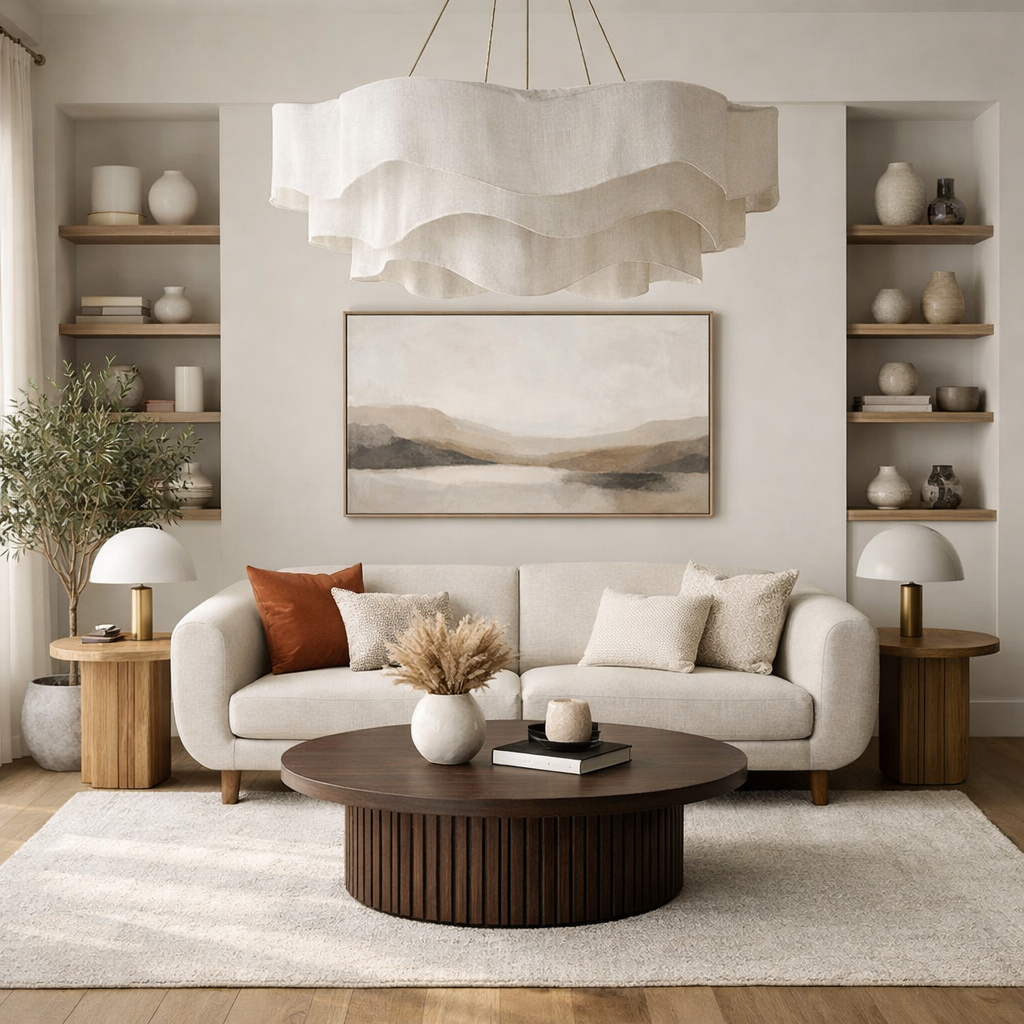
3D Interior Design: How Visualization and Rendering Work
It can show the proposed layout, furniture, materials, lighting, and architectural features from several viewpoints.Unlike a flat floor plan, a three-dimensional model communicates height, depth, scale, and relationships between objects.
It can make design options easier to compare and discuss.However, a 3D rendering is still a visual interpretation.
Its accuracy depends on measurements, product models, material settings, lighting, and the information supplied to the designer.
It should support technical drawings rather than replace them.
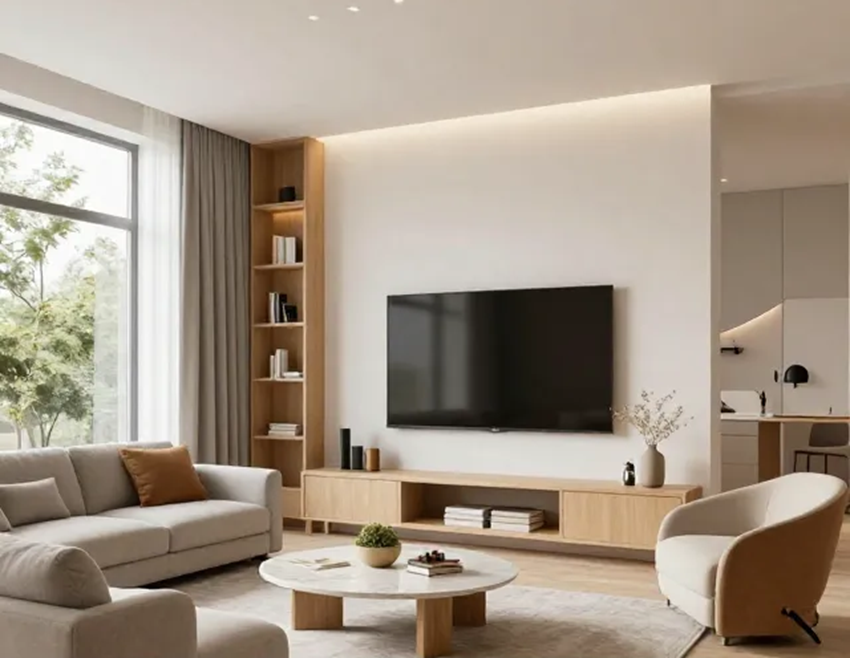
What Is 3D Interior Design?
3D interior design is the process of building a digital three-dimensional representation of an indoor space.
The model may represent an existing room or a proposed building.
A 3D interior can include:
- walls, floors, and ceilings
- doors and windows
- stairs and structural elements
- built-in cabinets
- furniture and appliances
- lighting fixtures
- paint, tile, wood, fabric, and other materials
- artwork and decorative accessories
The model can be viewed from different camera positions.
Depending on the software and project, it may also support panoramic views, animation, augmented reality, or an interactive walkthrough.
The required level of detail depends on the project.
A simple room layout does not need the same modeling and rendering work as a marketing image for a new development.
3D Modeling vs 3D Rendering
Modeling and rendering are related but different stages.
Understanding the distinction helps when requesting a service or choosing software.
What Is a 3D Model?
A 3D model describes the geometry of the room and its contents.
It establishes dimensions, shapes, positions, and spatial relationships.
The model may look simple while the layout is being developed.
At this stage, the priority is often scale and function rather than photorealism.
What Is a 3D Rendering?
Rendering converts the model into a finished image or animation.
The software calculates the camera, lighting, shadows, reflections, surfaces, and other visual effects.
A rendering can range from a basic conceptual image to a highly detailed photorealistic visualization.
Greater realism normally requires better models, materials, lighting, and more production time.
Our guide to an
interior design 3D model
explains the modeling side of the process in more detail.
How the 3D Interior Design Process Works
The exact workflow differs between tools and professionals.
Most projects follow the stages below.
1. Measuring and Documenting the Room
The process begins with reliable dimensions and information about the existing space.
Measurements may come from a site survey, architectural drawings, or homeowner documentation.
Important dimensions include:
- room length, width, and height
- door and window sizes
- door swing directions
- window sill and head heights
- column, beam, and recess dimensions
- built-in furniture
- fixed plumbing and electrical points
Photographs help explain finishes and architectural details.
They do not replace measurements.
2. Creating the Architectural Model
The designer builds the walls, floor, ceiling, windows, doors, and fixed architectural features.
This creates the digital shell of the room.
The first model should be checked against the source dimensions.
A small error at this stage can affect furniture placement and later decisions.
3. Developing the Layout
Furniture, appliances, cabinets, and storage are added at suitable dimensions.
Several arrangements may be tested.
The layout should consider:
- walking paths
- door and drawer clearance
- seating relationships
- viewing distances
- accessibility
- storage requirements
- the main function of the room
The most attractive camera view is not always the most functional plan.
Review the model from above as well as from eye level.
4. Adding Furniture and Decorative Objects
The designer can use generic objects, custom models, or digital models supplied by manufacturers.
A manufacturer model can improve product accuracy.
However, its listed dimensions should still be checked before purchasing.
Decorative objects help communicate scale and atmosphere.
Adding too many accessories too early can distract from layout problems.
5. Applying Materials and Finishes
Materials are assigned to walls, floors, cabinets, furniture, and other surfaces.
Their settings can influence color, reflection, roughness, and texture scale.
Possible materials include:
- paint
- wood
- stone
- tile
- metal
- glass
- fabric
- leather
A small sample photograph may not represent the exact finish across a large surface.
Physical samples remain important for final purchasing decisions.
6. Setting Natural and Artificial Light
Lighting affects the appearance of every color and material.
The model may include daylight, ceiling fixtures, lamps, hidden lighting, and decorative sources.
The designer can test different times of day or lighting combinations.
Results depend on accurate window orientation, fixture data, and rendering settings.
7. Choosing Camera Views
Camera height, position, and field of view influence how large the room appears.
Very wide camera settings can exaggerate space and distort furniture proportions.
Request views that communicate the complete layout.
A combination of perspective images and a top-down plan is often more useful than one dramatic angle.
8. Producing the Render
The rendering engine calculates the final image.
Preview images may be created first so the layout and materials can be reviewed before high-quality output.
Rendering time depends on image size, lighting, materials, geometry, hardware, and the desired realism.
9. Reviewing and Revising the Design
The client and designer review the images and identify changes.
It is more efficient to approve the layout before refining small decorative details.
A structured revision process can follow this order:
- Room dimensions and fixed elements
- Furniture and circulation
- Cabinetry and storage
- Materials and colors
- Lighting
- Accessories and final presentation
Information Needed for an Accurate 3D Interior
A useful model begins with useful source information.
Provide as much verified material as the project requires.
Helpful inputs include:
- a measured floor plan
- ceiling heights
- photographs of every wall
- door and window measurements
- fixed plumbing and electrical positions
- product names and dimensions
- paint and material references
- examples of the preferred style
- required storage and seating capacity
- the project budget
Label uncertain measurements instead of presenting them as final.
This allows the designer to avoid basing critical decisions on unverified information.
If structural changes are proposed, the visualization should follow drawings prepared or reviewed by an appropriate professional.
A rendering cannot confirm structural feasibility.
Benefits of 3D Interior Design
Better Spatial Understanding
Some people find floor plans difficult to interpret.
A 3D view can make ceiling height, furniture scale, and spatial relationships easier to understand.
Easier Layout Comparison
Several furniture or cabinet arrangements can be explored before physical work begins.
This can reveal blocked paths, crowded areas, or unused corners.
Clearer Communication
A shared model gives homeowners, designers, and contractors a common visual reference.
It can reduce misunderstandings about the intended appearance.
The render should still be accompanied by dimensions and specifications.
A visual reference alone is not enough for construction.
Material and Color Exploration
The same room can be shown with different wall colors, flooring, cabinets, or upholstery.
This makes broad comparisons faster.
Screen settings and virtual lighting affect perceived color.
Final finishes should be checked with physical samples in the actual room.
Earlier Identification of Problems
A properly constructed model may reveal:
- furniture blocking a door
- insufficient drawer clearance
- poor circulation
- an unsuitable furniture scale
- conflicts between lighting and cabinetry
- awkward empty areas
The model only reveals problems included in its data.
Hidden building conditions and inaccurate measurements may remain undiscovered.
More Controlled Revisions
Moving a digital object is usually easier than changing installed furniture or cabinetry.
Early revisions can reduce some unnecessary physical changes.
They do not eliminate all project risk.
Product availability, site conditions, installation tolerances, and contractor decisions can still affect the result.
Improved Presentations
Designers can use renders to explain a concept to clients.
Developers and real estate professionals may use them to present spaces that are unfinished or unfurnished.
Concept images should be identified clearly.
Viewers should understand when an image shows a proposed design rather than a completed property.
For an official overview of professional visualization workflows, see
Autodesk’s guide to 3D interior design rendering
.
Limitations of 3D Interior Visualization
A realistic rendering can look persuasive.
That does not make it a perfect prediction of the completed room.
Accuracy Depends on Measurements
Incorrect dimensions produce an incorrect model.
Critical measurements should be verified before furniture orders or construction.
Colors Can Look Different
Screens display colors differently.
Virtual light, exposure, and post-processing can also change their appearance.
Review physical samples under the room’s natural and artificial light.
Digital Materials Are Approximations
A texture may not show every variation in natural stone, wood, fabric, or handmade tile.
Batch differences can also affect real products.
Camera Settings Can Distort Space
Wide-angle views can make compact rooms look larger.
Ask for camera views that avoid unnecessary distortion.
Models May Not Include Hidden Conditions
A visual model may not show wiring, plumbing, structure, ventilation, uneven walls, or other concealed conditions.
These may affect installation.
A Render Is Not a Construction Drawing
A rendering communicates appearance.
Construction drawings contain dimensions, details, specifications, and instructions needed to build the project.
Some software can produce both visualization and documentation.
Even then, the final technical information must be checked.
Product Models May Not Be Exact
Generic furniture can represent the approximate style and size.
It should not be used to confirm the fit of a specific product.
Verify the manufacturer’s current dimensions, door clearances, installation requirements, and availability.
Common Uses of 3D Interior Design
Living Room Planning
A model can compare sofa positions, furniture scale, rugs, storage, lighting, and circulation.
It can also test how the layout appears from adjoining spaces.
Kitchen Design
Kitchen models can show cabinets, appliances, islands, work surfaces, and lighting.
They help communicate the visual design and basic workflow.
Technical cabinet drawings and verified appliance specifications are still needed.
Our
functional kitchen design guide
explains practical layout and storage considerations.
Bathroom Planning
A bathroom model can show tile layouts, fixtures, cabinets, mirrors, and lighting.
Waterproofing, drainage, ventilation, and plumbing require separate technical planning.
Bedroom Design
Three-dimensional planning can test bed size, wardrobe access, nightstands, lighting, rugs, and circulation.
Home Theater Design
A model can communicate seating rows, screen position, speaker locations, lighting, and equipment storage.
Technical viewing angles and acoustic planning require additional calculations.
See our
home theater design guide
for the practical requirements of a cinema room.
Office and Commercial Interiors
Design teams can use 3D views to review work areas, customer circulation, furniture, branding, and finishes.
Accessibility, occupancy, fire safety, and building requirements need formal documentation.
Virtual Staging
Virtual staging places digital furniture inside an image or model of an empty property.
It can help viewers understand possible room use.
Staged images should be labeled when furniture, finishes, or architectural features are not physically present.
DIY 3D Design vs Professional Visualization
DIY Tools
Beginner-oriented tools can be useful for testing furniture layouts, colors, and basic room arrangements.
They may provide templates and prebuilt object libraries.
DIY tools work well when:
- the project is relatively simple
- approximate visualization is sufficient
- you have reliable measurements
- technical construction documents are not required
Professional Services
Professional modeling and rendering may be appropriate for complex renovations, custom cabinetry, commercial spaces, or presentation-quality images.
A professional can also coordinate the model with drawings and product specifications.
The scope should state whether this coordination is included.
When Other Professionals Are Needed
A 3D interior designer does not automatically provide structural, electrical, plumbing, or building-code services.
Those tasks may require separate qualified professionals.
Clarify responsibility for measurements, technical drawings, approvals, and site verification before work begins.
Common 3D Interior Design Deliverables
A project may include one or more of the following:
- basic three-dimensional room model
- furnished layout views
- top-down or cutaway views
- material and color alternatives
- photorealistic renders
- panoramic images
- animated walkthroughs
- interactive model links
- virtual or augmented reality output
- dimensioned plans and elevations
- furniture or finish schedules
Not every package includes editable model files.
Some services provide only finished images.
Confirm the file formats, image resolution, revision allowance, and usage rights.
How to Choose a 3D Interior Design Service
Do not choose from photorealistic portfolio images alone.
Review whether the provider can model the type of space and detail your project requires.
Ask the following questions:
- What source information must I provide?
- Who is responsible for verifying dimensions?
- Does the service include layout development or only rendering?
- Are specific products modeled accurately?
- How many views are included?
- How many revision rounds are included?
- Are technical drawings included?
- Will I receive the editable model?
- What image resolution and file formats are supplied?
- Can the images be used commercially?
A low price may cover only a single image based on an existing model.
A complete design service may include measurements, planning, modeling, materials, revisions, and documentation.
Compare the scope rather than the final image count alone.
How to Prepare for a 3D Interior Design Project
- Define the room’s function. List the activities and number of users.
- Measure the space. Include height and fixed architectural features.
- Take clear photographs. Photograph every wall and important detail.
- Create a product list. Include furniture and appliances that must remain.
- Set a realistic budget. Avoid developing a design that cannot be implemented.
- Collect focused inspiration. Explain what you like in each reference.
- Prioritize functional needs. Approve circulation and storage before decoration.
- Agree on deliverables. Confirm views, revisions, files, and technical documents.
- Verify final dimensions. Check critical measurements before ordering or building.
- Review physical samples. Confirm paint, fabric, wood, stone, and tile in person.
Keep project decisions in one organized document.
Record approved dimensions, products, finishes, and revision dates.
This reduces confusion between different versions of the model.
Frequently Asked Questions About 3D Interior Design
What is 3D interior design?
It is the creation of a three-dimensional digital representation of an interior.
The model can show architecture, furniture, materials, lighting, and decoration.
Is a 3D model the same as a rendering?
No.
The model contains the room’s geometry and objects.
Rendering produces a finished image or animation from that model.
How accurate is 3D interior design?
It can be dimensionally accurate when built from verified information.
The visual appearance remains an approximation influenced by materials, lighting, cameras, and screens.
Can 3D design prevent renovation mistakes?
It can reveal some layout, clearance, proportion, and coordination problems before construction.
It cannot detect every structural, installation, or hidden site condition.
Can I create a 3D room design myself?
Yes.
Beginner tools can help with furniture placement and basic concepts.
Complex renovation and construction projects may require professional modeling and technical drawings.
Do I still need a floor plan?
Yes.
A floor plan provides dimensions and communicates the layout clearly.
It complements perspective views and renders.
Can a rendering show exact paint colors?
No screen image can guarantee an exact real-world paint appearance.
Review physical samples in the actual room before making the final choice.
Can I use 3D design to choose furniture?
Yes, provided the digital models and room dimensions are reliable.
Verify current manufacturer dimensions before purchasing.
What is a 3D walkthrough?
A walkthrough is an animation or interactive experience that moves through the digital interior.
It can help viewers understand relationships between several rooms.
Does a 3D rendering replace construction drawings?
No.
A render communicates visual intent.
Construction drawings provide dimensions, specifications, details, and instructions needed for installation.
How many revisions should a project include?
There is no universal number.
The agreement should state what counts as a revision and how many rounds are included.
Approve the layout before requesting detailed material changes.
Is photorealism always necessary?
No.
A simple model may be enough to evaluate furniture and circulation.
Photorealism is more useful when materials, lighting, atmosphere, or presentation quality are important.
Final Thoughts
3D interior design can make spatial ideas easier to understand and compare.
It is especially useful for reviewing layouts, furniture, materials, and lighting before physical work begins.
The model is only as reliable as the information used to create it.
Accurate measurements, realistic product dimensions, and a clear project brief remain essential.
Treat the rendering as a design and communication tool.
Verify critical dimensions, review physical samples, and use proper technical drawings for construction.