Plastic Skirting Boards: A Practical Low-Cost Option
Plastic skirting boards can be a practical alternative to wood or MDF, especially in rooms where moisture resistance, easy cleaning, low maintenance, and affordability matter more than premium decorative finishes.
They are particularly useful in utility rooms, garages, basements, workshops, rental properties, and other spaces where traditional materials may be exposed to humidity, dirt, or frequent wear.
What Are Plastic Skirting Boards?
Skirting boards cover the joint between a wall and the floor. They protect the lower part of the wall from knocks, cleaning tools, dirt, and everyday wear while also creating a finished edge around the room.
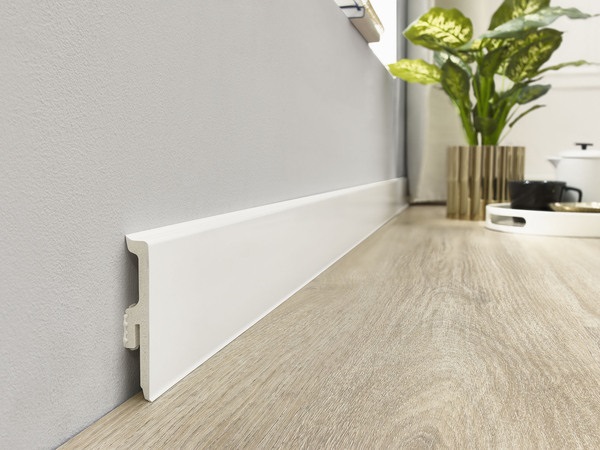
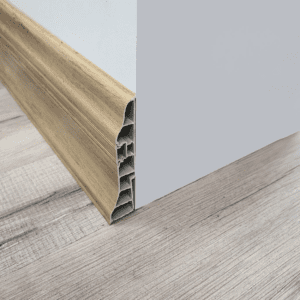
Plastic skirting boards are usually made from PVC or another synthetic material. Depending on the design, they may have a simple solid profile or include removable covers, corner pieces, connectors, and internal channels for cables.
They are not intended to imitate every detail of traditional wood trim. Their main strengths are practicality, durability, and straightforward maintenance.
Main Advantages of Plastic Skirting Boards
Plastic skirting boards can be particularly useful when the priority is function rather than ornate detailing.
Common advantages include:
- resistance to moisture
- easy cleaning
- low maintenance
- lightweight construction
- relatively simple installation
- availability of matching corners and connectors
- possible internal cable channels
- competitive cost compared with many wood products
The exact features depend on the profile and manufacturer, so it is worth checking the construction before buying.
Moisture Resistance and Easy Cleaning
One of the biggest advantages of plastic skirting boards is their resistance to moisture.
Unlike some MDF products, plastic does not absorb water in the same way and is therefore less likely to swell when exposed to normal household humidity or occasional splashes.
This can make it useful in areas such as:
- laundry rooms
- utility rooms
- basements
- entrance areas
- workshops
- some kitchens
The smooth surface is also usually easy to wipe clean with a damp cloth and a suitable household cleaner.
Moisture-resistant does not mean that every product is suitable for constant water exposure. Always check the manufacturer’s recommendations for the specific installation environment.
Plastic Skirting Board Installation
Plastic skirting boards are often easier for DIY installation than traditional timber profiles because many systems use lightweight sections and purpose-made accessories.
Depending on the product, installation may involve:
- adhesive
- clips
- screws
- mounting rails
Some systems include preformed internal corners, external corners, end caps, and joining pieces. These accessories can reduce the need for complicated angled cuts.
Prepare the Wall First
Before installation, make sure the wall and floor edges are clean, dry, and reasonably straight.
An uneven wall can leave visible gaps behind a rigid skirting profile, so preparation still matters even when installation is simple.
Check the Adhesive
If the boards are glued in place, use an adhesive recommended for both the wall surface and the skirting material.
Not every adhesive bonds well to every type of plastic.
Cable Management and Practical Features
Some plastic skirting board systems include channels designed to conceal suitable cables.
This can be useful in:
- home offices
- media rooms
- workshops
- rental properties
- rooms where wiring may change later
A removable front cover can make it easier to add or replace suitable cables without opening the wall.
Electrical wiring must follow local electrical rules. A decorative cable channel should not automatically be assumed suitable for mains wiring unless the product is specifically designed and approved for that use.
Cost and Value
Plastic skirting boards are often chosen for budget-conscious projects because basic profiles can cost less than many solid-wood alternatives.
The final price depends on:
- profile height and thickness
- surface finish
- cable-management features
- corner and connector accessories
- brand and installation method
For large areas, even a modest difference in price per meter can affect the total renovation cost.
Low Cost Does Not Have to Mean Poor Appearance
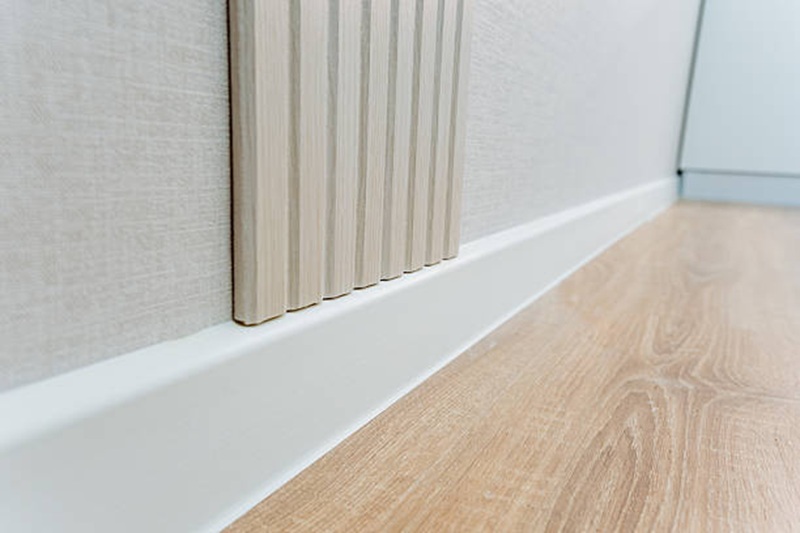
Modern plastic profiles are available in different heights, shapes, colors, and finishes.
A simple, well-installed skirting board that matches the floor and wall can look much better than a more expensive material that is poorly fitted or damaged by moisture.
Best Places to Use Plastic Skirting Boards
Plastic skirting boards are especially practical in rooms where durability and easy maintenance are important.
- basements
- garages
- workshops
- utility rooms
- laundry rooms
- rental properties
- storage rooms
- home offices
- children’s play areas
They can also work in ordinary living areas when the profile and finish suit the interior.
For ideas on designing a practical workspace, see our guide to
home offices in classic style.
When Plastic May Not Be the Best Choice
Plastic skirting boards are practical, but they are not automatically the best material for every room.
Possible disadvantages include:
- some inexpensive profiles can look less refined than painted wood
- very thin products may be easier to damage
- color and finish options may be more limited
- some plastics can expand or contract with temperature changes
- certain profiles are difficult or unsuitable to repaint
For formal interiors, historic properties, or rooms with detailed traditional moldings, wood or high-quality MDF may provide a more appropriate appearance.
The best choice depends on the room, budget, maintenance requirements, and desired style.
Frequently Asked Questions About Plastic Skirting Boards
Are plastic skirting boards waterproof?
Plastic itself is generally highly resistant to moisture, but the complete installation may include joints, adhesive, wall materials, and gaps that are not waterproof. Check the product specifications before using it in very wet areas.
Are plastic skirting boards better than MDF?
Neither material is always better. Plastic can have an advantage in damp or high-maintenance areas, while MDF may provide more traditional profiles and can be easier to paint in many decorative projects.
Can plastic skirting boards hide cables?
Some models include internal cable channels. Check the profile before purchase because not every plastic skirting board has this feature.
Can plastic skirting boards be painted?
Some can, but paint adhesion depends on the type of plastic and surface finish. If painting is important, choose a product designed for painting or use a coating system specifically suitable for that material.
Are plastic skirting boards easy to install?
Many systems are DIY-friendly, particularly those with clips, adhesive installation, and preformed corner pieces. Accurate measuring and surface preparation are still important for a clean result.
Do plastic skirting boards look cheap?
Not necessarily. Appearance depends heavily on the quality of the profile, color, proportions, joints, and installation. A simple modern profile can look clean and unobtrusive in the right interior.
Final Thoughts
Plastic skirting boards are a practical option when you need trim that is easy to clean, resistant to moisture, relatively affordable, and simple to maintain.
They are especially useful in basements, utility rooms, workshops, rental properties, and other functional spaces, but modern profiles can also work well in everyday interiors.
Before buying, compare profile quality, installation method, corner accessories, cable-management features, and compatibility with the room. The cheapest option is not always the best value, but a good plastic skirting system can provide a durable and tidy finish without unnecessary expense.