Kitchen Backsplash Ideas: Materials, Styles and How to Choose
Choosing the right kitchen backsplash ideas can change the look of a kitchen without requiring a complete renovation. A backsplash protects the wall behind work areas, but it also plays an important role in the overall design by connecting cabinets, countertops, flooring, and color choices.
The best option depends on your budget, cleaning habits, kitchen style, and the materials already used in the room. Tile remains one of the most popular choices, but glass, stone, metal, and peel-and-stick products can also work well in the right setting.
This guide compares common backsplash materials, styles, colors, maintenance needs, and practical considerations to help you choose an option that looks good and works well in everyday use.
What Does a Kitchen Backsplash Do?
A kitchen backsplash protects the wall behind countertops, sinks, and cooking areas from water, grease, food splashes, and stains.
It also creates a visual transition between lower and upper cabinets. Because it occupies a central area of the kitchen, even a simple backsplash can have a noticeable effect on the room’s style.
A good backsplash should combine appearance with practicality. The surface should be reasonably easy to clean and suitable for the level of moisture, heat, and daily use in the area where it is installed.
Ceramic Tile Backsplash
Ceramic tile is one of the most common backsplash materials because it is widely available, relatively affordable, and offered in many colors, sizes, and patterns.
Advantages of ceramic tile
- Large variety of styles and colors
- Generally easy to clean
- Suitable for many kitchen designs
- Available in budget and premium options
- Individual tiles can sometimes be replaced if damaged
Possible disadvantages
Grout lines require more maintenance than the tile surface itself and may collect dirt or discolor over time. Highly textured ceramic tiles can also be more difficult to wipe clean than smooth ones.
For many homeowners, ceramic tile offers a practical balance between cost, durability, and design flexibility.
Porcelain Tile Backsplash
Porcelain is a type of ceramic material that is typically denser and less porous than standard ceramic tile.
It can imitate natural stone, concrete, marble, and other finishes while offering a durable surface suitable for busy kitchens.
Why choose porcelain?
- Good resistance to moisture
- Durable surface
- Available in many finishes
- Can imitate more expensive materials
- Suitable for modern and traditional kitchens
Porcelain may cost more than basic ceramic tile, and some products can be more difficult to cut during installation because of their density.
Glass Backsplash Ideas
Glass can create a bright, clean appearance and is particularly useful in contemporary kitchens.
Glass backsplash options include individual tiles, mosaics, and large glass panels. A large panel has fewer grout lines, which can make cleaning easier.
Benefits of glass
- Reflects light and can make a kitchen feel brighter
- Easy-to-wipe surface
- Available in many colors
- Works well with modern cabinetry
- Large panels create a clean, minimal look
Fingerprints, grease, and water marks can be more visible on glossy glass surfaces, so they may require frequent wiping.
Natural Stone Backsplash
Natural stone can add texture and character to a kitchen. Common choices include marble, travertine, slate, and other stone products.
Each piece can have natural variations in color and pattern, which makes the finished backsplash unique.
Things to consider
Some natural stone is porous and may require sealing. Certain acidic foods or cleaning products can also affect sensitive stone surfaces.
Stone can work beautifully with wood cabinets, traditional interiors, and kitchens where natural materials are already part of the design.
If low maintenance is a priority, compare the care requirements of a specific stone before choosing it.
Metal Kitchen Backsplash
Stainless steel and other metal surfaces are often associated with professional or industrial-style kitchens.
A metal backsplash can create a clean, contemporary appearance and is generally resistant to heat and moisture.
Advantages
- Durable surface
- Easy to wipe clean
- Works well behind cooking areas
- Can complement stainless steel appliances
- Creates a modern or industrial look
However, fingerprints, scratches, and smudges may be visible depending on the finish. Some people also find large metal surfaces too visually cold for traditional kitchen designs.
Peel-and-Stick Backsplash
Peel-and-stick backsplash products are often chosen for quick updates, rentals, or lower-budget projects.
They are available in designs that imitate subway tile, stone, mosaic, and other materials.
When can peel-and-stick work well?
- Temporary kitchen updates
- Rental properties where permanent changes are limited
- Small backsplash areas
- Low-cost cosmetic improvements
- DIY projects
Quality varies significantly between products. Before installation, check whether the material is recommended for use near heat, moisture, or cooking areas.
The wall surface also needs to be clean, smooth, and properly prepared for good adhesion.
Popular Kitchen Backsplash Styles
Subway tile
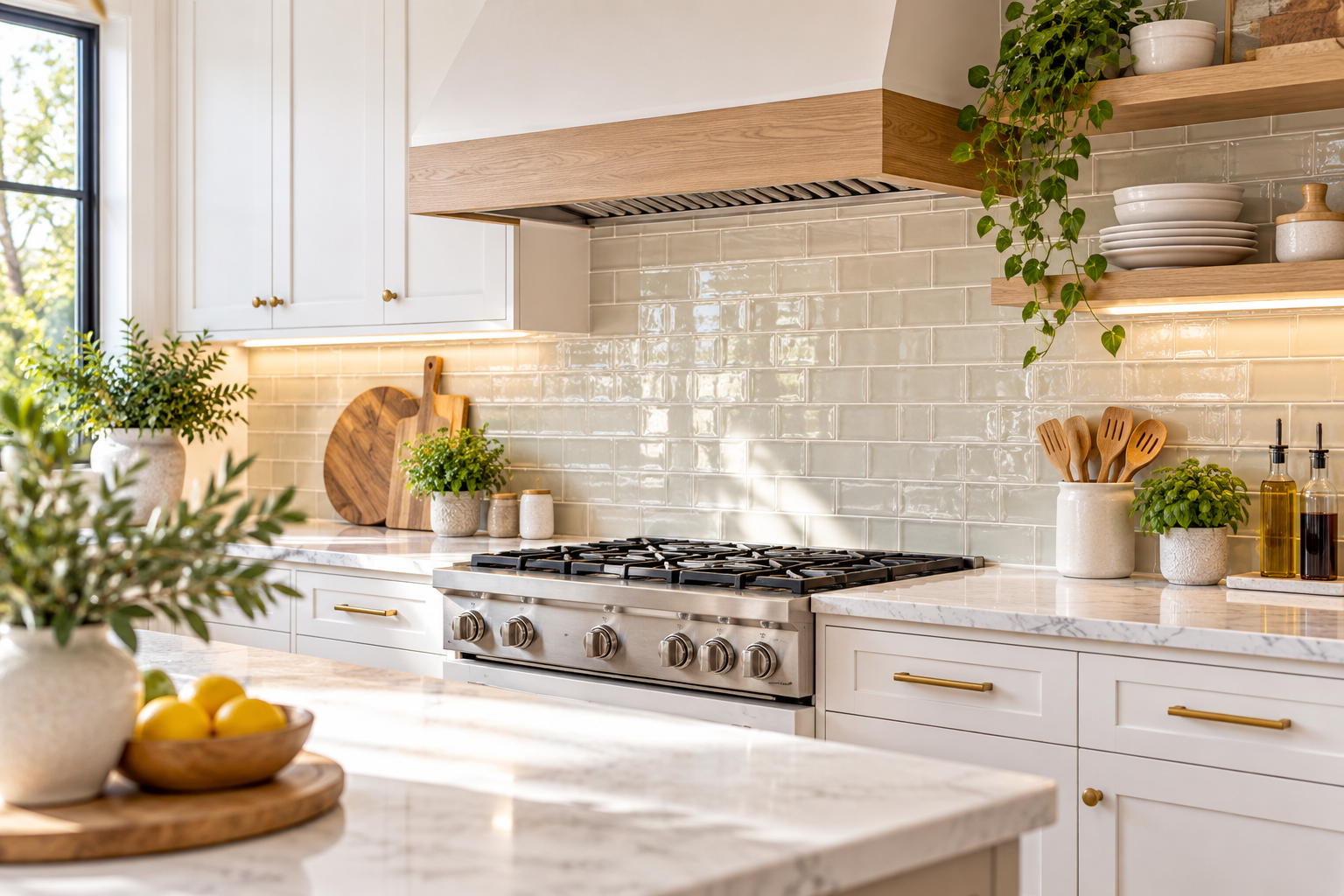
Subway tile remains popular because its simple rectangular shape works with many kitchen styles. White is traditional, but darker colors, textured finishes, and different layouts can create a more distinctive appearance.
Herringbone pattern
A herringbone layout adds movement and visual interest without requiring a highly decorative tile.
Mosaic backsplash
Mosaic tiles can introduce multiple colors, textures, or materials. They are often used as an accent but can become visually busy if combined with heavily patterned countertops.
Large-format tile
Large tiles reduce the number of grout lines and can create a cleaner, more contemporary appearance.
Full-height backsplash
Instead of stopping under the upper cabinets, some kitchens continue the backsplash material higher up the wall or even to the ceiling in selected areas.
This approach can create a strong visual feature, particularly around a range hood or open shelving.
How to Choose a Kitchen Backsplash Color
The backsplash does not need to match every surface exactly. In many kitchens, it works better as a link between cabinets, countertops, flooring, and wall colors.
Use a neutral backsplash
White, cream, beige, gray, and other neutral tones are flexible and can make future changes to accessories or wall colors easier.
Add contrast
A dark backsplash can create contrast against light cabinetry, while a lighter backsplash can brighten kitchens with dark cabinets.
Repeat an existing color
One effective approach is to choose a backsplash that picks up a subtle color from the countertop, flooring, or cabinetry.
If you are also deciding on the overall palette, our guide to kitchen color ideas can help you coordinate the different surfaces.
Backsplash Ideas for White Kitchen Cabinets
White cabinets provide a flexible background, so many backsplash styles can work well.
- White subway tile: creates a bright, classic appearance.
- Soft gray tile: adds gentle contrast without making the kitchen feel dark.
- Blue or green tile: introduces color while keeping the room fresh.
- Marble-look porcelain: adds subtle pattern and a more refined appearance.
- Dark tile: creates stronger contrast and can make white cabinets stand out.
Because white cabinetry is visually simple, the backsplash can either stay understated or become the main decorative feature.
Backsplash Ideas for Small Kitchens
In a small kitchen, a backsplash can influence how open or busy the room feels.
Light-colored, glossy, or reflective surfaces may help distribute light and make the kitchen feel brighter.
Large patterns can work in small spaces, but they should be used carefully if the countertop and cabinets already contain strong visual details.
Using the same backsplash throughout the kitchen can create a more continuous appearance than using several unrelated materials.
For additional space-saving ideas, see our guide on how to organize a small kitchen for maximum storage.
Kitchen Backsplash Cleaning and Maintenance
Maintenance requirements vary by material, finish, grout type, and location.
Smooth ceramic and porcelain
These surfaces are generally easy to wipe with a soft cloth and an appropriate household cleaner.
Grout
Grout can collect grease and dirt. Regular cleaning helps reduce discoloration, especially near cooking areas.
Natural stone
Use products recommended for the specific stone. Harsh or acidic cleaners may damage certain stone surfaces.
Glass
Glass is easy to wipe, but streaks and fingerprints may be more visible on glossy surfaces.
Metal
Clean in the direction recommended for the finish and avoid abrasive materials that may scratch the surface.
Common Kitchen Backsplash Mistakes to Avoid
Choosing appearance without considering cleaning
A highly textured backsplash may look attractive but can be difficult to clean behind a cooktop.
Ignoring the countertop pattern
If the countertop already has strong veining or color variation, a very busy backsplash can make the kitchen feel visually crowded.
If you are comparing surfaces, see our guide to kitchen countertop materials.
Using too many competing colors
The backsplash should usually work with the existing palette rather than introduce several unrelated colors at once.
Forgetting about grout color
Grout can significantly change the finished appearance. Matching grout creates a more continuous look, while contrasting grout emphasizes the tile pattern.
Not checking the material near heat
Not every decorative product is designed for installation close to a cooktop or other heat source. Always follow the manufacturer’s installation and safety recommendations.
Frequently Asked Questions
What is the most practical kitchen backsplash?
Smooth ceramic and porcelain tiles are popular practical choices because they are widely available, relatively easy to clean, and offered in many styles. The best option still depends on your budget and kitchen use.
Should the backsplash match the countertop?
It does not need to match exactly. A backsplash can coordinate with one of the countertop colors or provide controlled contrast while still fitting the overall kitchen palette.
What backsplash makes a kitchen look bigger?
Light colors, reflective surfaces, simple patterns, and consistent materials can help create a brighter and less visually cluttered appearance.
Is subway tile still a good backsplash choice?
Subway tile remains versatile because its simple shape works with traditional, transitional, and modern kitchens. Color, finish, grout, and layout can significantly change its appearance.
Can a backsplash be installed over existing tile?
In some situations it may be possible, but the existing surface must be stable, clean, and suitable for the new installation system. Product and installer requirements should be checked before proceeding.
How high should a kitchen backsplash go?
Many backsplashes run from the countertop to the bottom of the upper cabinets. Other designs continue higher around a range hood, shelving, or an entire feature wall.
Choose a Backsplash That Fits Your Kitchen
The best kitchen backsplash ideas balance design, durability, maintenance, and the other materials already used in the room.
Start by comparing your cabinets and countertop, then decide whether you want the backsplash to blend into the background or become a stronger visual feature.
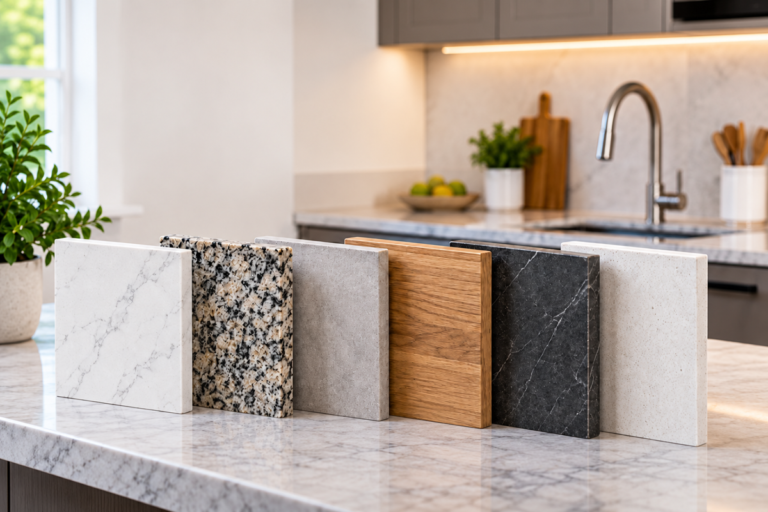
Before making a final decision, bring home material samples whenever possible. Colors and finishes can look very different under your actual kitchen lighting than they do in a showroom or online photograph.
A well-chosen backsplash can protect the wall, make cleaning easier, and connect the kitchen’s major surfaces without requiring a complete redesign.