Home Theatre Design
Designing a home theatre is one of the most rewarding upgrades you can make to your living space. Whether you’re a movie lover, a sports fan, or a gaming enthusiast, a well‑planned home theatre transforms everyday entertainment into an immersive, cinematic experience. This guide walks you through the essential elements of home theatre design, from room layout and acoustics to lighting, seating, and technology.
⭐ Why Home Theatre Design Matters
A home theatre is more than a big screen and loud speakers. Proper design ensures:
- Balanced, high‑quality sound
- Comfortable viewing angles
- Optimal lighting conditions
- Aesthetic harmony
- Seamless integration of technology
Thoughtful planning elevates your space from “just a TV room” to a true home cinema.
🏠 1. Choosing the Perfect Room
Not every room is ideal for a home theatre. Consider:
Room Shape
- Rectangular rooms provide better acoustics than square rooms.
- Avoid rooms with excessive windows or reflective surfaces.
Room Size
- Larger rooms allow for bigger screens and more seating.
- Smaller rooms require careful speaker placement and acoustic treatment.
Location
- Basements are excellent due to natural sound isolation.
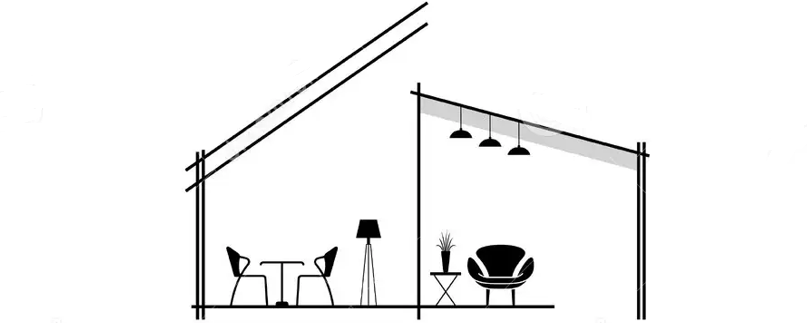
- Spare bedrooms or lofts can also work with proper soundproofing.
🔊 2. Mastering Acoustics and Soundproofing
Sound is half the experience. To achieve cinema‑quality audio:
Acoustic Treatment
- Use wall panels, bass traps, and diffusers to reduce echo.
- Add carpets, curtains, and soft furniture to absorb sound.
Soundproofing
- Install insulated drywall or acoustic insulation.
- Seal gaps around doors and windows.
- Consider double‑layered walls for maximum isolation.
📺 3. Selecting the Right Screen and Projector
Your display is the visual centerpiece of your home theatre.
Screen Options
| Type | Best For | Pros |
|---|---|---|
| Projector + Screen | Large rooms | Cinematic size, immersive feel |
| OLED TV | Smaller rooms | Deep blacks, vibrant colors |
| LED TV | Budget setups | Bright, durable |
Screen Size
A general rule:
Viewing distance = 1.5 × screen diagonal
This ensures comfortable, immersive viewing.
🔈 4. Choosing the Ideal Sound System
A powerful sound system brings movies to life.
Popular Configurations
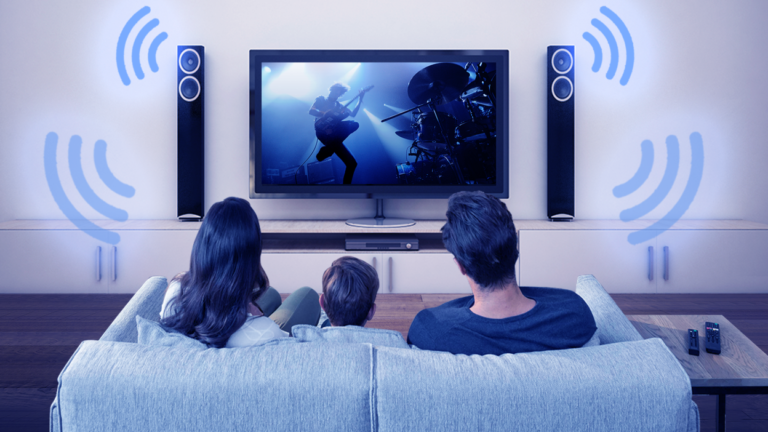
- 5.1 Surround Sound – Standard home theatre setup
- 7.1 Surround Sound – Enhanced rear audio
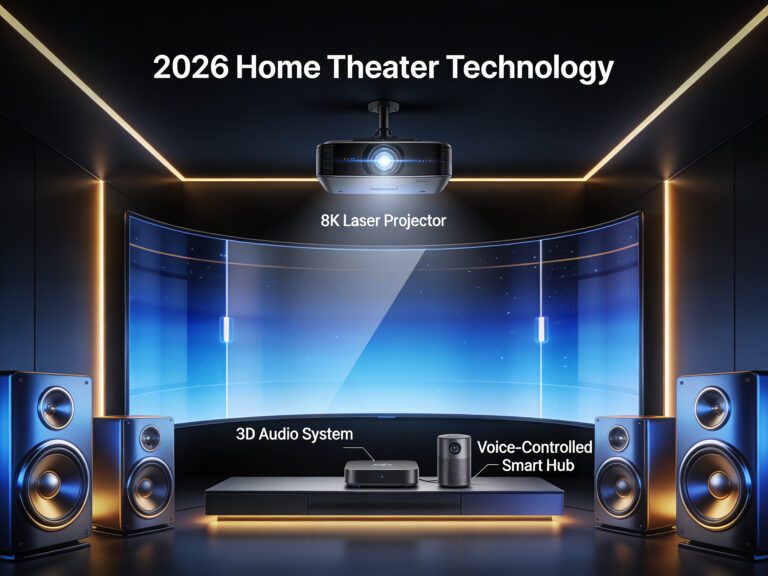
- Dolby Atmos – 3D sound with ceiling speakers
Speaker Placement Tips
- Front speakers should align with ear level.
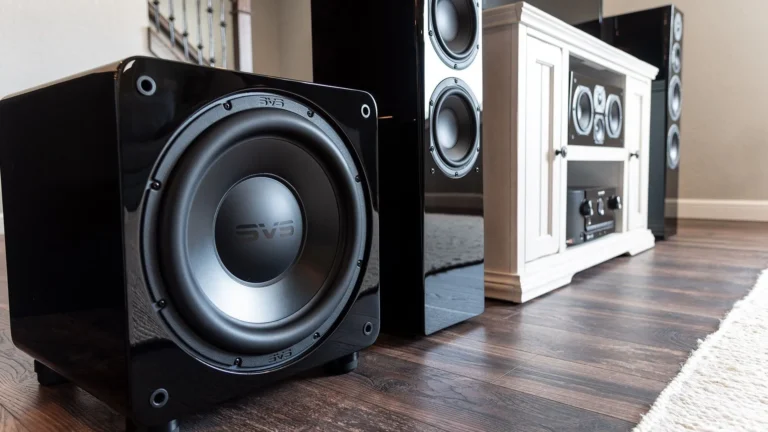
- Subwoofers work best near walls or corners.
- Rear speakers should be slightly above ear height.
💡 5. Lighting for the Perfect Atmosphere
Lighting sets the mood and enhances immersion.
Best Lighting Options
- LED strip lights behind the screen
- Wall sconces with dimmers
- Recessed ceiling lights
- Smart lighting systems
Avoid direct light on the screen to prevent glare.
🛋️ 6. Comfortable Seating and Layout
Comfort is key for long movie nights.
Seating Choices
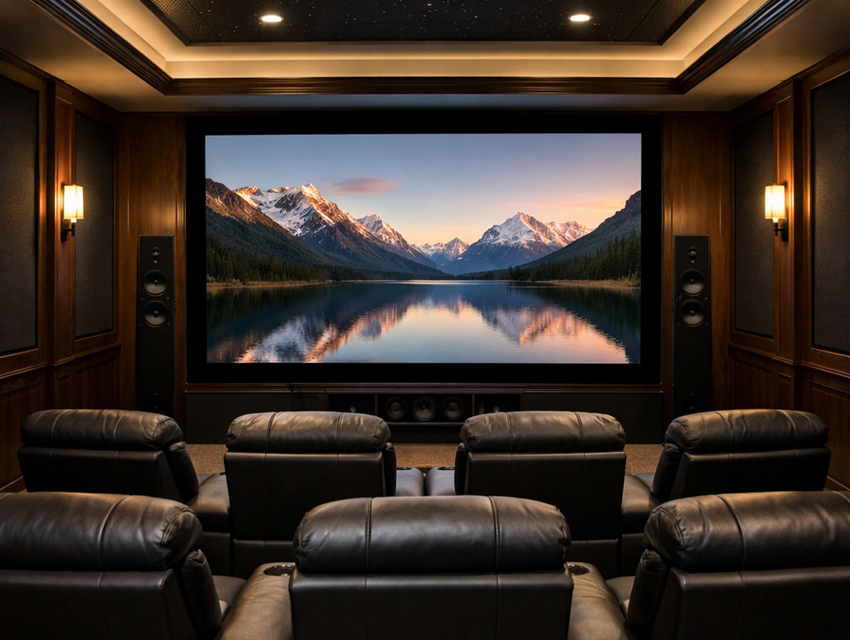
- Recliners
- Theatre‑style rows
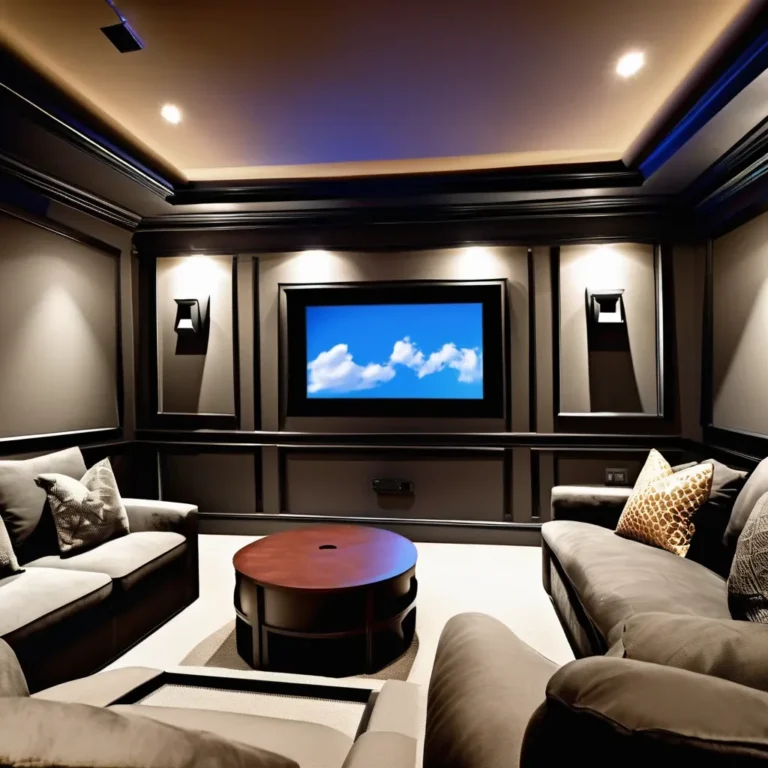
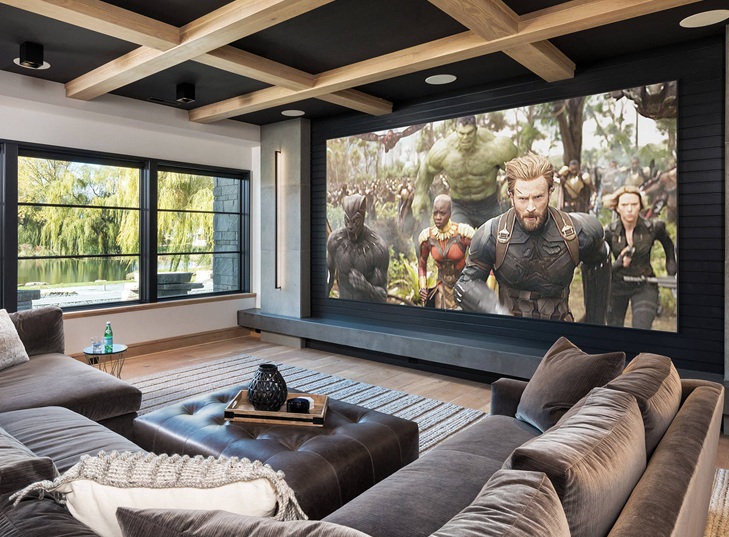
- Sectional sofas
- Stadium seating for larger rooms
Layout Tips
- Leave enough space between rows.
- Ensure clear sightlines for every seat.
- Add cup holders, armrests, and side tables for convenience.
🎛️ 7. Smart Control and Automation
Modern home theatres benefit from smart integration:
- Universal remote or smart hub
- Voice control (Alexa, Google Assistant)
- Automated lighting scenes
- Motorized projector screens
- Smart thermostats for comfort
Automation makes your theatre feel truly high‑end.
🎨 8. Aesthetic Design and Decor
A beautiful home theatre enhances the experience.
Design Ideas
- Dark wall colors to reduce reflections
- Acoustic fabric panels
- Movie posters or LED wall art
- Hidden wiring for a clean look
🧰 9. Budgeting Your Home Theatre
Home theatre design can fit any budget.
Typical Cost Ranges
- Entry‑level: $1,000–$3,000
- Mid‑range: $5,000–$15,000
- High‑end: $20,000+
Prioritize essentials: acoustics, display, and sound.
🎥 Final Thoughts
A well‑designed home theatre turns your home into a personal cinema where every movie, game, or concert feels extraordinary. With the right planning, equipment, and design choices, you can create a space that delivers stunning visuals, immersive sound, and unmatched comfort.