Walk-In Closet Design Tips: Layout, Storage and Organization Ideas
A successful walk-in closet design turns an available room or unused area into storage that is comfortable, accessible, and easy to maintain. The best results come from matching the layout to the room, dividing storage according to your wardrobe, and leaving enough space to move and open drawers or doors.
A walk-in closet does not have to be large. A compact storage room, deep niche, or separated part of a bedroom can provide useful clothing storage when its walls and vertical space are planned carefully.
This guide explains how to plan a walk-in closet layout, select storage components, organize clothing and accessories, and avoid mistakes that can make the finished space difficult to use.
1. Start With a Walk-In Closet Design Plan
Before choosing shelves, cabinets, or finishes, measure the available space carefully. Record the length and height of every usable wall as well as the position of doors, windows, outlets, switches, radiators, vents, and sloped ceilings.
Measure at more than one point because walls and floors are not always perfectly straight. Also check which direction the entrance door opens and whether it takes up space that could otherwise be used for storage.
Next, review what you intend to keep in the closet. Your wardrobe should determine the storage system rather than the other way around.
Include the following categories in your plan:
- Short hanging clothes such as shirts, jackets, and trousers
- Long garments such as dresses and coats
- Folded clothing
- Shoes and boots
- Bags, belts, jewelry, and other accessories
- Underwear, socks, and small personal items
- Seasonal clothing and bedding
- Suitcases, boxes, and rarely used belongings
Estimate how much space each category currently requires and leave some flexibility for future changes. Adjustable shelves and movable dividers make it easier to adapt the closet later.
2. Choose the Best Walk-In Closet Layout
The shape and width of the room usually determine the most practical layout. Adding storage to every wall is not always the best solution because capacity is useful only when the room remains comfortable to enter and use.
Single-wall layout
A single-wall or straight layout places storage along one side of the room. It is generally the simplest choice for a narrow closet because the opposite wall remains open for movement.
This arrangement can include a combination of double hanging rods, drawers, shelves, and a full-height section for long garments.
Galley layout
A galley layout uses two parallel walls. It can provide substantial storage, but the room must be wide enough for storage on both sides and a usable passage between them.
Keep frequently used items within easy reach and avoid placing opposing drawers or cabinet doors where they interfere with each other.
L-shaped layout
An L-shaped walk-in closet uses two adjoining walls. It offers more capacity than a single-wall arrangement while preserving a relatively open central area.
This layout is useful when a door, window, radiator, or other feature prevents storage from continuing along an entire wall.
U-shaped layout
A U-shaped layout uses three walls and usually provides the greatest storage capacity. It works best in a larger dressing room with enough central clearance for comfortable movement.
Each wall can serve a different purpose: hanging space on one side, drawers and folded clothing on another, and shoes or accessories on the third.
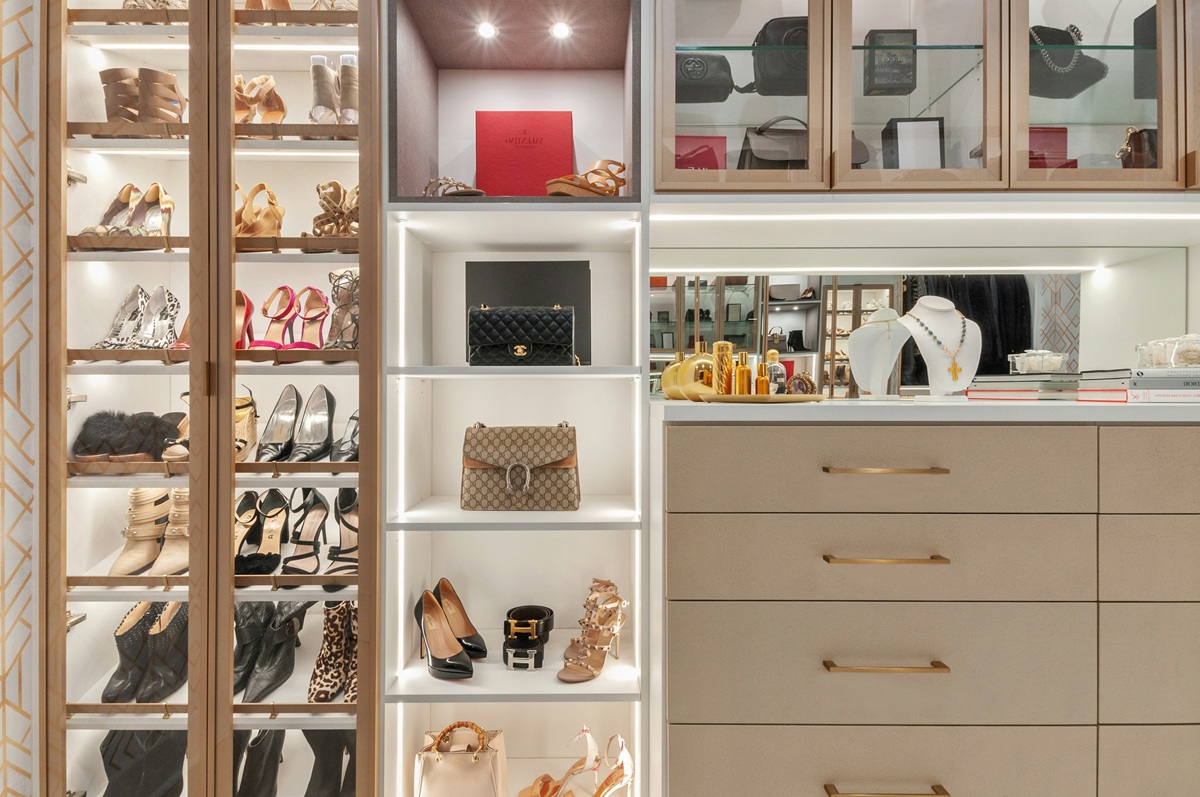
Layout with a central island
A closet island can provide drawers, a folding surface, or accessory storage, but it requires considerably more room than wall-mounted storage alone.
Do not add an island simply to create a luxurious appearance. If it narrows the walkway or prevents drawers from opening completely, the room will be less practical.
3. Plan Storage Depth and Walking Space
Comfortable movement is one of the most important parts of walk-in closet design. The exact space required depends on the storage system, door style, drawer depth, and number of people using the closet.
Before installation, check that you can:
- Walk through the closet without brushing against hanging clothes
- Open drawers completely
- Reach upper and lower storage safely
- Use cabinet doors without blocking the entrance
- Stand back far enough to see and select clothing
- Access corners without moving other items first
Mark the planned cabinet depth and walkway on the floor with removable tape. This simple test gives a clearer impression of the finished room than a drawing alone.
Shallow shelves can work for shoes, bags, and folded items when standard-depth cabinetry would make a small closet too narrow.
4. Combine Different Types of Closet Storage
A practical closet should combine hanging rods, shelves, drawers, and specialized compartments. Relying on only one type of storage usually creates wasted space or makes some belongings difficult to reach.
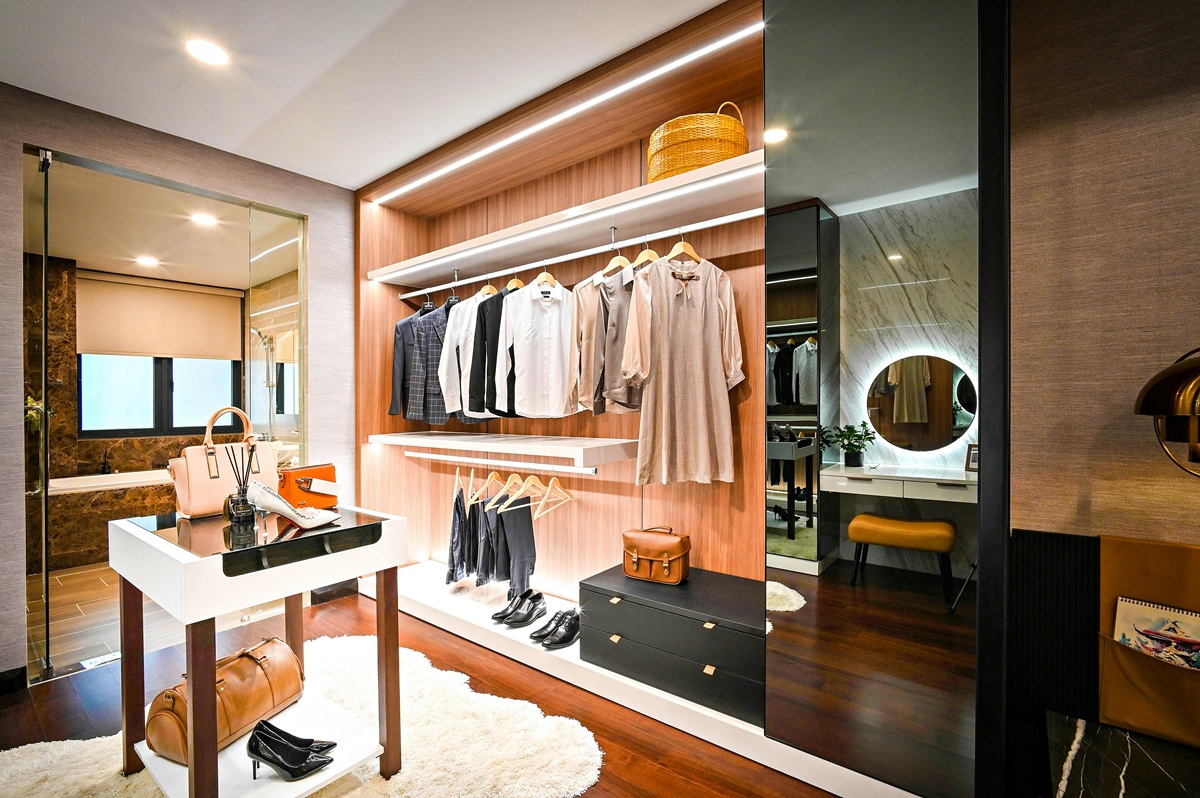
Hanging rods
Reserve full-height hanging space for dresses, coats, and other long garments. Shorter clothes can often be stored on two levels, increasing capacity without requiring additional floor space.
A lower rod should still be positioned high enough to keep clothing away from shoes and the floor.
Adjustable shelves
Shelves work well for folded clothes, bags, hats, baskets, and storage boxes. Adjustable supports allow shelf heights to change as your wardrobe evolves.
Avoid making stacks of folded clothing excessively tall. Smaller groups are easier to access and less likely to collapse when an item is removed.
Drawers
Drawers keep underwear, socks, jewelry, belts, and other small items organized and out of sight. Shallow drawers with dividers are often more useful for accessories than deep drawers where small objects become mixed together.
Shoe storage
Shoe shelves are commonly placed in the lower part of the closet. Adjustable or differently spaced shelves accommodate flats, sneakers, heels, and taller boots.
Allow frequently worn shoes to dry and air before placing them in enclosed storage.
Upper storage
Use the highest shelves for suitcases, seasonal clothes, spare bedding, and other items that are not needed every day. Clearly labeled boxes make these areas easier to maintain.
Hooks and accessory storage
Hooks can hold bags, scarves, robes, or an outfit prepared for the next day. Pull-out trays, small compartments, and drawer dividers help organize watches, jewelry, ties, and belts.
5. Select Durable Materials and Finishes
Walk-in closet materials should withstand regular contact with clothing, hangers, shoes, and storage boxes. They should also be easy to clean and suitable for the room’s ventilation and humidity conditions.
Common choices include:
- Natural wood or wood veneer
- Wood-effect laminate
- Painted or matte cabinet panels
- Metal hanging systems
- Glass doors for selected display sections
- Durable, easy-to-clean flooring
Light finishes can help a compact closet feel more open and make stored items easier to see. Wood tones add warmth, while darker finishes can create a dramatic appearance in a spacious room with sufficient lighting.
Choose finishes that coordinate with the adjoining bedroom or hallway, especially when the closet entrance remains visible. For more ideas on creating a coordinated sleeping area, see these small modern bedroom designs.
6. Organize the Closet Around Everyday Use
Effective closet organization is based on accessibility rather than fitting the maximum possible number of items into the room.
Place belongings according to how frequently they are used:
- Eye level: everyday clothing and frequently used accessories
- Lower sections: shoes, drawers, and heavier belongings
- Upper shelves: seasonal clothes, boxes, bedding, and suitcases
- Full-height sections: dresses, coats, and long garments
- Small drawers: jewelry, belts, socks, and accessories
Group similar clothing together so that shirts, trousers, jackets, dresses, and sportswear each have a defined zone. Within those categories, you can arrange items by color, season, or frequency of use.
Avoid filling every shelf and rod completely. Leaving some free space makes belongings easier to remove, return, and reorganize.
Use consistent boxes, baskets, and labels for small or seasonal items. Containers should support organization without hiding belongings so completely that they are forgotten.
7. Walk-In Closet Ideas for Small Spaces
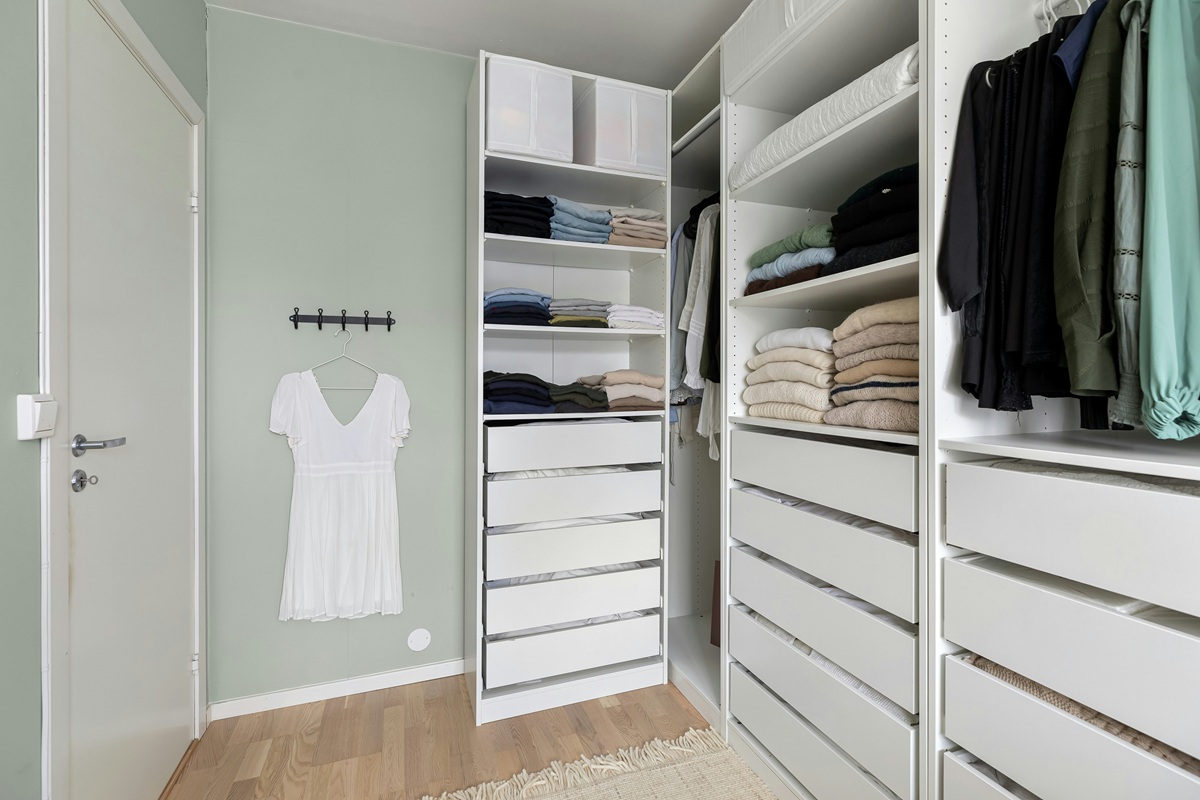
A small walk-in closet requires careful decisions about depth, door movement, and vertical storage. The goal is to preserve a clear passage while using the walls efficiently.
Consider these small walk-in closet ideas:
- Use a single-wall or L-shaped layout
- Extend storage toward the ceiling
- Install double rods for short hanging clothes
- Use shallow shelves in narrow areas
- Choose sliding or pocket doors where appropriate
- Add a full-length mirror without using additional floor space
- Select light finishes that reflect available light
- Use open shelves selectively to reduce visual weight
- Avoid oversized drawers and unnecessarily deep cabinets
- Keep the floor as clear as possible
A compact closet entrance can also benefit from a door that does not take up valuable interior space. Compare practical options in this guide to space-saving door styles.
If there is not enough room for a true walk-in closet, a well-planned reach-in wardrobe or built-in storage wall may provide better access and greater usable capacity.
8. Add Practical Lighting, Mirrors, and Ventilation
Closet lighting
Good lighting makes it easier to find items, distinguish colors, and keep the closet organized. General ceiling lighting should illuminate the entire room without creating strong shadows.
LED strips or integrated cabinet lights can improve visibility inside shelves, drawers, and hanging sections. Lighting installed near clothing should be suitable for enclosed furniture and positioned according to the manufacturer’s safety instructions.
Choose a light appearance that allows clothing colors to look natural. Very warm or strongly tinted lighting can make similar colors difficult to distinguish.
Mirrors
A full-length mirror is useful in a dressing area and can make a small closet feel brighter. Wall-mounted or cabinet-door mirrors provide this function without occupying floor space.
Position the mirror where you can stand far enough away to use it comfortably and where it receives even light.
Ventilation
Closets can trap heat, moisture, and odors, especially when they have no window. Preserve existing vents, allow air to circulate around clothing, and avoid placing damp garments or shoes into enclosed storage.
Do not block ventilation openings with cabinets or stacked boxes. Persistent dampness or musty odors should be investigated rather than covered with fragrance products.
9. Common Walk-In Closet Design Mistakes
- Planning storage before reviewing the wardrobe: the closet may include too many shelves but insufficient hanging space.
- Ignoring walking clearance: drawers and cabinet doors become difficult to open in a narrow passage.
- Using every wall automatically: additional cabinets can make a small room less usable.
- Forgetting long garments: dresses and coats need sufficient vertical clearance.
- Installing fixed shelves everywhere: storage becomes difficult to adapt when needs change.
- Creating inaccessible corners: deep corner sections can hide clothing and waste space.
- Adding an oversized island: the central walkway becomes cramped.
- Using inadequate lighting: dark shelves make clothing difficult to see.
- Blocking ventilation: restricted airflow can contribute to stale odors and moisture problems.
- Leaving no spare capacity: a completely full closet becomes difficult to maintain.
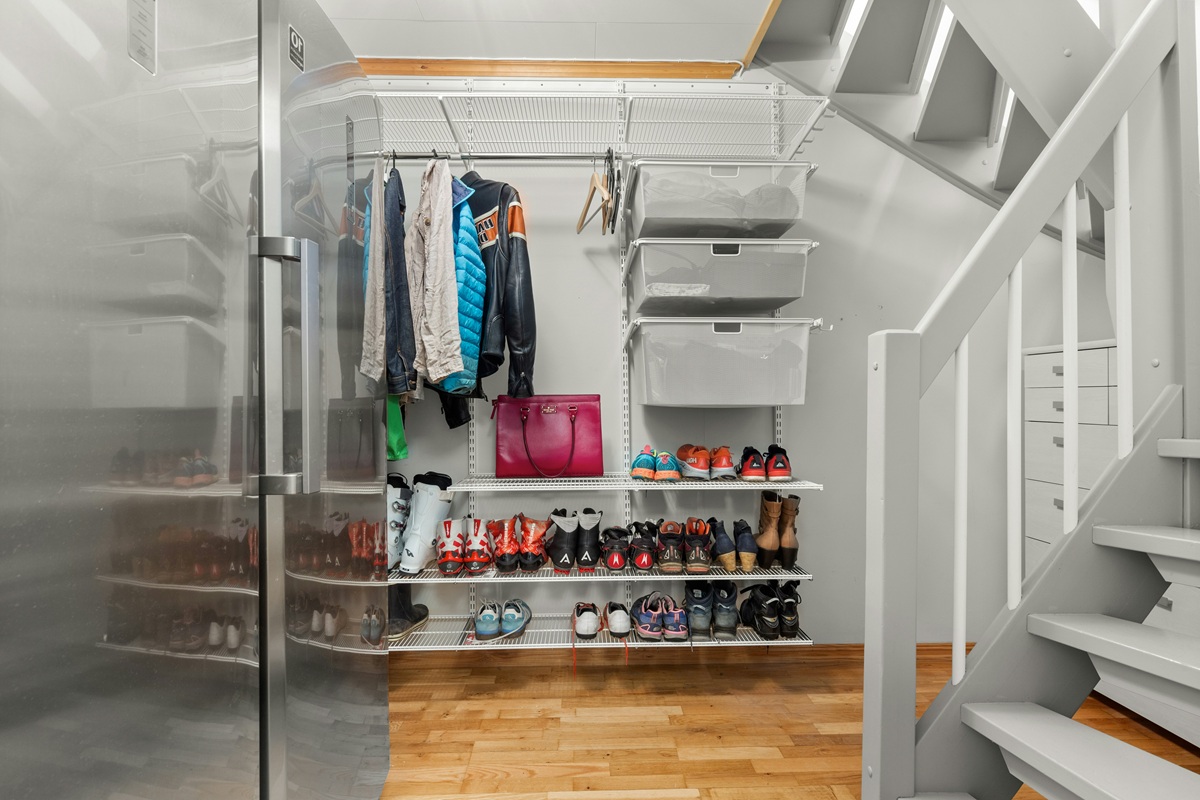
Storage principles used in a closet can also improve nearby transitional spaces. This guide to entryway storage and organization offers additional ideas for shoes, coats, bags, and everyday belongings.
Frequently Asked Questions
What is the minimum size for a walk-in closet?
There is no universal minimum size because the required dimensions depend on the room shape, storage depth, entrance position, and layout. A single-wall closet needs less width than a galley or U-shaped arrangement.
The space must be wide enough to move safely and open drawers, cabinet doors, and the room entrance without obstruction.
Which walk-in closet layout provides the most storage?
A U-shaped layout generally offers the greatest wall-storage capacity, but it requires a sufficiently large room. In a narrow space, a single-wall or L-shaped arrangement may provide more practical storage because it preserves a usable walkway.
Can part of a bedroom become a walk-in closet?
Yes. Part of a bedroom can be separated with built-in furniture, sliding doors, or an appropriate partition. Before making structural or electrical changes, check local requirements and consult a qualified professional when necessary.
Are open shelves or closed cabinets better?
Open shelves keep clothing visible and easy to reach, while closed cabinets create a calmer appearance and reduce dust exposure. A combination often works best: open storage for frequently used clothes and closed compartments for seasonal or less attractive items.
How should a small walk-in closet be organized?
Use the full wall height, keep everyday clothing at eye level, add double hanging rods where appropriate, and reserve upper shelves for seasonal belongings. Shallow shelves and wall-mounted accessories can increase capacity without narrowing the passage excessively.
Does a walk-in closet need ventilation?
Some form of air circulation is beneficial, particularly in a windowless closet or humid environment. Avoid blocking existing vents, do not store damp clothes, and leave enough space around belongings for air to move.
How can I make a walk-in closet look less cluttered?
Group similar items, use drawers or consistent containers for small belongings, keep the floor clear, and avoid filling every visible shelf. Good lighting and a limited material palette also create a calmer appearance.
Final Walk-In Closet Design Checklist
A well-planned closet should support your daily routine rather than simply provide the largest possible number of shelves.
- Measure every usable wall and fixed room feature
- Review the wardrobe before selecting storage
- Choose a layout that preserves comfortable movement
- Combine hanging rods, shelves, drawers, and shoe storage
- Use adjustable components where possible
- Keep frequently used items within easy reach
- Provide appropriate lighting and mirrors
- Maintain ventilation and avoid storing damp items
- Leave some capacity for future changes
The most effective walk-in closet design is not necessarily the largest or most elaborate. Accurate measurements, suitable clearances, flexible storage, and a clear place for each category will make the room easier to use and maintain over time.